

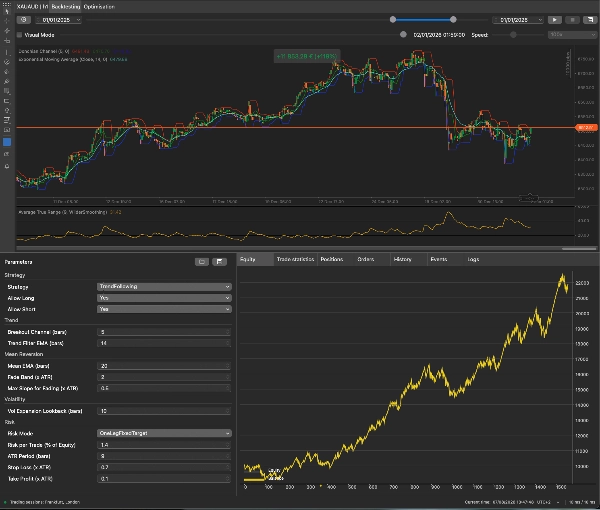
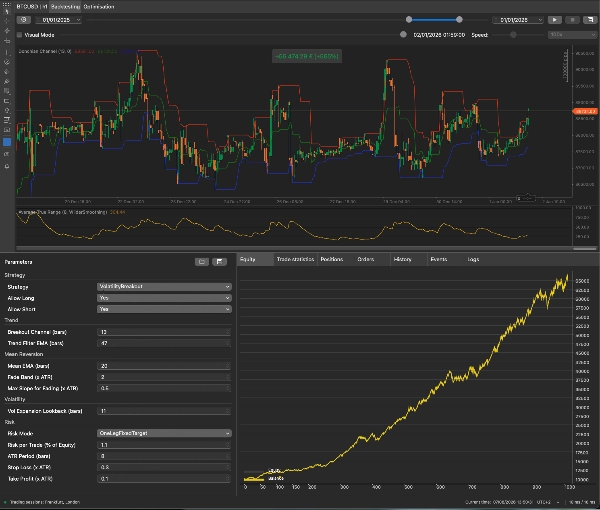

Описание
Цербер: Три головы, один охотник
Три стратегии для разных режимов, три режима риска, один бот. Выберите комбинацию, которая подходит рынку, на котором вы торгуете.
Что такое Цербер
Один бот с двумя переключателями:
- Стратегия: логика входа. Три «головы», каждая создана для разного рыночного режима.
- Режим риска: как рассчитываются размеры позиций, устанавливаются стопы и трейлы.
Девять комбинаций из двух выпадающих списков. Размер позиции нормируется по ATR к вашему проценту риска, так что при одинаковых настройках риск одинаковый, независимо от того, спокойный или волатильный рынок. Решения принимаются один раз за закрытие бара.
Никакой «черной коробки» с вашими деньгами. Каждый элемент управления описан ниже, а риск полностью раскрыт: как рассчитывается размер, где ставится стоп, как работает трейлинг. Чего здесь не найдете — так это обещаний гарантированной прибыли (если увидите такое где-либо, убегайте).
Три головы (Стратегия)
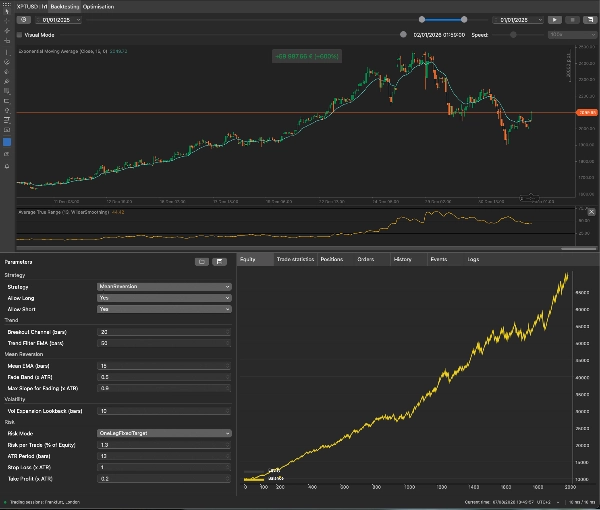
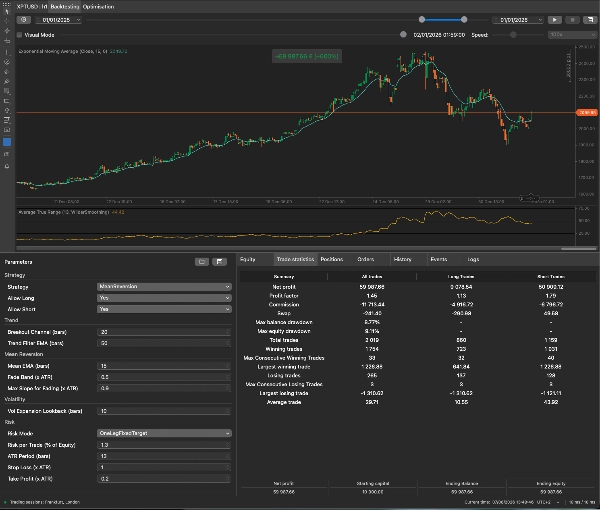
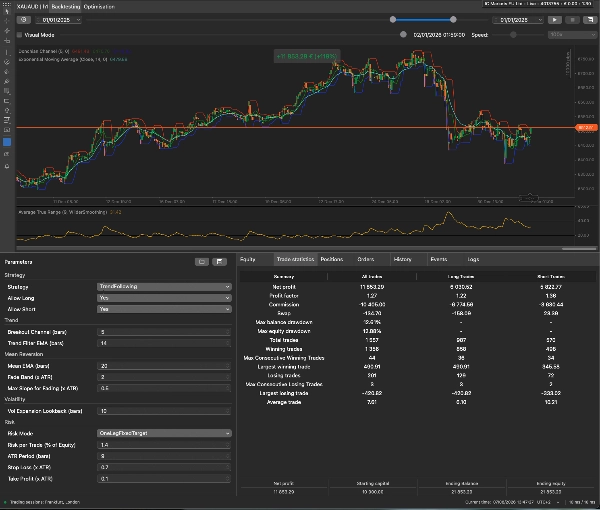
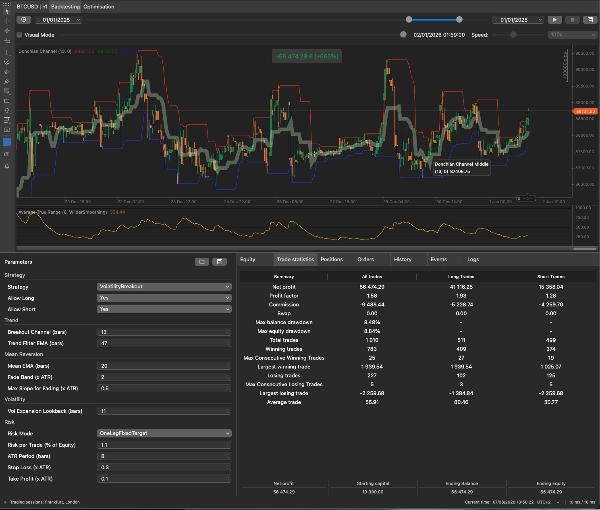
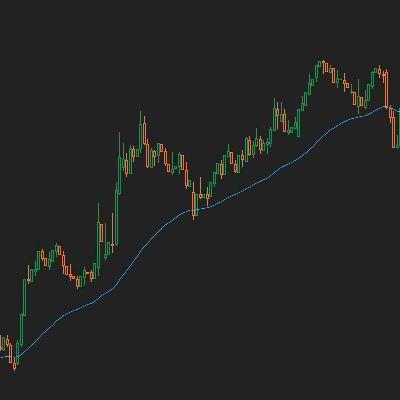
- TrendFollowing: создан для трендовых рынков. Ищет пробой канала, который фильтр тренда подтверждает как движение по тренду, а не против него.
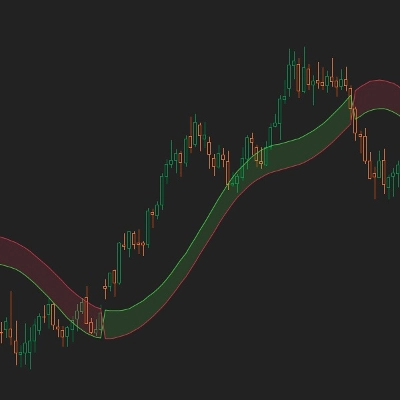
- MeanReversion: создан для боковых рынков. Ищет цену, отстоящую на расстояние, масштабированное ATR, от справедливой стоимости, при условии, что фильтр тренда чист (цель — возврат к среднему).
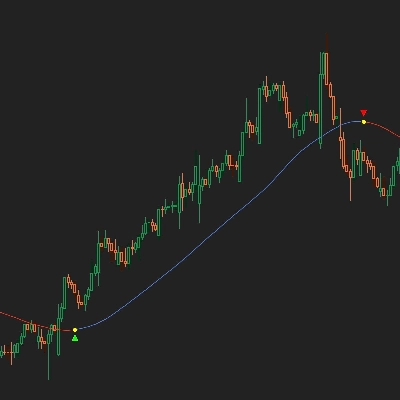
- VolatilityBreakout: создан для расширения волатильности. Ищет пробой канала, происходящий в момент реального расширения волатильности, а не после того, как она уже исчерпана.
Слой риска (Режим риска)
Размер всегда нормируется по ATR. Бот читает текущий ATR, вычисляет от него дистанцию стопа, и рассчитывает размер позиции так, чтобы при срабатывании стопа потери не превышали установленный вами процент от капитала. В условиях высокой волатильности позиция меньше, в спокойных условиях — больше (риск одинаковый). Нет фиксированных лотов, нет догадок.
- OneLegFixedTarget: одна позиция. Фиксированный стоп и цель, выраженные в ATR. Вход, выход, готово.
- OneLegTrailingStop: одна позиция, без фиксированной цели. Стоп следует за ценой на расстоянии ATR и никогда не движется против вас.
- TwoLegTrailingStop: две части позиции, риск делится 50/50. Одна часть берет цель по ATR. Вторая — бегунок (тот же стоп, трейлинг от входа, оставлен бежать насколько позволит рынок).
О трейлинге: Цербер использует серверный трейлинг-стоп cTrader (тот же, что вы бы ставили вручную). Он привязан к ордеру и не требует триггера: стоп сохраняет дистанцию позади лучшей цены, достигнутой сделкой, сужаясь по мере движения в вашу пользу. Серверный трейлинг значит, что он работает даже при отключении вашего компьютера или связи.
О размере позиции. Каждая сделка рассчитана так, чтобы рисковать не более чем Риском на сделку от вашего капитала, с дистанцией стопа, установленной по ATR.
Параметры, простым языком
Группированы так, как они появляются в cTrader.
Стратегия
- Стратегия: какую голову использовать.
- Разрешить лонг / Разрешить шорт: фильтр направления. Отключите один, чтобы торговать с долгосрочным уклоном или не участвовать в нежелательном направлении.
Тренд
- Длина канала пробоя (бары): длина канала пробоя (головы Trend / Volatility). Чем длиннее — тем меньше, но значительнее пробоев.
- EMA фильтра тренда (бары): фильтр подтверждения тренда (голова Trend). Чем длиннее — тем строже критерии тренда.
Среднее отклонение
- EMA среднего (бары): линия справедливой стоимости, к которой возвращается цена, и где происходит выход из MeanReversion.
- Полоса отката (× ATR): насколько далеко должна уйти цена, чтобы сработал откат. Шире = реже, экстремальнее входы.
- Максимальный наклон для отката (× ATR): фильтр тренда. Понизьте, если голову часто «перегоняют».
Волатильность
- Период оценки расширения волатильности (бары): насколько далеко назад нужно смотреть, чтобы считать волатильность расширяющейся (голова Volatility).
Риск
- Режим риска: см. режимы риска выше.
- Риск на сделку (% от капитала): какую часть капитала бот рискует в одной сделке. Размер позиции рассчитывается так, чтобы максимальные потери при срабатывании стопа не превышали этот процент.
- Период ATR (бары): период ATR для расчета размера и стопов.
- Стоп-лосс (× ATR): начальное расстояние стопа во всех режимах и расстояние трейлинга в режимах с трейлинг-стопом.
- Тейк-профит (× ATR): целевая дистанция (цель OneLegFixedTarget или целевая часть TwoLegTrailingStop). Не используется в OneLegTrailingStop.
Как использовать
- Настройте: один экземпляр на символ, на таймфрейме, на котором планируете торговать. Каждый экземпляр управляет только своим символом (запускайте несколько для портфеля).
- Выберите голову, соответствующую рынку: сначала посмотрите на инструмент и таймфрейм, затем выберите:
Запуск головы тренда на рынке с боковым движением — это не проблема настроек, которую можно решить. Измените рынок или смените голову. -
- Постоянные направленные движения → TrendFollowing
- Четко выраженные диапазоны, цена многократно возвращается к среднему → MeanReversion
- Спокойные периоды, переходящие в резкие расширения (открытия сессий, после консолидаций) → VolatilityBreakout
- Выберите режим риска: начните с OneLegFixedTarget во время проверки головы: одна позиция, один стоп, одна цель, чтобы бэктест ясно показал, есть ли преимущество у входов. Перейдите к трейлингу, когда будете им доверять:
-
- OneLegTrailingStop когда голова ловит движения, которые проходят далеко за фиксированную цель. Нет ограничения по прибыли.
- TwoLegTrailingStop когда хотите и то, и другое (одна часть фиксирует цель, другая бежит дальше).
- Установите риск: Риск на сделку — это главное число. 1% или меньше — разумная отправная точка. Размер позиции рассчитывается так, чтобы риск не превышал этот процент капитала, с учетом ATR.
- Проверьте, затем запускайте в реале: бэктест → форвард-тест → демо → реальная торговля, в этом порядке.
Проверяйте, прежде чем доверять
Любой набор параметров может выглядеть великолепно на бэктесте, если слишком сильно подгонять. Это переобучение, и это самый быстрый способ потерять деньги своему же боту. Стоит делать правильно:
- Разделите данные. Один период для оптимизации (in-sample), более поздний — для проверки без изменений (out-of-sample).
- Оптимизируйте только на in-sample.
- Проверьте эти настройки на out-of-sample. Если они разваливаются — переобучение (меньше параметров, проще логика).
- Форвард-тест через несколько последовательных окон. Настоящее преимущество примерно стабильно; переобученное — единичный всплеск.
- Проверка плато: поиграйте с лучшими параметрами ±20%. Стабильные результаты означают надежность; резкие колебания — хрупкость.
- Форвард-тест на демо до реальных денег.
В cTrader нет функции однокликового форвард-теста, поэтому это делается вручную (разделите по дате, оптимизируйте один сегмент, проверьте следующий). Утомительно, но это разница между стратегией и лотерейным билетом.
Чего ожидать
- Нет режима, который выигрывает на всех рынках. Головы тренда терпят убытки в боковиках; среднее отклонение проигрывает в трендах. Поэтому головы разделены.
- Фильтрация означает меньше сделок. Входы лучше по времени, а не постоянное действие.
- Затраты имеют значение: спред, комиссия, своп, особенно на низких таймфреймах. Бэктест с реальными затратами.
- Прошлые результаты, бэктестовые или форвард, не гарантируют будущих.
Часто задаваемые вопросы
- С какой головы начать? TrendFollowing самый прощающий и наиболее подтвержденный для розничных трейдеров. Начинайте с него и OneLegFixedTarget.
- Зачем три режима риска? Потому что управление сделками — это преимущество для многих стратегий (вход — только половина дела). OneLegFixedTarget — просто; OneLegTrailingStop позволяет неограниченно держать прибыль; TwoLegTrailingStop фиксирует часть прибыли и оставляет остальное. Выберите тот, который соответствует вашему стилю управления сделками.
- Торгует ли он несколькими символами? Один символ на экземпляр. Запускайте несколько для портфеля.
- Почему сигнал был пропущен? Обычно размер позиции округлился ниже минимального лота вашего брокера, или по этому символу уже есть открытая позиция.
- Будут ли добавлены новые головы? Архитектура изначально модульная (новые стратегии можно добавлять без нарушения существующих).
Технические заметки
- Входы и выходы оцениваются один раз за закрытие бара, а не по каждому тиковому изменению.
- Стопы, цели и трейлинг размещаются на сервере вместе с ордером (выживают при отключении).
Отказ от ответственности
Торговля связана с существенным риском потерь. Это программное обеспечение — инструмент, а не финансовая консультация. Вы несете ответственность за собственное тестирование, настройки риска и результаты. Автор не дает гарантий и не заявляет о результатах, ни прошлых, ни будущих.
Сводка
Position sizing is ATR-normalized, meaning it adjusts to market volatility to risk a consistent percentage of equity per trade. The three risk modes include OneLegFixedTarget (single position with fixed stop and target), OneLegTrailingStop (single position with a trailing stop and no fixed target), and TwoLegTrailingStop (two positions splitting risk, one with a fixed target and one trailing).
The bot evaluates trade signals once per bar close and uses server-side stops and trailing stops to maintain risk management even if the user’s connection drops. It supports one symbol per instance, allowing portfolio diversification by running multiple instances.
Parameters are clearly documented, covering strategy selection, trend filters, mean reversion settings, volatility lookbacks, and risk controls such as risk per trade, ATR period, stop loss, and take profit distances. Users are advised to validate strategies through rigorous backtesting, walk-forward testing, and demo trading before live deployment.
Отзывы покупателей
Обсуждение
Частые вопросы













Цена