
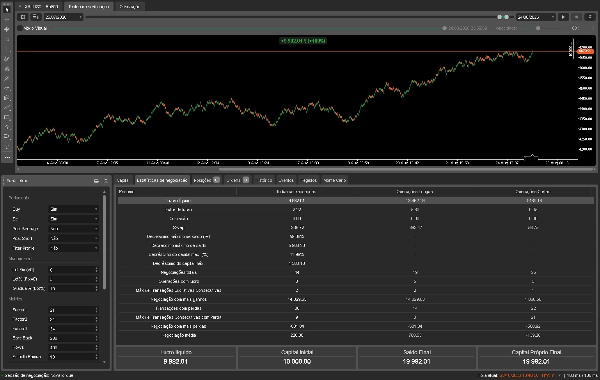
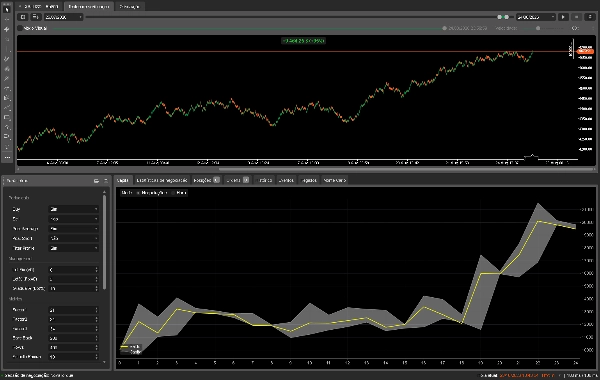
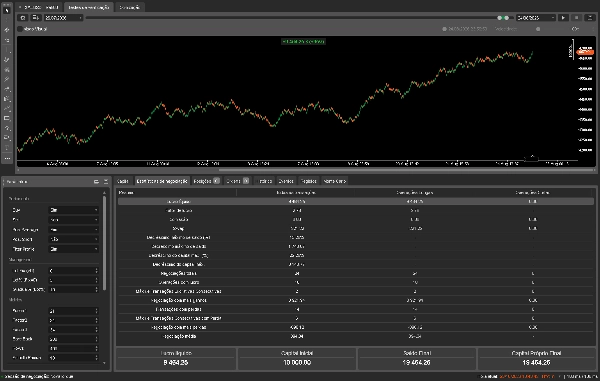
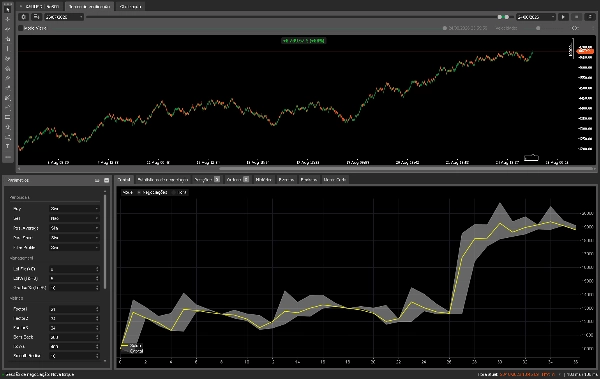
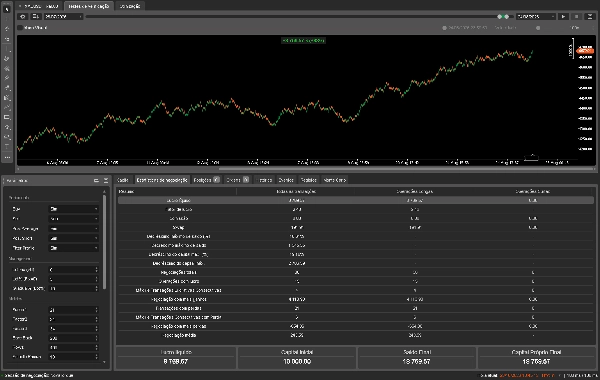
Mô tả
ALGORITHMIC TRADING SYSTEM
SPECTRUM PRIME
Multi-Timeframe Trading System
Multiple Signals. Structured Decisions.
Overview
This algorithm was developed to act as a **support tool for analysis and automated trade execution**, combining indicator signals across multiple timeframes to determine conditions for entering, exiting, and adjusting position volume.
Its structure allows users to configure different entry methods, select permitted trading directions, adjust indicator parameters, and define time-based rules and position management settings.
The system is not a universal solution and does not guarantee results. Its behavior depends on the selected configuration, the characteristics of the asset, market conditions, and the methodology used. For this reason, it is recommended to monitor its behavior regularly and review the settings according to the results observed.
Usage Philosophy
Although the cBot can execute trades automatically, it is also intended to function as a kind of **operational support tool for the trader**.
The idea is to allow the user to combine an assessment of market structure with the selection of an entry method and trading direction, while leaving execution and position management to the programmed rules.
The trader can use technical analysis to decide whether the system should trade long, short, or in both directions, as well as select the method most appropriate to their market analysis.
This approach does not eliminate the need for monitoring. Periodic reviews of results, parameters, and operating conditions are important for identifying behavioral changes and avoiding the indiscriminate use of a configuration suited to one scenario in other market conditions.
Multi-Timeframe and Multi-Indicator Analysis
The resulting signals are combined through different logical conditions, taking into account agreement between timeframes, the presence of competing directional signals, and the selected entry method.
This structure makes it possible to assess the market across different time scales, preventing all decisions from depending exclusively on a single timeframe.
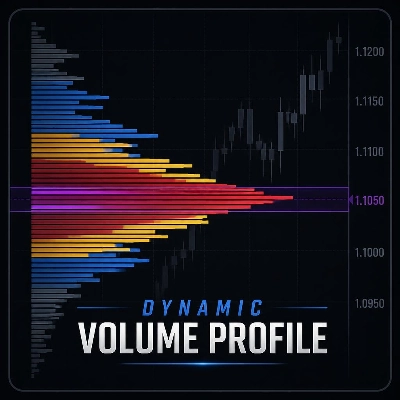
To complement the visual analysis, it is recommended to use indicators and market-reading tools compatible with the adopted methodology, including **Dynamic Volume Profile** ( https://ctrader.com/products/5700 ), RSI, MACD, and moving averages (MAs).
These tools can help the trader contextualize the algorithm's signals in relation to price structure, activity concentration, and market direction. They are complementary analytical references and do not constitute automatic confirmations of the cBot's internal logic.
The periods and parameters used in the visual analysis can be aligned with those configured in the algorithm to facilitate comparison between the signals and the market reading.
Entry Methods
The algorithm offers three entry methods selectable through parameters, each based on different combinations of conditions across timeframes.
1. Standard — Broad Multi-Timeframe Analysis
Configuration:
- Pos. Average = False
- Pos. Short = False
When both parameters are disabled, the algorithm uses the standard entry logic, combining short-, medium-, and long-term conditions.
The decision considers combinations of signals from different groups of timeframes, including additional conditions to resolve situations in which buy and sell signals coexist.
This mode is intended for users who want to work with a broader analytical structure, using agreement across different time scales to guide trades.
2. Medium — Short- to Medium-Term Analysis
Configuration:
- Pos. Average = True
- Pos. Short = False
This mode activates the fast-entry logic, based mainly on combinations of intermediate timeframes.
Entry conditions consider combinations of the configured periods, including timeframes 2 to 5, according to the groups defined in the strategy.
The purpose is to provide an approach with less dependence on long-term conditions, intended for intraday trading in which the interpretation of intermediate timeframes is more relevant.
3. Short — Short-Term Analysis
Configuration:
- Pos. Short = True
This mode activates the logic based on combinations of the four short timeframes: periods 1 to 4.
Its structure uses a more limited set of periods and may be considered for short-term strategies, especially when the trader intends to work with movements closer to intraday market dynamics.
However, selecting this method does not guarantee faster execution, greater accuracy, or better performance during news events and periods of high volatility. These characteristics depend on the instrument, configuration, and actual market conditions.
**Method priority:** when Pos. Short is enabled, it takes precedence over Pos. Average. To use the Medium method, keep Pos. Short disabled. When both are disabled, the algorithm uses the Standard method.
PARAMETERS
1. Periodicals — Operational Configuration
*Buy*
Allows or blocks the opening of new buy positions.
When disabled, the algorithm does not initiate new buys through its entry conditions. This does not constitute an immediate closing command for existing buy positions.
Positions are closed according to the cBot's exit logic. If a position must be closed immediately, the user must close it manually or use another procedure compatible with their operating configuration.
*Sell*
Allows or blocks the opening of new sell positions.
Its operation is equivalent to the Buy parameter, applied to sell trades.
*Pos. Average*
Activates the Medium entry method, using combinations of signals from intermediate timeframes.
To use this method, keep Pos. Short disabled.
*Pos. Short*
Activates the Short entry method, based on combinations of the first configured timeframes.
When enabled, this method takes priority over Pos. Average.
*Filter Profile*
Activates an additional filter based on signals from the custom **Dynamic Volume Profile** indicator ( https://ctrader.com/products/5700 ).
When enabled, the filter reduces the number of new entries in accumulation zones, with the aim of avoiding false breakouts.
When disabled, this condition no longer blocks entries.
2. Management — Volume Management
*Lot Fix (>0)*
Defines the fixed volume used when opening positions.
To activate this mode, set a value greater than zero. When this is done, the fixed volume takes priority over the percentage-based management method.
In this mode, automatic volume adjustment based on Lot% is not applied.
*Lot% (Fix=0)*
Defines the percentage used to calculate the target position volume, based on the account equity and the margin required by the position.
To use this method, set Lot Fix to zero and Lot% to a positive value.
The algorithm calculates a target volume according to the configured percentage and the relationship between account equity and position margin.
The Lot% value does not directly correspond to the percentage of account equity that can be lost on a trade. It is used as a reference for margin allocation and volume sizing.
*Gradual% (Lot%)*
Defines the percentage threshold for subsequent volume increases when using Lot% management.
The purpose of this parameter is to prevent every small difference between the current volume and the target volume from immediately resulting in a position modification.
Illustrative example:
Consider an account with equity of 10,000 monetary units and Lot% set to 10.
The reference calculation uses 10% of equity, or 1,000 monetary units, as the target margin for the position. This value does not directly represent the lot size: the corresponding volume depends on the margin required by the instrument and the account conditions.
The position is initially opened at 0,01 lots. The algorithm then calculates the target volume corresponding to the reference margin.
If Gradual% is set to 10, the algorithm compares the target volume with the currently open volume. A subsequent modification will be considered when the target volume represents an increase of at least 10% relative to the current volume, provided the other logic conditions are also met.
If the target increases but the difference is below the configured threshold, the position retains its current volume until an adjustment condition is met.
The described mechanism applies to **increases in position volume**. It does not implement an automatic reduction in volume when the calculated target decreases.
To disable the gradual growth threshold, set Gradual% to zero. In this case, the algorithm can still adjust the initial position to the target volume, but it will not perform subsequent increases through the gradual rule.
**Important:** this feature does not guarantee safe leverage or limit the financial loss of a trade. Increasing volume can also increase the position's exposure and risk.
*Stop Loss (pips)*
Defines the Stop Loss distance, in pips, applied when a new position is opened.
This parameter provides an additional layer of protection if the cBot stops running or the computer or internet connection becomes unavailable. Once the order and Stop Loss have been successfully accepted and registered, the protection can remain active on the broker's server independently of the cBot's execution.
The Stop Loss is a safety mechanism and does not replace the algorithm's normal exit logic. Execution may occur at a different price during gaps or periods of limited liquidity, and the Stop Loss does not guarantee a specific maximum financial loss.
3. Metrics — Indicator Parameters
*Factor 1, 2, and 3*
Defines the period parameters for the trend indicators. Always keep Factor 2 greater than Factor 1, and Factor 3 greater than or equal to Factor 2.
*Bars Back, Rows, and Smooth Radius*
The Bars Back, Rows, and Smooth Radius parameters are passed to the custom **Dynamic Volume Profile** indicator ( https://ctrader.com/products/5700 ) . For a complete description of its calculations and visual effects, refer to the indicator's specific documentation.
4. Time Frames — Timeframe Configuration
*Time 1 to Time 7*
Define the seven chart periods used in the algorithm's signal analysis and combinations.
The default configuration is:
- Time 1 — 5 minutes
- Time 2 — 15 minutes
- Time 3 — 30 minutes
- Time 4 — 1 hour
- Time 5 — 2 hours
- Time 6 — 4 hours
- Time 7 — 8 hours
It is recommended to configure the periods in ascending order, from shortest to longest, to maintain the organization of the multi-timeframe analysis.
Although other periods can be selected, historical data availability and the amount of data required by the indicators must be taken into account. Very long periods (above 1D) or configurations incompatible with the available history may compromise initialization and signal interpretation.
5. Hours — Time Control
*Start Time*
Defines the starting time from which the algorithm can open new positions.
*End Time*
Defines the end of the operating window. After this time, the algorithm stops opening new positions under the permitted-hours logic.
Times are interpreted using the clock of the server used by cTrader.
*Filter Close*
Enables or disables the additional scheduled-closing condition.
When enabled, the algorithm can close positions for the symbol after the configured time, according to its internal closing logic.
When disabled, this additional closing rule is not executed, but the strategy's normal exit rules can still close positions.
*Time Interval*
Defines the time used by the additional closing condition.
The current logic assumes that this time is equal to or later than End Time and that the closing window is compatible with the start time, including when it crosses midnight.
APPLICATION METHODOLOGY
Standard Method
With Pos. Average and Pos. Short disabled, the algorithm uses the standard entry logic, which combines different groups of timeframes and directional conditions.
The trader can perform a broader analysis of market structure, using higher timeframes as a reference to decide whether to trade long, short, or in both directions.
With this configuration, the cBot evaluates the programmed conditions for opening and closing positions without requiring the user to monitor each combination of signals individually in real time.
**The goal is to reduce the need for constant manual intervention in execution while preserving the ability to review the trading direction and volume management.**
Medium Method
With Pos. Average enabled and Pos. Short disabled, the algorithm uses the fast-entry logic based on intermediate timeframes.
This method may be used in intraday strategies seeking to follow short- to medium-term movements, with a confirmation structure different from the one used in Standard mode.
The choice should take into account the instrument's behavior, the trading horizon, and how the trader interprets the signals from the selected periods.
Short Method
With Pos. Short enabled, the algorithm switches to the entry logic based on the first four timeframes.
This mode may be considered for shorter intraday approaches, in which the interpretation of lower timeframes is more relevant.
Because signals from lower timeframes can change more frequently, it is recommended to carefully evaluate the system's behavior under different market conditions, including consolidation, directional movements, and higher volatility.
Trading Direction
The choice between buy, sell, or both directions should be based on the trader's chosen analytical methodology.
The Buy and Sell settings determine which directions are enabled for new entries. The algorithm's internal logic combines the available signals and may allow positions on both sides when the corresponding conditions are met.
Therefore, enabling both buy and sell does not mean that the system guarantees directional exclusivity or will always identify the market's prevailing direction.
Combining Methods and Operational Adaptation
Combining methods consists of reviewing the entry mode according to the market structure observed by the trader.
For example, a strategy initially configured in Standard mode may be switched to Medium mode when the analysis indicates that intermediate timeframes are more relevant to the current scenario. In situations involving consolidation or changes in market dynamics, the trader can reassess the configuration and decide whether to return to the previous method.
Similarly, an intraday trade based on the Medium method can be adapted to the Short method when there is an operational reason to work with lower timeframes.
These changes are made through the cBot parameters. **The algorithm does not automatically switch between the three methods based on an autonomous market classification.** Selecting and reviewing the mode is part of the operating configuration defined by the user.
The purpose of this approach is to provide flexibility to adjust the entry structure without requiring changes to the source code.
Review and Optimization
The algorithm should be evaluated periodically, taking into account the asset's behavior, timeframe configuration, indicator parameters, trading direction, and volume management rules.
The review may include:
- Comparing the three entry methods;
- Evaluating signals across different time scales;
- Analyzing periods of higher and lower volatility;
- Checking the behavior of open positions;
- Reviewing volume and margin parameters;
- Comparing backtests with results obtained under subsequent conditions.
Optimization should aim for consistency and suitability to the chosen methodology, avoiding parameter selection based exclusively on the best result over a specific historical interval.
DISCLAIMER AND RISKS
This algorithm is an automated trading tool based on technical conditions and predefined rules. It does not predict the market with certainty, eliminate financial risk, or guarantee positive results.
Performance may vary depending on the asset, volatility, liquidity conditions, trading costs, order execution, indicator configuration, and selected parameters.
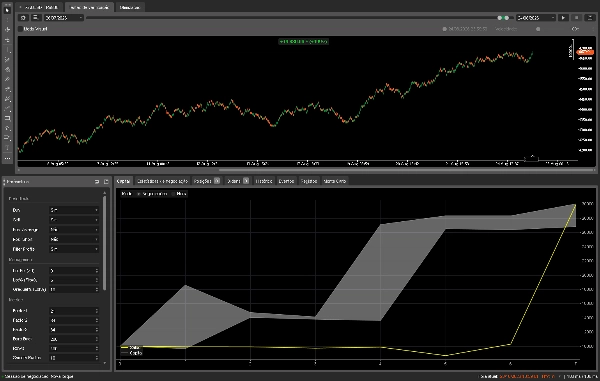
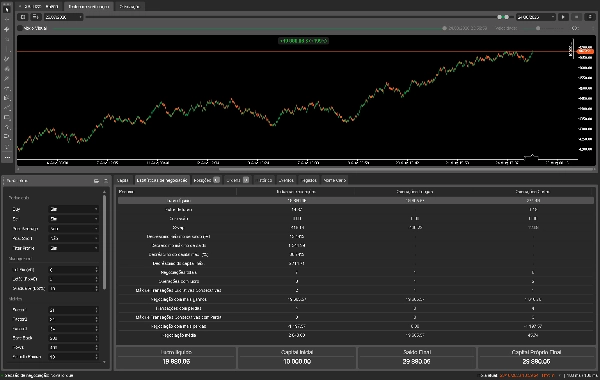
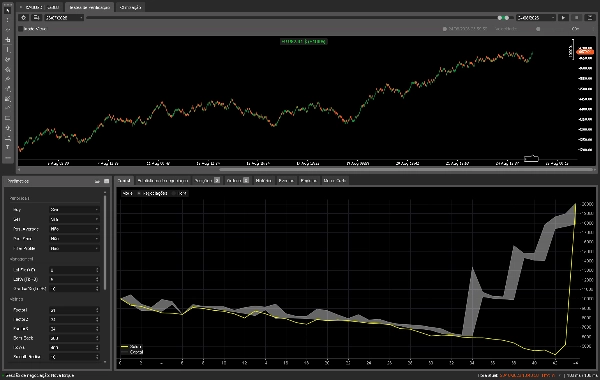
Backtests are simulations based on historical data and the conditions used during testing. Their results do not guarantee similar performance in future trades.
Changes to timeframes, indicator parameters, entry method, and volume management can significantly alter the system's behavior.
**It is recommended to test and validate configurations before using them in live trading, monitor results, and maintain risk-management practices appropriate to one's financial risk tolerance.**