
Descripción
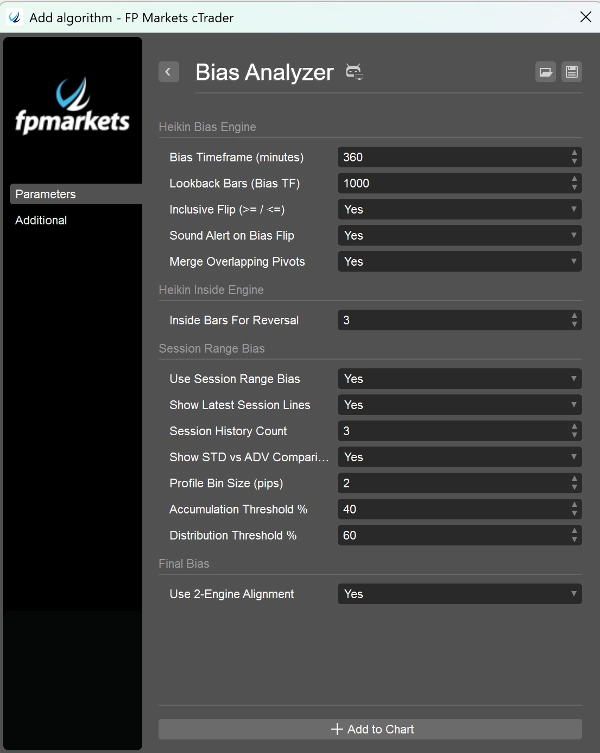
Bias Analyzer — un panel limpio basado en reglas de “contexto de mercado”
La mayoría de los errores en el trading no son malas entradas — son buenas entradas en el contexto equivocado.
Bias Analyzer está diseñado para resolver eso: te ofrece una lectura direccional consistente usando dos motores independientes y muestra el resultado directamente en tu gráfico.
Importante: Bias Analyzer es una herramienta analítica y visual. no abre, modifica ni cierra operaciones.
Lo que muestra Bias Analyzer
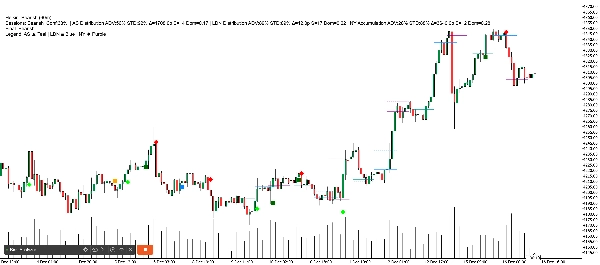
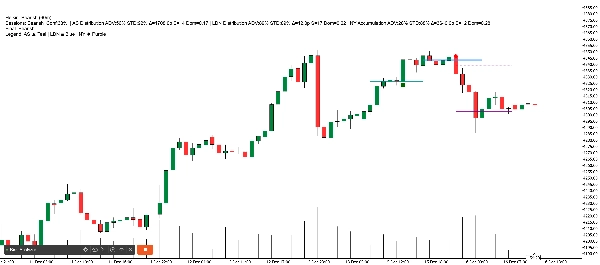
✅ Un panel compacto en la esquina superior izquierda con:
- Sesgo Heikin (Alcista / Bajista / Pendiente)
- Sesgo de sesión (Alcista / Bajista / Neutral / Pendiente)
- Sesgo de alineación final (Alcista / Bajista / Neutral / Pendiente)
- Porcentaje de confianza para el motor de sesión
- Estadísticas por sesión: ADV% vs STD%, Δ pips, conteo de picos, dominancia
✅ Líneas POC de sesión (última sesión o historial multi-sesión)
- ADV POC = línea sólida más gruesa (primaria)
- STD/Base POC = línea punteada (comparación opcional)
Motor 1 — Sesgo de pivote Heikin Ashi (estructura)
Este motor lee los “cambios de color” Heikin Ashi en tu Marco Temporal de Sesgo elegido y construye zonas de pivote:
- Fusión opcional de pivotes superpuestos
- El sesgo cambia cuando el precio rompe la última zona opuesta (inclusiva o estricta)
- Incluye un módulo de bobina inside-bar (solo cuerpo) para contexto temprano de continuación/reversión
Úsalo como tu filtro de “presión” de marco temporal superior.
Motor 2 — Sesgo de rango de sesión (Asia / Londres / Nueva York)
Bias Analyzer evalúa las sesiones completadas más recientes de Asia, Londres y Nueva York y aplica un estricto voto de 2 de 3:
- Cada sesión calcula Mínimo/Máximo y un POC
- Las sesiones se clasifican según dónde se sitúa el POC dentro del rango de la sesión:
-
- Cerca del fondo → Acumulación (voto alcista)
- Cerca de la cima → Distribución (voto bajista)
- Medio → Equilibrado (sin voto)
ADV POC (el factor decisivo)
En lugar de tratar los cuerpos de las velas como “verdad”, ADV se enfoca en dónde el precio fue rechazado con volumen:
- Detecta velas M15 de pico (volumen de ticks ≥ vela anterior)
- Usa intervalos solo de mecha y distribuye el volumen según la longitud de la mecha
- Añade ponderación de intención usando:
-
- desequilibrio de mecha en la vela de pico
- color de la siguiente vela
- primer quiebre del máximo/mínimo del pico más tarde en la misma sesión
- Construye un perfil de sesión y selecciona el ADV POC con mejor puntuación
STD/Base POC permanece disponible para comparación (para que puedas ver qué está cambiando ADV).
Sesgo final (alineación)
Cuando la alineación de 2 motores está habilitada:
- Si Heikin + Sesiones coinciden → Final = Alcista/Bajista
- Si conflictan → Final = Neutral
- Si los datos son insuficientes → Final = Pendiente
Esto está diseñado para mantenerte fuera de condiciones de “mensajes mixtos”.
Funciona mejor en
- Cualquier símbolo con volumen de ticks consistente (se recomiendan principales/secundarios de Forex, índices, metales)
- Cualquier marco temporal de gráfico (usa internamente M5 para rangos de sesión y M15 para picos ADV)
Aviso de riesgo
El trading implica riesgos. Bias Analyzer proporciona solo información analítica y no garantiza resultados. Siempre prueba en una cuenta demo y usa tu propia gestión de riesgos.