

Mô tả
Ý TƯỞNG
Một Kênh Donchian bổ sung bối cảnh phạm vi khung thời gian cao hơn thay vì xem mỗi đột phá một cách riêng lẻ.
VẤN ĐỀ
Một Kênh Donchian tiêu chuẩn cho bạn biết khi giá đạt đến cực trị gần đây.
Nhưng một đột phá không xảy ra một cách riêng lẻ.
Một đột phá trên M15 có thể quan trọng — hoặc nó chỉ đơn giản là giá di chuyển trong phạm vi lớn hơn nhiều của Ngày hoặc Tuần.
Cùng một đột phá do đó có thể có bối cảnh rất khác nhau tùy thuộc vào vị trí nó xảy ra trong phạm vi khung thời gian cao hơn.
Kênh hiển thị đột phá. Nhưng chỉ riêng kênh không cho thấy đột phá đó nằm ở đâu trong phạm vi lớn hơn.
KHÁI NIỆM CỐT LÕI: KÊNH HIỂN THỊ DI CHUYỂN. KHUNG THỜI GIAN CAO HƠN CHỈ RA NƠI NÓ XẢY RA.
Một đột phá không chỉ là một sự kiện.
Nó cũng có một vị trí.
Hai đột phá có thể trông giống hệt nhau trên khung thời gian thực hiện trong khi xảy ra ở các vị trí rất khác nhau trong phạm vi khung thời gian cao hơn.
Một có thể xảy ra gần giữa phạm vi lớn hơn.
Một cái khác có thể xảy ra ngay bên trong ranh giới trên của nó.
Hành động giá có thể trông giống nhau.
Bối cảnh thì không.
Chỉ báo này làm cho bối cảnh đó trở nên rõ ràng bằng cách đặt phạm vi khung thời gian cao hơn đã hoàn thành trước đó trực tiếp lên biểu đồ hiện tại của bạn.
Thay vì chỉ hỏi:
"Giá có phá vỡ kênh không?"
bạn cũng có thể hỏi:
"Đột phá xảy ra ở đâu?"
NÓ LÀM GÌ
Kênh Donchian với Bối cảnh Khung Thời gian kết hợp hai lớp thông tin trên một biểu đồ duy nhất:
1. Donchian Khung Thời gian Hiện tại
Kênh Donchian tiêu chuẩn theo dõi mức cao, thấp và điểm giữa gần đây của thị trường hiện tại.
Chu kỳ của nó được tính tự động từ tỷ lệ giữa khung thời gian biểu đồ của bạn và khung thời gian bối cảnh đã chọn. Ví dụ, bối cảnh Tuần trên biểu đồ H1 tạo ra khoảng nhìn lại 120 thanh.
Bạn không cần phải quyết định liệu kênh nên sử dụng 20, 50 hay 100 thanh.
Mối quan hệ khung thời gian xác định khoảng nhìn lại.
2. Bối cảnh Khung Thời gian Cao hơn
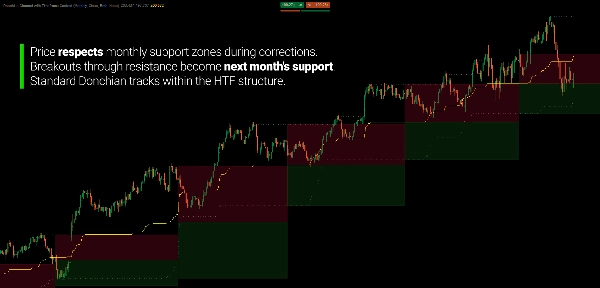
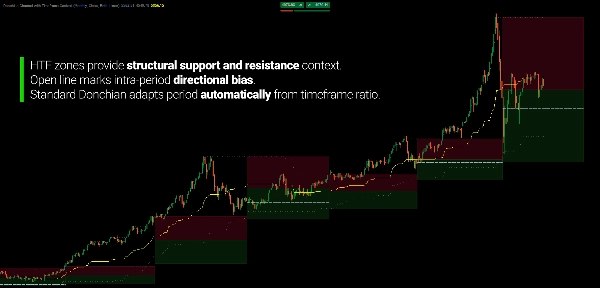
Phạm vi của chu kỳ khung thời gian cao hơn đã hoàn thành trước đó được chiếu tiếp lên biểu đồ hiện tại của bạn như các vùng hỗ trợ và kháng cự.
Phạm vi này được chia thành hai khu vực:
Vùng Hỗ Trợ
Từ mức thấp của chu kỳ trước đến điểm giữa của nó.
Vùng Kháng Cự
Từ điểm giữa đến mức cao của chu kỳ trước.
Khi giá phát triển trên khung thời gian hiện tại của bạn, bạn có thể ngay lập tức thấy vị trí của nó trong phạm vi lớn hơn đó.
HAI KHUNG THỜI GIAN. MỘT BIỂU ĐỒ.
Donchian khung thời gian hiện tại hiển thị sự di chuyển phát triển quanh các cực trị gần đây.
Phạm vi khung thời gian cao hơn cung cấp khung tham chiếu lớn hơn.
Ví dụ:
Bối cảnh Tuần → Biểu đồ H1
hoặc
Bối cảnh Ngày → Biểu đồ M5
Khung thời gian thấp hơn vẫn là chuyển động chủ động.
Khung thời gian cao hơn chỉ đơn giản cung cấp phạm vi bao quanh.
Kênh hiển thị những gì giá đang làm. Khung thời gian cao hơn cho biết nơi nó xảy ra.
KHUNG THỜI GIAN CAO HƠN KHÔNG GHI ĐÈ KHUNG THỜI GIAN THẤP HƠN
Phạm vi khung thời gian cao hơn không phải là tín hiệu bảo bạn giá phải làm gì.
Nó là một khung tham chiếu.
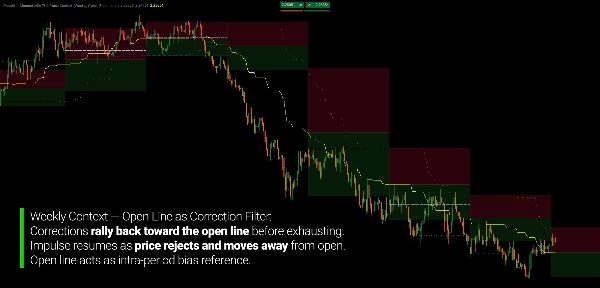
Một đột phá khung thời gian thấp hơn có thể tiếp tục vượt qua kháng cự khung thời gian cao hơn.
Một đợt hồi có thể dừng lại bên trong hỗ trợ khung thời gian cao hơn.
Giá cũng có thể di chuyển hoàn toàn vượt ra ngoài phạm vi trước đó và bước vào vùng mới.
Mục đích không phải là dự đoán kết quả nào sẽ xảy ra.
Mà là làm cho phạm vi lớn hơn trở nên rõ ràng trong khi bạn quan sát chuyển động nhỏ hơn phát triển.
HÃY ĐỂ BỐI CẢNH TỰ CẬP NHẬT
Các vùng khung thời gian cao hơn dựa trên chu kỳ đã hoàn thành trước đó.
Khi một chu kỳ khung thời gian cao hơn mới bắt đầu, phạm vi bối cảnh sẽ được cập nhật.
Ví dụ:
Tuần trước → Tuần hiện tại
Mức cao, thấp và điểm giữa của tuần trước trở thành tham chiếu cho tuần hiện tại.
Trên biểu đồ H1, những ranh giới đó vẫn hiển thị trong khi Kênh Donchian chu kỳ hiện tại tiếp tục phát triển.
Do đó bạn có một tham chiếu liên tục mà không cần phải vẽ thủ công phạm vi của chu kỳ trước đó.
BỐI CẢNH KHUNG THỜI GIAN LÀ LỰA CHỌN CỦA BẠN
Chọn khung thời gian cao hơn cung cấp bối cảnh bạn muốn:
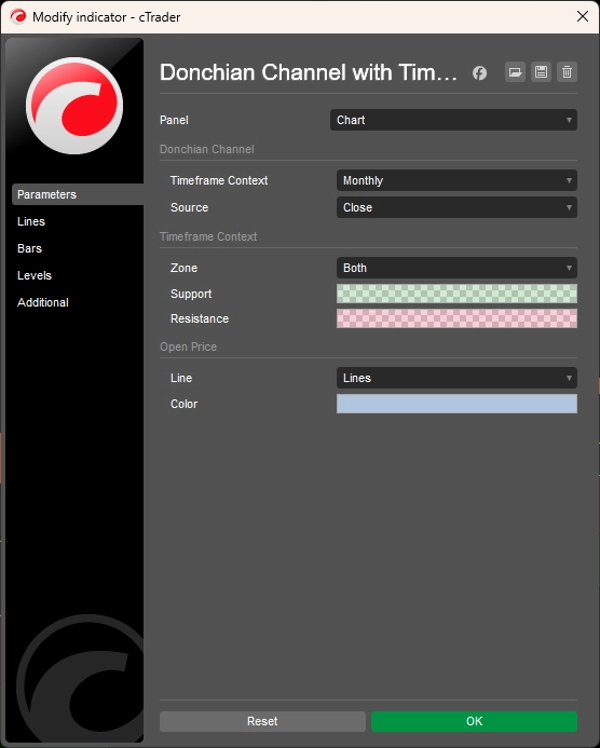
- Hàng tháng
- Hàng tuần
- Hàng ngày
- 4 giờ
- 1 giờ
- 30 phút
- 15 phút
- Và các kết hợp được hỗ trợ khác
Chỉ báo tự động xử lý chu kỳ Donchian tương ứng.
Bạn chọn bối cảnh. Phép tính sẽ thích ứng với nó.
TÙY CHỌN THAM CHIẾU GIÁ MỞ
Giá mở của chu kỳ khung thời gian cao hơn hiện tại cũng có thể được hiển thị.
Điều này cung cấp cho bạn một tham chiếu khác về vị trí giá đang giao dịch so với giá mở của chu kỳ khung thời gian cao hơn hiện tại.
Bật nó khi bạn muốn có thêm bối cảnh.
Ẩn nó khi bạn muốn biểu đồ tập trung vào hai lớp Donchian.
CHỌN CÁCH TÍNH TOÁN KÊNH
Các ranh giới Donchian có thể được tính toán từ:
Giá đóng cửa
hoặc
Giá cao / thấp
Phép tính dựa trên giá đóng cửa tạo ra các ranh giới từ giá đóng cửa.
Phép tính Giá cao/thấp bao gồm các cực của bóng nến và do đó đại diện cho phạm vi giá rộng hơn.
Cùng một lựa chọn nguồn được áp dụng nhất quán cho cả phép tính khung thời gian hiện tại và khung thời gian cao hơn.
ĐƯỢC XÂY DỰNG CHO BỐI CẢNH, KHÔNG PHẢI ĐUỔI TÍN HIỆU
Kênh Donchian với Bối cảnh Khung Thời gian không phải là hệ thống dự đoán đột phá.
Nó không cho bạn biết liệu một đột phá có thành công hay không.
Nó cung cấp cho bạn một môi trường xác định để quan sát điều đó.
Sử dụng nó để nghiên cứu:
- Các đột phá
- Các đợt hồi giá
- Ranh giới khung thời gian cao hơn
- Vị trí trong phạm vi lớn hơn
- Mở rộng vượt quá các cực trị trước đó
- Hình học giá đa khung thời gian
- Chuyển động hiện tại so với chu kỳ trước đó
Donchian tiêu chuẩn cho bạn biết nơi các cực trị hiện tại đang ở.
Bối cảnh khung thời gian cao hơn cho bạn biết những cực trị đó nằm ở đâu trong phạm vi lớn hơn.
TÍNH NĂNG CHÍNH
- Kênh Donchian tiêu chuẩn
- Tính toán chu kỳ khung thời gian hiện tại tự động
- Chiếu phạm vi khung thời gian cao hơn
- Các vùng bối cảnh hỗ trợ và kháng cự
- Mức cao, thấp và điểm giữa của chu kỳ trước đó
- 13 bối cảnh khung thời gian có thể chọn, từ Hàng tháng đến 15 phút
- Tùy chọn giá mở khung thời gian cao hơn
- Chế độ tính toán Đóng hoặc Cao/Thấp
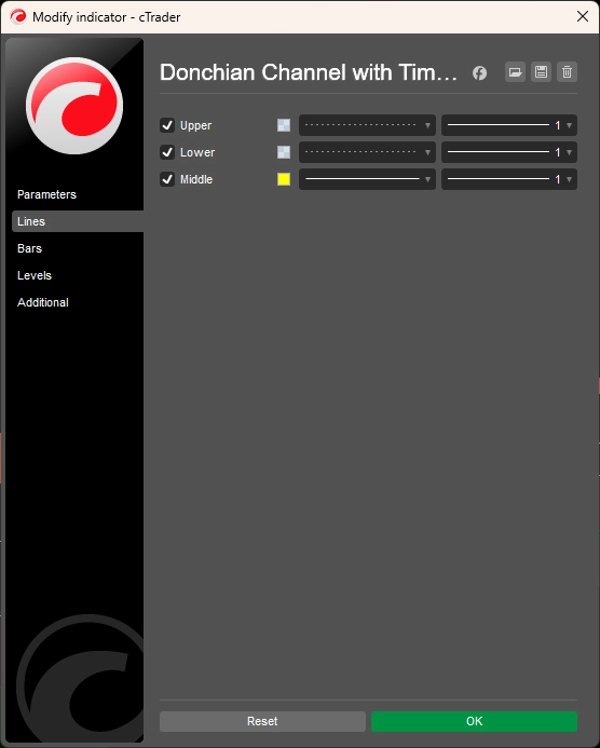
- Hiển thị vùng có thể cấu hình: Cả hai, Chỉ hỗ trợ, Chỉ kháng cự hoặc Không có
- Tùy chọn hiển thị chỉ hỗ trợ / chỉ kháng cự
- Cập nhật theo thời gian thực
- Hỗ trợ biểu đồ dựa trên thời gian và không dựa trên thời gian, bao gồm Tick, Renko và Range
---
Giao dịch có rủi ro. Chỉ báo này là công cụ phân tích kỹ thuật và nên được sử dụng cùng với quản lý rủi ro phù hợp.
Tóm tắt
This dual-layer system automatically adapts the Donchian lookback period based on the ratio between the selected higher timeframe and the chart timeframe, eliminating manual period settings. It supports 13 timeframe options from Monthly to 15 Minutes and can be applied across various markets including forex pairs (EURUSD, GBPUSD, USDJPY, NZDUSD), commodities (XAUUSD), indices (NAS100), and cryptocurrencies (BTCUSD).
Key features include real-time updates of both standard and higher-timeframe channels, configurable visual zones with adjustable colors and transparency, an optional open price line marking the higher-timeframe period’s open, and flexible price source settings (close or high/low).
The indicator aids traders in filtering false breakouts by showing whether price movements occur within structural supply or demand zones on a higher timeframe. It is designed for trend-following, swing, and discretionary traders who use Donchian channels and seek enhanced structural context to better assess breakout significance and correction exhaustion without switching timeframes.
Đánh giá của khách hàng
Thảo luận
Câu hỏi thường gặp






Giá