説明
ZScore Momentum Bot — トレーディングシステム概要
- プロップ&ファンドアカウント対応
このボットはカスタムフィットネス関数を使用します。最大損失を超えたパスは除外されます。その他のすべてのパスは純利益でランク付けされます。つまり、最適化グリッドはチャレンジの境界内で取引されたパラメータの組み合わせのみを表示します — アカウントのストップロスを違反せずに利益を上げた構成であり、途中で日次制限に達したかどうかに関わらず有効です。
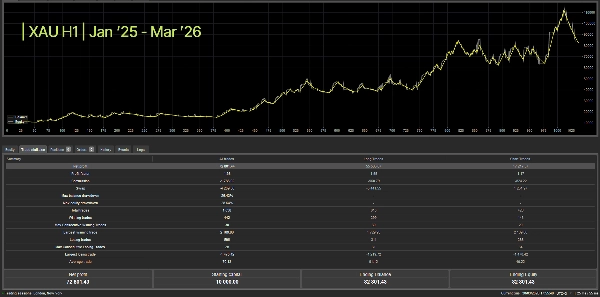
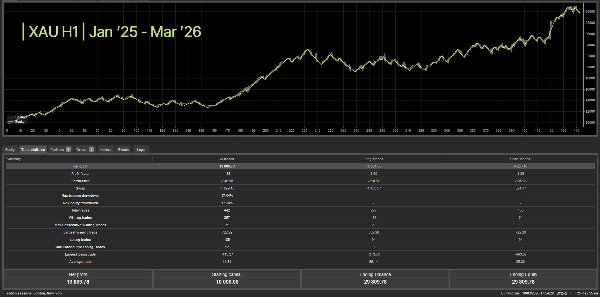
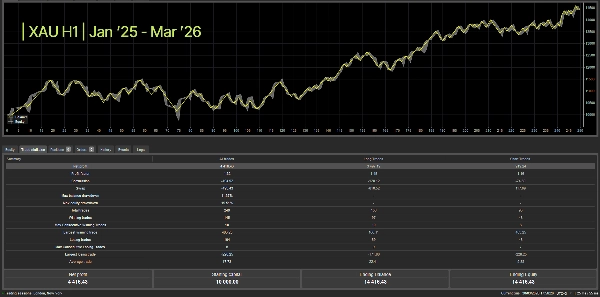
XAUの最適化パラメータのサンプル、バックテスト期間2025年1月〜2026年3月
ドローダウンフィルター有効
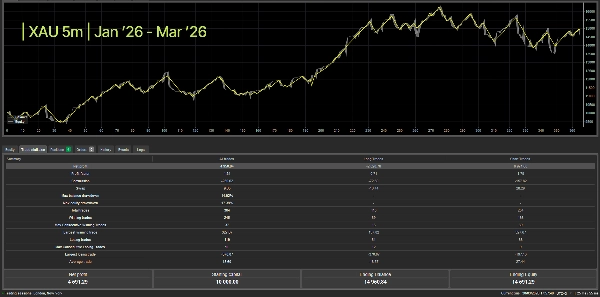
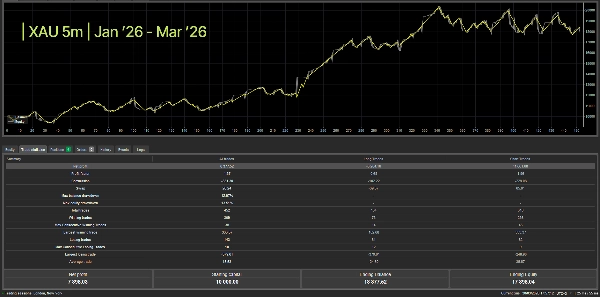
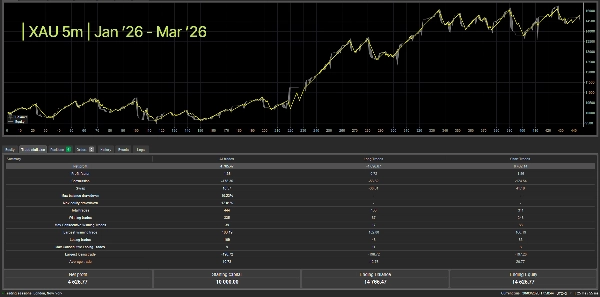
XAUの最適化パラメータのサンプル、プロップ/チャレンジアカウントのDD保護有効(!)
バックテスト期間2026年1月〜2026年3月
- このシステムの機能
このボットはZスコアレジーム検出器、振幅モメンタム(AMP)シーケンス検出器、およびバイアス方向フィルターを組み合わせており、3つすべてが一致した場合にのみ取引を開始します。すべてのレイヤーが整合していなければ取引は行われません。
また、プロップファームやファンドアカウントチャレンジ向けに設計されたリスク制限レイヤーも含まれており、主要なチャレンジ提供者と同じ計算方法で日次損失、最大損失、利益目標ルールを自動的に適用します。
- 3つの分析レイヤー
Zスコアレジームは価格が最近の統計的平均からどれだけ離れているかを測定します。偏差が設定可能な閾値を超えると、方向性のレジームが発生します — 価格が平均より大幅に上ならブル、下ならベア、それ以外はニュートラルです。レジーム内では、ボットはそれをトリガーした最初のバー(新しいシグナル)とレジームが継続しているバーを区別します — この区別が3つのシグナルタイプのうち2つを決定します。
バイアスは設定可能な遡及期間内で、最近のバーがブル色かベア色かをカウントします。バーの多い方向がバイアスとなります。これは同期ゲートとして機能し、バイアスがブルでZスコアがブルレジームのときのみロングが許可され、両方がベアのときのみショートが許可されます。意見が異なる場合は、AMPが何を示していても取引は開始されません。
AMPシーケンスは累積価格リターンを分析し、最小振幅閾値を超える持続的な方向性の動きをOLS回帰で確認します。進行中のシーケンスと終了したばかりのシーケンスを区別し、両方の状態を異なるエントリータイプに使用します。
- シグナルタイプ
3つの独立したシグナルタイプがあり、それぞれ個別に有効または無効にできます。
タイプ1 — 新しいZスコアレジームが始まり、同時にAMPシーケンスがその方向で動いているときに発火します。最も早いエントリーで、レジーム開始時に1回だけ発火し繰り返しません。
タイプ2 — 確立されたZスコアレジームとアクティブなAMPシーケンスが同じ方向を指すバーで発火します。タイプ1より頻繁で、強いトレンド中の継続やスケーリングエントリーに有用です。
タイプ3 —レジームが確立され、反対方向のAMPシーケンスが終了を確認したときに発火します。これは反転ではなく再開の取引で、レジームが方向を示し、終了した反対シーケンスがプルバックの完了を示します。
3つのタイプはロングとショートの両方に対して対称的に適用されます。
- 取引エントリーロジック
新しいバーごとにリスク制限を最初に評価し、次にバイアス/Zスコアの同期、AMP条件、セッションフィルター、ポジション数を順に確認します。シグナルは新たにトリガーされなければなりません — 前のバーでは条件が偽で、現在のバーで真である必要があります。いずれかのステップで部分的な整合があっても取引は行われません。
- ボリュームサイズ設定
固定ロットサイズはアカウントサイズに関係なくすべての取引で一定のロットを使用します — シンプルで予測可能です。
エクイティ%リスクは、完全なストップロスヒットが現在のエクイティの設定された割合に正確に相当するように各取引のサイズを調整します。アカウントが成長するとポジションサイズは大きくなり、縮小すると小さくなります。
- ドローダウンスケーリング
エクイティ%モードで利用可能です。アカウントが最高値からドローダウンすると、ロットサイズは2つの設定可能な閾値間で比例的に減少します — スケーリング開始レベルと最小係数が適用されるフロアレベルです。ボットは取引を停止せず、サイズは単にフロア(例:通常の25%)まで圧縮され、アカウントが回復すると戻ります。最高値は実現残高のみを使用し、未実現の浮動利益は含みません。
- その他の取引制御
ストップロスとテイクプロフィットはピップ単位で定義され、すべてのシグナルタイプの取引に適用されます。
複数ポジションは方向ごとに有効化でき、設定可能な上限があります。異なるシグナルタイプのポジションは独立したラベルを持ちます。
シグナルで反対方向をクローズは新しいポジションを開く前に反対方向のすべてのポジションを閉じ、常に単一方向のコミットメントを強制します。
セッションフィルターはGMTオフセット対応の設定可能な時間帯にエントリーを制限します。日付をまたぐセッションも正しく機能します。すべての分析はセッション外でも継続され、最終的な実行ステップのみが制限されます。
- リスク制限 — プロップ&ファンドアカウント対応
各制限は独立して切り替え可能です。3つすべてがエントリーロジック実行前の各クローズバーで評価され、チャートパネルにリアルタイムで更新されます。
最大日次損失(1%〜10%)は日次ドローダウンが閾値に達するとCE(S)Tカレンダー日の残りの取引をブロックします。損失予算は固定の金額で、初期アカウント残高の設定された割合として計算され、毎日の開始残高から差し引かれます。これは主要なプロップファームのルール定義と一致し、アカウントが成長しても予算は一定です。違反時にはすべてのオープンポジションがクローズされ、CE(S)Tの真夜中リセットまでエントリーがブロックされます。リセット時に新しい日の開始残高が記録され、違反フラグはクリアされます。この制限に達することは有効な最適化パスとみなされ、日が正しく制限されアカウントは失敗していません。
最大損失(5%〜50%)はアカウントレベルのストップロスです。エクイティは初期残高の設定された割合を下回ってはなりません。違反時にはすべてのポジションがクローズされ、以降のエントリーは行われません。バー内違反 — ストップロスがバー中に発動し、バー終了前にエクイティがフロアを下回る場合 — はプラットフォームのピークドローダウン数値を使用して最適化中に検出されます。記録された最大ドローダウンがこの制限に達するか超えるパスはフィットネススコア−1を受け、最適化結果から除外されます。
最大利益(5%〜20%)は完了した結果をロックします。エクイティが目標に達するとすべてのポジションがクローズされ、以降のエントリーは行われません。これはライブ、デモ、バックテスト、最適化のすべてのモードで適用され、チャレンジ目標達成後の利益の戻しを防ぎます。この制限に達することは有効な最適化パスです。
- 最適化
このボットはカスタムフィットネス関数を使用します。最大損失を超えたパスは除外されます。その他のすべてのパスは純利益でランク付けされます。つまり、最適化グリッドはチャレンジの境界内で取引されたパラメータの組み合わせのみを表示します — アカウントのストップロスを違反せずに利益を上げた構成であり、途中で日次制限に達したかどうかに関わらず有効です。
概要
The bot supports prop and funded trading accounts by enforcing risk limits such as maximum daily loss, maximum overall loss, and profit targets, aligning with major proprietary trading challenge rules. It offers flexible volume sizing options, including fixed lot size and equity percentage risk, with drawdown scaling to reduce position sizes proportionally during equity declines.
Trade entries are subject to session filters, position limits, and risk checks, with configurable stop loss and take profit levels applied uniformly. Multiple positions per direction are supported, with options to close opposite positions on new signals to maintain directional commitment.
Backtesting covers over a year with optimization excluding parameter sets breaching maximum loss limits. The bot is suitable for Forex, indices, cryptocurrencies, and symbols like XAUUSD and USDJPY, operating primarily on a 5-minute chart timeframe with market, limit, and stop order types. It targets medium trade frequency and day trading style, compatible with brokers such as Fusion Markets.
カスタマーレビュー
5 | 0 % | |
4 | 67 % | |
3 | 33 % | |
2 | 0 % | |
1 | 0 % |