

Açıklama
FİKİR
Her araç için ayrı salınım referanslarına güvenmek yerine aynı otomatik olarak algılanan salınım yapısından oluşturulmuş dört Fibonacci aracı.
SORUN
Fibonacci Düzeltme, Genişleme, Yelpaze ve Zaman Bölgeleri, fiyat hareketini incelemek için faydalı yollar olabilir.
Ancak her araç farklı manuel seçilmiş bir salınım referansı kullandığında, piyasayı farklı yorumlar şeklinde tanımlayabilirler.
Sorun birden fazla Fibonacci aracına sahip olmak değildir.
Sorun, bunların temel referans yapısını tutarlı tutmaktır.
ANA KONSEPT: SALINIM YAPISI PAYLAŞILIR. FİBONACCİ GÖRÜNÜMLERİ BAĞLI KALIR.
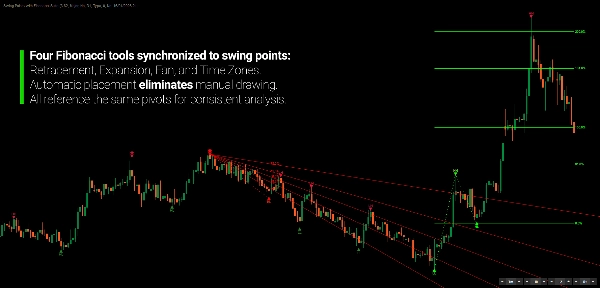
Swing Points with Fibonacci Suite, salınım yapısını bir kez algılar ve bu paylaşılan salınım haritasını dört Fibonacci aracının tümü için ortak yapısal referans olarak kullanır. Her araç hâlâ mevcut veya önceki salınım yapılarına bağımsız olarak referans verebilir.
Her araçtan şu soruyu sormak yerine:
“Hangi salınım noktalarını kullanmalıyım?”
paket önce bir salınım haritası oluşturur.
Fibonacci araçları daha sonra aynı temel fiyat geometrisini ölçmenin farklı yolları olur.
Bir salınım yapısı. Birden fazla Fibonacci görünümü.
NE YAPAR
Gösterge otomatik olarak salınım noktalarını algılar ve bunları şu referanslar olarak kullanır:
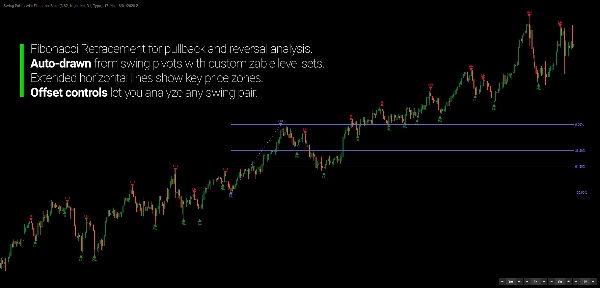
- Fibonacci Düzeltme
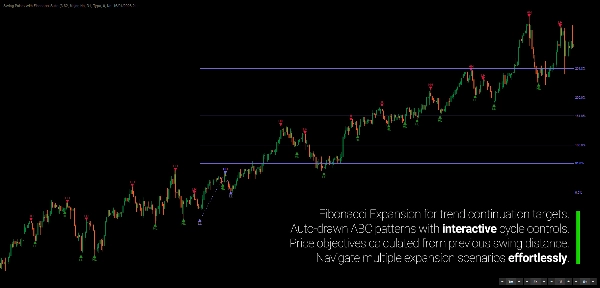
- Fibonacci Genişleme
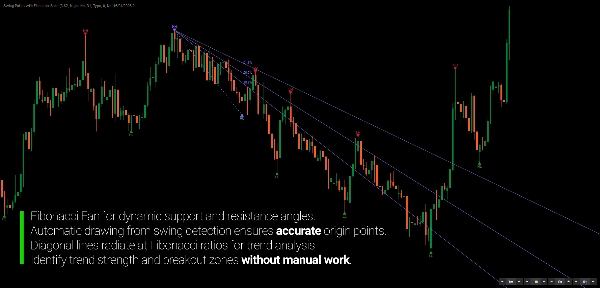
- Fibonacci Yelpaze
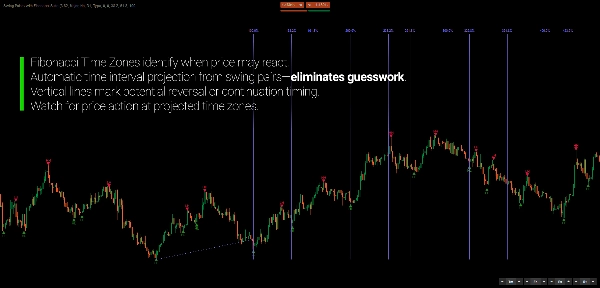
- Fibonacci Zaman Bölgeleri
Salınım yapısı geliştiğinde, Fibonacci projeksiyonları da güncellenir.
Bu, her Fibonacci aracı için ayrı salınım referanslarını manuel olarak tanımlama ve yeniden çizme ihtiyacını ortadan kaldırır.
SALINIM ÖNCE GELİR
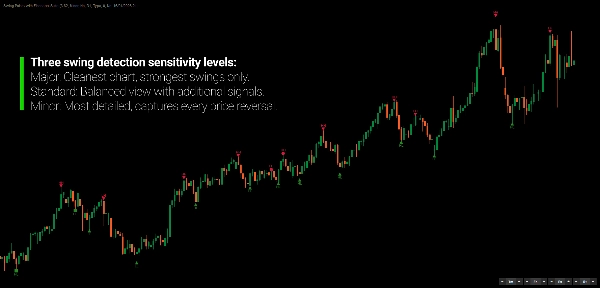
Salınım yapısı, regresyona dayalı bir salınım algılama motoru kullanılarak tespit edilir.
Üç duyarlılık seviyesi mevcuttur:
- Büyük
- Standart
- Küçük
Bu, analizde ne kadar fiyat geometrisi dahil etmek istediğinize karar vermenizi sağlar.
Amaç evrensel olarak doğru tek bir salınım yapısı tanımlamak değildir.
Araçlar için tutarlı bir referans yapısı sağlamaktır.
AYNI YAPININ DÖRT FARKLI ÖLÇÜMÜ
Her Fibonacci aracı aynı salınım haritasının farklı bir boyutuna bakar.
Düzeltme
Orantılı fiyat hareketini ölçer.
Genişleme
Üç salınım yapısından fiyat ilişkilerini projekte eder.
Yelpaze
Fiyat ile salınım yapısı arasındaki diyagonal ilişkileri inceler.
Zaman Bölgeleri
Önemli salınım noktaları arasındaki zamansal aralığı inceler.
Amaç dört ayrı sinyal değildir.
Aynı temel hareketin dört farklı ölçümüdür.
YAPI DEĞİŞEBİLİR
Bir salınım tespit edildikten sonra piyasa gelişmeye devam eder.
Yeni yüksekler veya düşükler tespit edilen salınım yapısını değiştirdiğinde, Fibonacci projeksiyonları buna göre güncellenebilir.
Bu nedenle geometri, güncel salınım haritasına bağlı kalır ve eski manuel referansa kalıcı olarak bağlı olmaz.
REFERANSI HÂLÂ KENDİNİZ KONTROL EDERSİNİZ
Otomasyon kontrolü bırakmak anlamına gelmez.
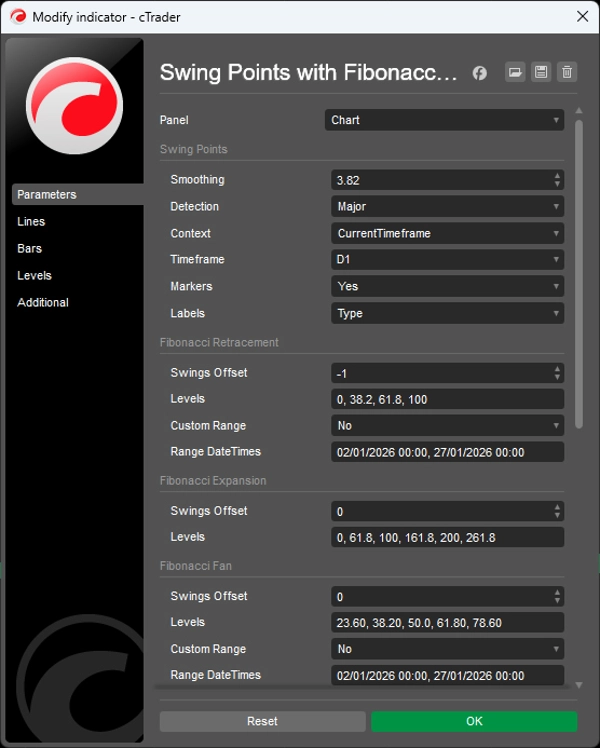
Her Fibonacci aracının bağımsız bir referans kaydırması vardır.
- 0 — mevcut yapı
- -1 — önceki yapı
- -2 — iki yapı gerisi
Bu, bir aracın mevcut salınımı incelerken diğerinin önceki bir yapıya bakmasını sağlar.
Salınım algılama paylaşılır.
Referans seçimi sizin kontrolünüzdedir.
ARALIĞI KENDİNİZ DE TANIMLAYABİLİRSİNİZ
Otomatik salınım algılama varsayılandır, ancak belirli bir tarih aralığını veya piyasa olayını incelemek istediğinizde bunu geçersiz kılabilirsiniz.
Özel Aralık Modu, Fibonacci analizinin başlangıç ve bitiş noktalarını tespit edilen salınım noktalarına güvenmek yerine tam olarak tanımlamanıza olanak tanır.
MEVCUT GRAFİĞİNİZDE DAHA YÜKSEK ZAMAN DİLİMİ FİBONACCİSİ
Salınım yapısı daha yüksek bir zaman diliminden hesaplanabilirken Fibonacci geometrisi mevcut grafikte görüntülenebilir.
Örneğin, Günlük salınımlar referans yapısını sağlayabilirken siz H1 grafikte fiyat hareketini analiz edebilirsiniz.
Bu, mevcut zaman diliminden ayrılmadan daha yüksek zaman dilimi fiyat geometrisini görünür kılar.
DAHA FAZLA DETAY İSTEDİĞİNİZDE SALINIM BİLGİSİ
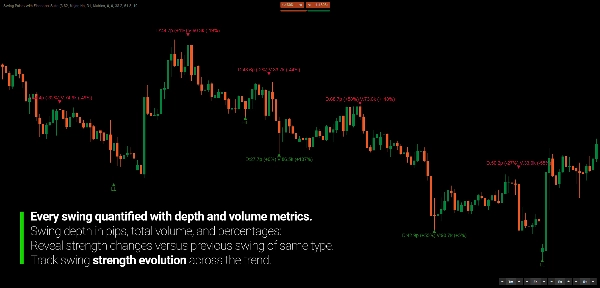
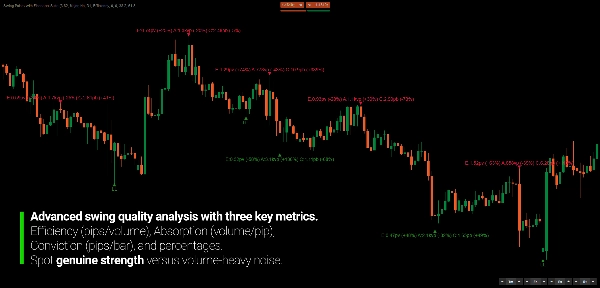
Gösterge ayrıca algılanan her salınım hakkında ek bilgiler sunabilir, bunlar arasında:
- HH / HL / LH / LL
- Salınım derinliği
- Tick hacmi
- Salınım süresi
- Verimlilik
- Absorpsiyon
- İnanç
- Aynı türdeki önceki salınımlarla karşılaştırma
Bu ölçümler, temel salınım referansını değiştirmeden geometri etrafında ek bağlam sağlar.
FİBONACCİYİ BİR SİNYAL DEĞİL, BİR HARİTA OLARAK OKUYUN
Fibonacci seviyeleri referans noktalarıdır.
Fiyatın onlara ulaştığında ne yapacağını tahmin etmezler.
Aynı seviye, kullanılan araca bağlı olarak bir düzeltme, genişleme, diyagonal ilişki veya zaman projeksiyonunun parçası olarak gözlemlenebilir.
Gösterge çizimi otomatikleştirir.
Geometrinin ne anlama geldiğine siz karar verirsiniz.
YAPISAL FİBONACCİ ANALİZİ İÇİN TASARLANDI
Zaten Fibonacci analizi kullanan ve farklı araçların aynı temel salınım yapısına bağlı kalmasını isteyen tüccarlar için tasarlanmıştır.
Şunları incelemek için kullanın:
- Düzeltmeler
- Genişlemeler
- Diyagonal ilişkiler
- Zaman projeksiyonları
- Salınımdan salınıma geometri
- Daha yüksek zaman dilimi Fibonacci bağlamı
- Birden fazla tarihsel salınım referansı
ANA ÖZELLİKLER
- Otomatik salınım algılama
- Regresyona dayalı salınım motoru
- Büyük / Standart / Küçük duyarlılık
- Tüm araçlar için birleşik salınım referansı
- Fibonacci Düzeltme
- Fibonacci Genişleme
- Fibonacci Yelpaze
- Fibonacci Zaman Bölgeleri
- Bağımsız referans kaydırmaları
- HH / HL / LH / LL sınıflandırması
- Salınım derinliği
- Tick hacmi
- Salınım süresi
- Verimlilik
- Absorpsiyon
- İnanç
- Aynı tür salınım karşılaştırması
- Daha yüksek zaman dilimi analizi
- Gerçek zamanlı yapısal güncellemeler
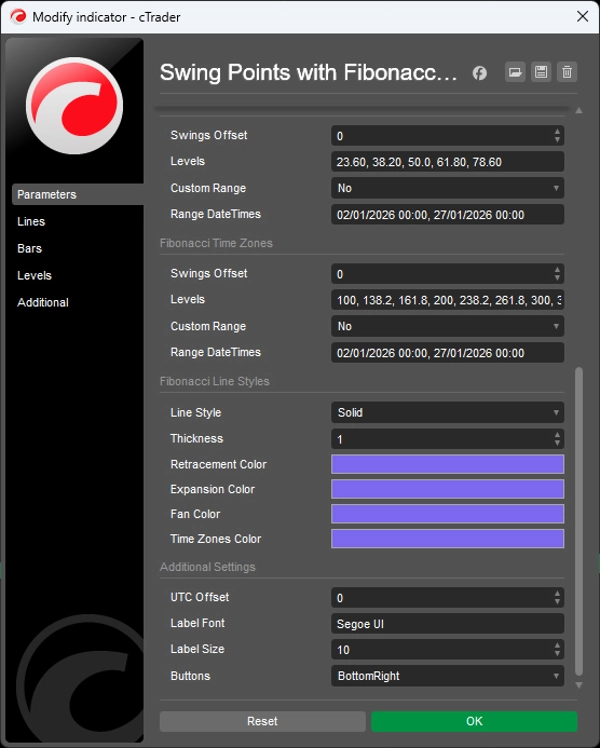
- Özelleştirilebilir Fibonacci seviyeleri ve görüntüleme
---
Ticaret risk içerir. Bu gösterge teknik analiz aracıdır ve uygun risk yönetimi ile birlikte kullanılmalıdır.
Özet
All Fibonacci tools are anchored to the same detected swings, ensuring internal consistency and eliminating subjectivity common in manual Fibonacci analysis. Users can adjust which swing pairs drive each tool independently via on-chart controls, and a custom range mode allows manual specification of analysis intervals. Multi-timeframe capability enables detection of swings on higher timeframes while displaying results on lower timeframe charts, providing broader structural context without switching views.
Additional features include swing classification (higher highs, lower lows, etc.) and metrics such as depth, volume, duration, efficiency, absorption, and conviction, supporting detailed market structure analysis. This indicator is designed for traders who use Fibonacci as a structural reference framework, particularly swing and position traders seeking comprehensive, consistent Fibonacci analysis across multiple timeframes.
Müşteri değerlendirmeleri
Tartışma
SSS








Fiyat