

Opis
POMYSŁ
Kanał Fibonacciego, który dostosowuje się do zakresu cenowego rozwijającego się od wybranego punktu początkowego, zamiast pozostawać stałym między dwoma historycznymi punktami.
PROBLEM
Tradycyjne narzędzia Fibonacciego zwykle opisują zakres za pomocą wybranych stałych punktów.
Jednak cena nie przestaje się rozwijać po wybraniu tych dwóch punktów.
Gdy cena osiąga nowy szczyt lub dołek, sam zakres ulega zmianie.
Stała mapa Fibonacciego może nadal dokładnie opisywać oryginalny zakres, ale nie reprezentuje już pełnego zakresu, który rozwinął się od wybranego punktu początkowego.
Problem nie leży w samym Fibonaccim. Problemem jest utrzymywanie stałej mapy przypiętej do zakresu, który nadal się rozwija.
GŁÓWNA KONCEPCJA: ANCHOR DEFINIUJE POCZĄTEK. ZAKRES EWOLUUJE RAZEM Z CENĄ.
Kanał Fibonacciego oddziela punkt początkowy od aktualnego zakresu.
Anchor definiuje, gdzie zaczyna się pomiar.
Cena następnie definiuje, jak daleko ten zakres się rozwinął.
Zamiast ustalać oba końce pomiaru, kanał ciągle mierzy rozwijający się zakres od wybranego anchoru.
Pytanie zmienia się z:
„Które dwa punkty powinny definiować zakres Fibonacciego?”
na:
„Od którego punktu chcę mierzyć zakres w miarę jego rozwoju?”
Anchor jest stały. Zakres ewoluuje.
CO TO ROBI
Umieść anchor na wykresie i pozwól cenie rozwijać się od tego punktu.
Wskaźnik śledzi bieżący najwyższy szczyt i najniższy dołek od anchoru do aktualnej świecy i oblicza kanał Fibonacciego na podstawie tych rozwijających się ekstremów.
Gdy cena tworzy nowy ekstremum, zakres się rozszerza, a poziomy Fibonacciego aktualizują się automatycznie.
Przesuń anchor w inne miejsce, a cały kanał przeliczy się od nowego punktu początkowego.
Efektem jest mapa Fibonacciego, która pozostaje przypięta do rozwijającego się zakresu cenowego, a nie do stałego historycznego obrazu.
JAK TO DZIAŁA
- Wybierz anchor.
- Anchor definiuje początek pomiaru.
- Cena rozwija się od tego punktu.
- Aktualny szczyt i dołek definiują rozwijający się zakres.
- Poziomy Fibonacciego są obliczane w tym zakresie.
- Nowe ekstremy aktualizują kanał.
- Przesuń anchor, gdy zmieni się odniesienie analityczne.
Anchor można przeciągać bezpośrednio na wykresie.
FIBONACCI BEZ PRZERYSOWANIA
Kanał nie jest stały po początkowym obliczeniu.
Gdy nowe szczyty lub dołki rozszerzają mierzony zakres, geometria Fibonacciego aktualizuje się automatycznie.
Pozwala to obserwować, jak ten sam ruch cenowy zmienia swoje proporcjonalne relacje w miarę rozwoju zakresu.
KIERUNEK DOSTOSOWUJE SIĘ AUTOMATYCZNIE
Kanał automatycznie zmienia orientację zgodnie z rozwijającym się ruchem.
Dla ruchu wzrostowego pomiar jest orientowany od szczytu do dołka.
Dla ruchu spadkowego jest orientowany od dołka do szczytu.
Kierunek jest określany przez porównanie aktualnej ceny zamknięcia z ceną otwarcia świecy anchoru.
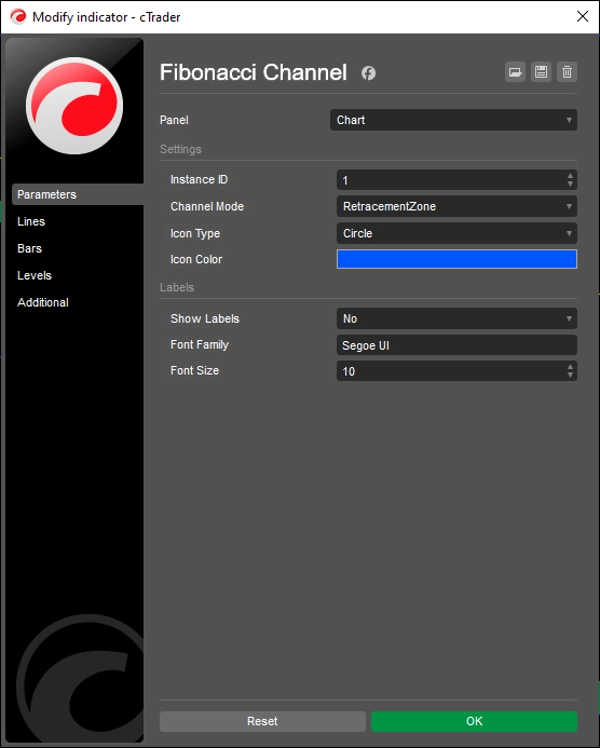
SIEDEM TRYBÓW KANAŁU
Wybierz, jak wyświetlana jest geometria Fibonacciego:
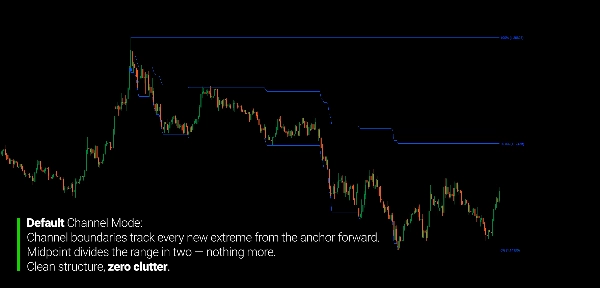
- Domyślny
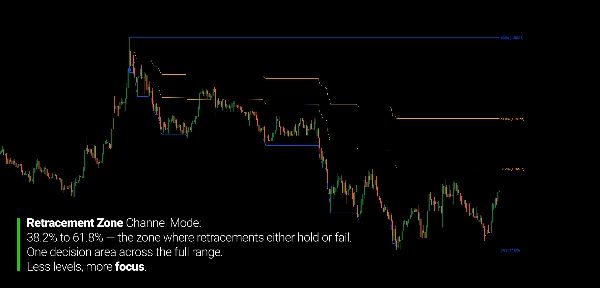
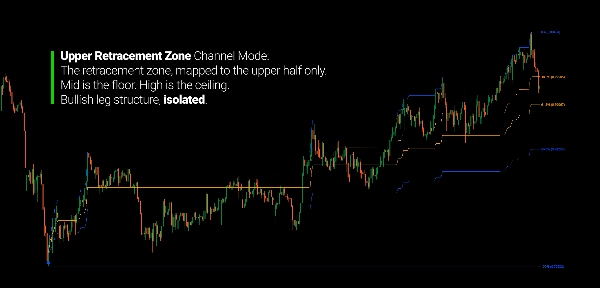
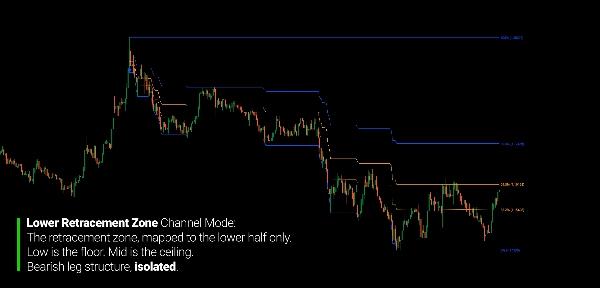
- Strefa korekty 38,2–61,8
- Górna strefa korekty
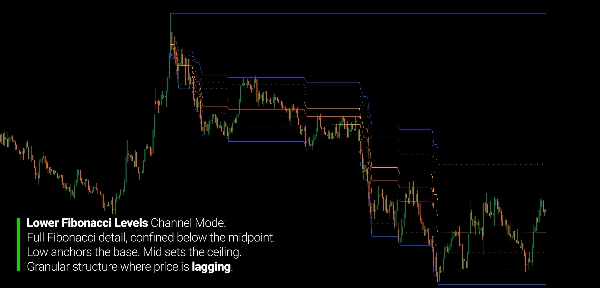
- Dolna strefa korekty
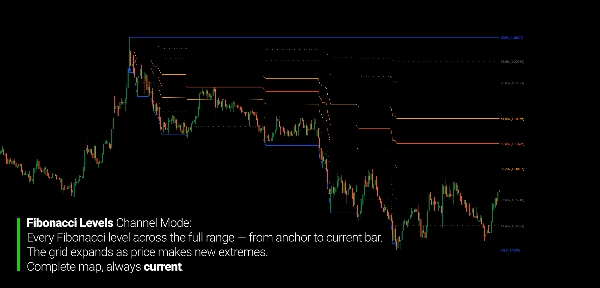
- Poziomy Fibonacciego
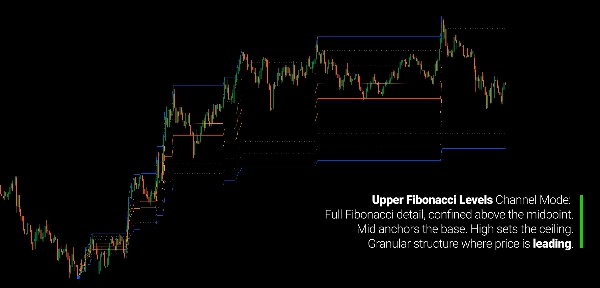
- Górne poziomy Fibonacciego
- Dolne poziomy Fibonacciego
Pozwala to oglądać ten sam podstawowy zakres jako pełny kanał, wybrane strefy lub pojedyncze poziomy Fibonacciego.
ANCHOR JEST NAJWAŻNIEJSZĄ CZĘŚCIĄ
Anchor definiuje początek pomiaru.
Może być umieszczony w:
- Początku trendu
- Głównym odwróceniu
- Otwarciu sesji
- Znaczącym rozszerzeniu
- Dowolnej innej świecy ważnej dla analizy
Wybór anchoru pozostaje pod Twoją kontrolą.
Wskaźnik obsługuje rozwijający się zakres od tego momentu.
CZYTAJ ZAKRES, NIE TYLKO POZIOMY
Stosunki Fibonacciego są pomiarami odniesienia, a nie prognozami.
Kanał uwidacznia trzy ważne elementy:
Szczyt — aktualny górny ekstremum.
Środek — środek rozwijającego się zakresu.
Dołek — aktualny dolny ekstremum.
Celem jest obserwacja, gdzie cena rozwija się w mierzonym zakresie, zamiast zakładać, że poziom Fibonacciego musi wywołać określoną reakcję.
WIELE KANAŁÓW
Na tym samym wykresie można umieścić wiele niezależnych kanałów Fibonacciego.
Pozwala to różnym anchorom reprezentować różne odniesienia analityczne i ruchy cenowe.
Każdy kanał rozwija się niezależnie od własnego punktu początkowego.
STWORZONY DO ANALIZY ZAKRESÓW
Kanał Fibonacciego jest zaprojektowany dla traderów, którzy chcą badać rozwój ceny od jasno określonego punktu początkowego.
Może być używany do badania:
- Rozwijających się trendów
- Impulsów i korekt
- Rozszerzających się zakresów cenowych
- Stref korekty
- Względnej pozycji w zakresie
- Wielu odniesień historycznych
- Kontekstu zakresu na wyższym interwale czasowym
Wskaźnik automatyzuje obliczenia.
Interpretacja pozostaje Twoja.
KLUCZOWE CECHY
- Przeciągany anchor
- Automatycznie rozwijający się zakres cenowy
- Automatyczne przeliczanie Fibonacciego
- Automatyczna orientacja kierunkowa
- Siedem trybów wyświetlania kanału
- Strefy korekty Fibonacciego
- Wiele niezależnych kanałów
- Elastyczne odniesienia historyczne
- Aktualizacje zakresu w czasie rzeczywistym
- Czysta analiza na wykresie
---
Trading wiąże się z ryzykiem. Ten wskaźnik jest narzędziem analizy technicznej i powinien być używany razem z odpowiednim zarządzaniem ryzykiem.
Podsumowanie
The indicator offers seven display modes, ranging from simple boundary lines to full Fibonacci grids applied to the entire range or selectively to the upper or lower halves. The draggable anchor icon enables real-time repositioning, instantly recalculating the channel and levels based on a structurally meaningful bar such as a trend start or key reversal.
Key features include multiple independent instances on the same chart, customizable anchor icon styles, and optional price labels with adjustable font settings. This tool serves as a structural reference framework for swing, position, and range traders who use Fibonacci levels to assess retracement zones and price structure rather than as direct trade signals. It supports visualization of market structure and proportional price zones, adapting continuously to price action from the selected anchor point.
Opinie klientów
5 | 60 % | |
4 | 40 % | |
3 | 0 % | |
2 | 0 % | |
1 | 0 % |
Dyskusja
Częste pytania





Cena
