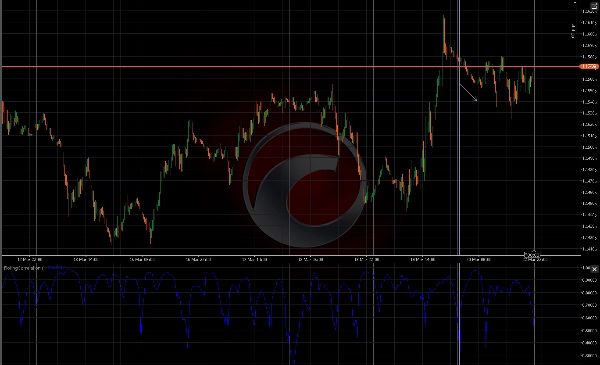
Description
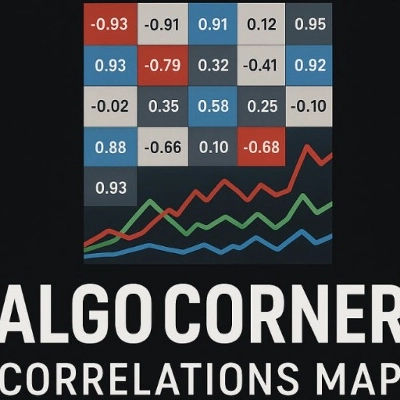
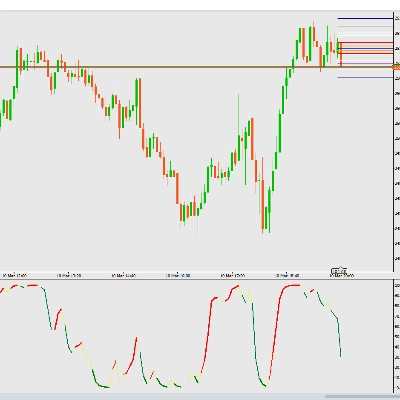
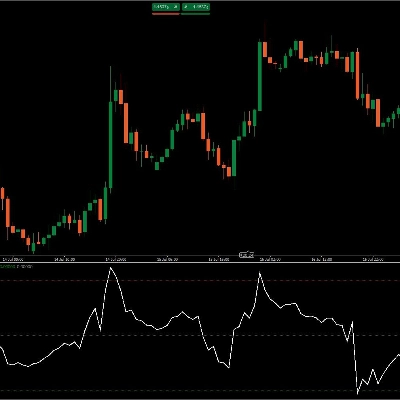
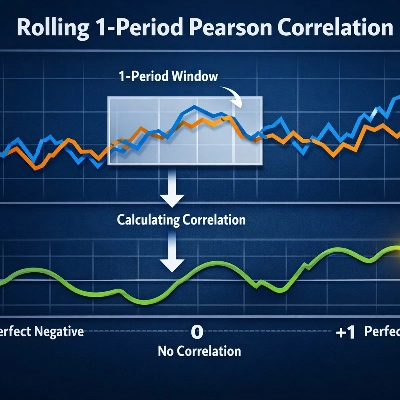
RollingCorrelation calcule la corrélation de Pearson glissante entre chaque prix de clôture et son décalage d'une barre sur une fenêtre configurable. L'indicateur renvoie des valeurs dans la plage [-1, 1], où des valeurs proches de +1 indiquent une forte autocorrélation positive (continuation de tendance), des valeurs proches de -1 indiquent une forte autocorrélation négative (comportement oscillatoire ou de retournement), et des valeurs proches de 0 indiquent peu ou pas d'autocorrélation linéaire.
Comment cela fonctionne Pour chaque barre, il calcule le coefficient de corrélation de Pearson entre la série des prix de clôture et la même série décalée d'une barre sur la fenêtre de période spécifiée (par défaut 20). L'implémentation utilise la formule standard de covariance / variance pour produire une seule valeur de corrélation par barre.
Entrées
- Période (int, par défaut 20) : nombre de barres dans la fenêtre glissante. L'indicateur nécessite au moins Période+1 barres pour calculer la première valeur.
Sortie
- Corrélation (ligne) : valeur de corrélation glissante pour chaque barre, plage [-1, 1].
Interprétation & utilisation pratique
- Près de +1 : le prix montre une forte persistance — les mouvements récents sont susceptibles de continuer (utile pour les signaux de suivi de tendance).
- Près de -1 : forte autocorrélation négative — le prix inverse souvent d'une barre à l'autre (utile pour les tactiques de retour à la moyenne).
- Près de 0 : pas de relation linéaire cohérente au décalage 1 — le mouvement des prix semble aléatoire sur la fenêtre.
- Modèles de signaux typiques : franchissements de seuil (par ex., >0,6 ou <−0,6), augmentations/diminutions soutenues de la corrélation, divergence entre le prix et la corrélation, ou filtrage des entrées provenant d'autres systèmes (exiger une corrélation > 0,5 pour les entrées de tendance, ou < −0,5 pour les configurations de retournement).
Idées de trading
- Associez-le à des filtres de volatilité (ATR) pour éviter les signaux pendant le bruit de faible volatilité.
- Utilisez-le avec des indicateurs de tendance (moyennes mobiles, MACD) pour confirmer la direction lorsque la corrélation est positive.
- Utilisez-le comme déclencheur de retour à la moyenne à court terme lorsque la corrélation est fortement négative et que le prix est à un niveau de support/résistance ou à une bande de Bollinger extrême.
- Les périodes courtes (par ex., M1–M15) et les périodes plus courtes peuvent être utilisées pour le scalping ; des périodes/échelles de temps plus longues pour la confirmation swing.
Paramètres recommandés
- La période par défaut = 20 fonctionne bien comme point de départ.
- Court terme : Période 8–14 (scalping / intrajournalier).
- Moyen terme : Période 20–50 (swing / confirmation de tendance).
- Évitez de régler la Période trop grande sur des symboles très bruyants ou trop petite sur des instruments très lents.
Limitations et notes
- Nécessite au moins Période+1 barres pour calculer les valeurs.
- Si la variance des prix à l'intérieur de la fenêtre est nulle (prix plats), le dénominateur de la corrélation peut être nul — cela peut produire des résultats NaN/indéfinis. Utilisez des valeurs de Période raisonnables et assurez-vous que l'instrument présente un mouvement de prix suffisant.
- Cet indicateur mesure uniquement la corrélation linéaire au décalage 1 ; il ne détecte pas les relations non linéaires ni les décalages multi-barres.
- Ce n'est pas un système de trading autonome — il est préférable de l'utiliser comme filtre ou outil de confirmation dans une stratégie.
Exemples suggérés à inclure dans la galerie
- EURUSD H1 avec Période=20 montrant une forte corrélation pendant une phase de tendance.
- BTCUSD 1H montrant un comportement oscillatoire et des périodes de corrélation négative.
- XAUUSD 15m montrant une utilisation pour le scalping avec une Période courte.
Résumé
For each bar, the indicator computes the Pearson correlation coefficient between the series of close prices and the same series shifted by one bar within the specified period. This calculation uses standard covariance and variance formulas to generate a single correlation value per bar.
Traders can use this indicator to identify trend strength or potential reversals, applying threshold crossings or sustained changes in correlation as signals. It is useful for trend-following strategies when correlation is positive and for mean-reversion tactics when correlation is negative. The indicator can be combined with volatility filters and other trend indicators for confirmation. It supports various markets including Forex, stocks, indices, commodities, and cryptocurrencies, and is applicable across multiple timeframes from scalping (M1–M15) to swing trading.
The indicator requires at least Period+1 bars to compute values and is intended as a supplementary tool rather than a standalone trading system.