

Описание
ИДЕЯ
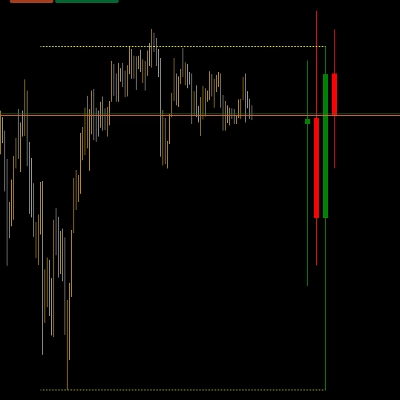
Канал Фибоначчи, который адаптируется к диапазону цен, развивающемуся от выбранной начальной точки, вместо того чтобы оставаться фиксированным между двумя историческими точками.
ПРОБЛЕМА
Традиционные инструменты Фибоначчи обычно описывают диапазон, используя выбранные фиксированные точки.
Но цена не перестаёт развиваться после выбора этих двух точек.
Когда цена достигает нового максимума или минимума, сам диапазон изменяется.
Фиксированная карта Фибоначчи может по-прежнему точно описывать исходный диапазон, но она уже не отражает полный диапазон, который развился с выбранной начальной точки.
Проблема не в самом Фибоначчи. Проблема в том, что фиксированная карта прикреплена к диапазону, который всё ещё развивается.
ОСНОВНАЯ КОНЦЕПЦИЯ: ЯКОРЬ ОПРЕДЕЛЯЕТ НАЧАЛО. ДИАПАЗОН РАЗВИВАЕТСЯ ВМЕСТЕ С ЦЕНОЙ.
Канал Фибоначчи отделяет начальную точку от текущего диапазона.
Якорь определяет, где начинается измерение.
Цена затем определяет, насколько далеко развился этот диапазон.
Вместо того чтобы фиксировать оба конца измерения, канал непрерывно измеряет развивающийся диапазон от выбранного якоря.
Вопрос меняется с:
«Какие две точки должны определять диапазон Фибоначчи?»
на:
«От какой точки я хочу измерять диапазон по мере его развития?»
Якорь фиксирован. Диапазон развивается.
ЧТО ОН ДЕЛАЕТ
Установите якорь на графике и позвольте цене развиваться от этой точки.
Индикатор отслеживает текущие максимумы и минимумы от якоря до текущего бара и вычисляет канал Фибоначчи на основе этих развивающихся экстремумов.
Когда цена создаёт новый экстремум, диапазон расширяется, и уровни Фибоначчи обновляются автоматически.
Переместите якорь в другую точку, и весь канал пересчитается от нового начала.
В результате получается карта Фибоначчи, которая остаётся привязанной к развивающемуся ценовому диапазону, а не к фиксированному историческому снимку.
КАК ЭТО РАБОТАЕТ
- Выберите якорь.
- Якорь определяет начало измерения.
- Цена развивается от этой точки.
- Текущие максимум и минимум определяют развивающийся диапазон.
- Уровни Фибоначчи рассчитываются по этому диапазону.
- Новые экстремумы обновляют канал.
- Перемещайте якорь всякий раз, когда меняется аналитическая точка отсчёта.
Якорь можно перетаскивать прямо на графике.
ФИБОНАЧЧИ БЕЗ ПЕРЕРИСОВКИ
Канал не фиксируется после первоначального расчёта.
По мере того как новые максимумы или минимумы расширяют измеряемый диапазон, геометрия Фибоначчи обновляется автоматически.
Это позволяет наблюдать, как одно и то же ценовое движение меняет свои пропорциональные отношения по мере развития диапазона.
НАПРАВЛЕНИЕ АДАПТИРУЕТСЯ АВТОМАТИЧЕСКИ
Канал автоматически меняет ориентацию в соответствии с развивающимся движением.
Для бычьего движения измерение ориентировано от максимума к минимуму.
Для медвежьего движения — от минимума к максимуму.
Направление определяется сравнением текущей цены закрытия с ценой открытия бара якоря.
СЕМЬ РЕЖИМОВ КАНАЛА
Выберите, как отображается геометрия Фибоначчи:
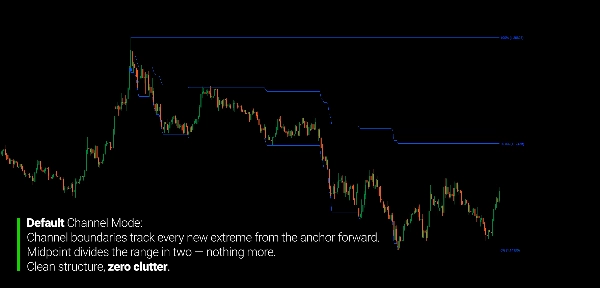
- По умолчанию
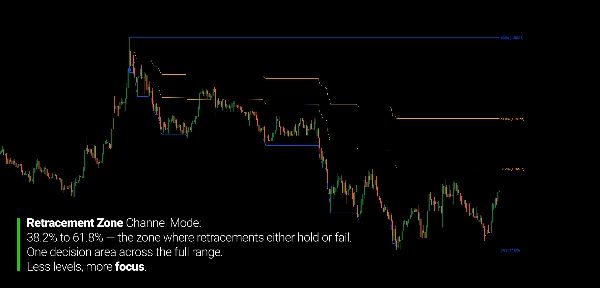
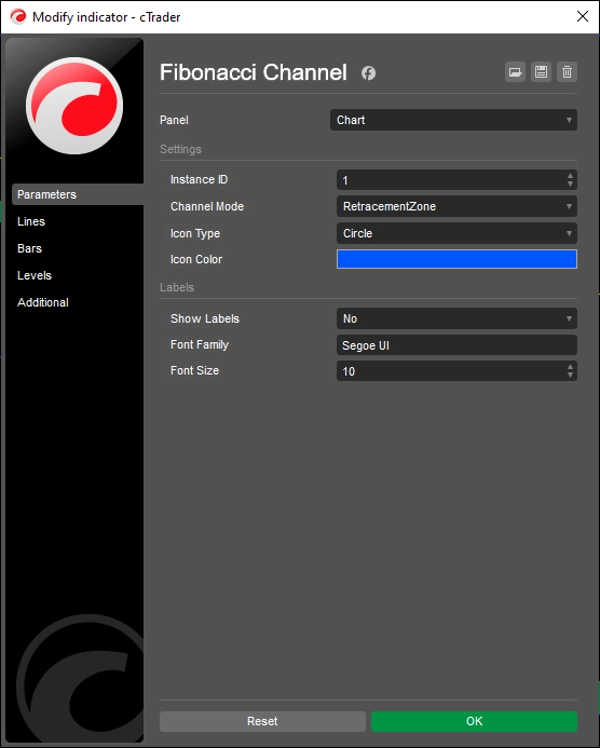
- Зона отката 38.2–61.8
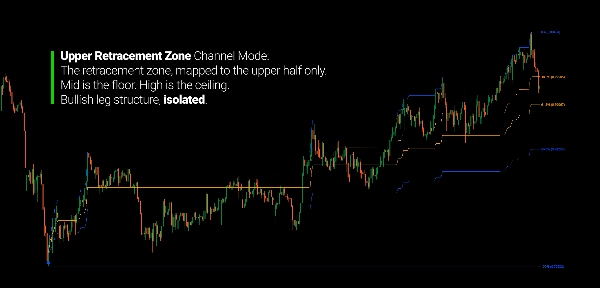
- Верхняя зона отката
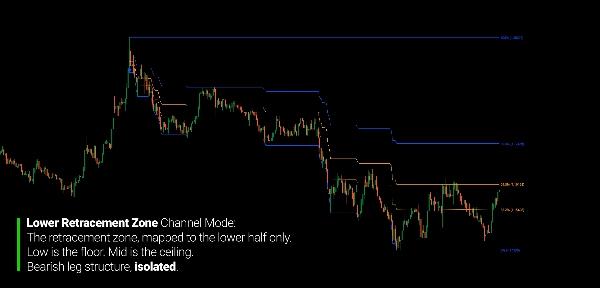
- Нижняя зона отката
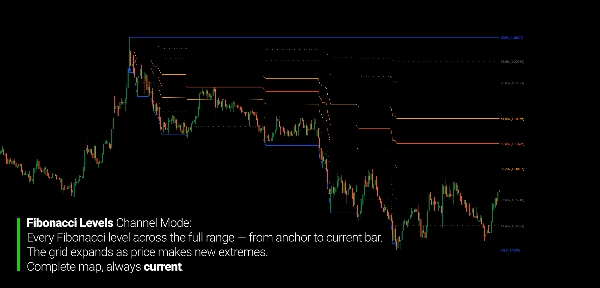
- Уровни Фибоначчи
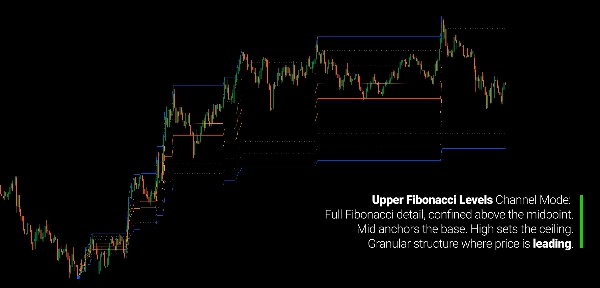
- Верхние уровни Фибоначчи
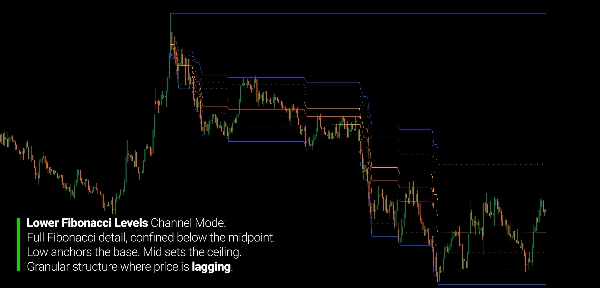
- Нижние уровни Фибоначчи
Это позволяет просматривать один и тот же базовый диапазон как полный канал, выбранные зоны или отдельные уровни Фибоначчи.
ЯКОРЬ — ЭТО ВАЖНАЯ ЧАСТЬ
Якорь определяет начало измерения.
Он может быть установлен в:
- Начало тренда
- Крупный разворот
- Открытие сессии
- Значительное расширение
- Любой другой бар, важный для анализа
Выбор якоря остаётся под вашим контролем.
Индикатор обрабатывает развивающийся диапазон оттуда.
ЧИТАЙТЕ ДИАПАЗОН, А НЕ ТОЛЬКО УРОВНИ
Отношения Фибоначчи — это ориентировочные измерения, а не прогнозы.
Канал делает видимыми три важных элемента:
Максимум — текущий верхний экстремум.
Средина — середина развивающегося диапазона.
Минимум — текущий нижний экстремум.
Цель — наблюдать, где цена развивается внутри измеряемого диапазона, а не предполагать, что уровень Фибоначчи обязательно вызовет определённую реакцию.
МНОЖЕСТВО КАНАЛОВ
На одном графике можно разместить несколько независимых каналов Фибоначчи.
Это позволяет разным якорям представлять разные аналитические точки отсчёта и ценовые движения.
Каждый канал развивается независимо от своей начальной точки.
РАЗРАБОТАН ДЛЯ АНАЛИЗА ДИАПАЗОНОВ
Канал Фибоначчи предназначен для трейдеров, которые хотят изучать развитие цены от чётко определённой начальной точки.
Его можно использовать для изучения:
- Развивающихся трендов
- Импульсов и коррекций
- Расширяющихся ценовых диапазонов
- Зон отката
- Относительного положения внутри диапазона
- Нескольких исторических точек отсчёта
- Контекста диапазона на более высоких таймфреймах
Индикатор автоматизирует расчёт.
Интерпретация остаётся за вами.
КЛЮЧЕВЫЕ ОСОБЕННОСТИ
- Перетаскиваемый якорь
- Автоматически развивающийся ценовой диапазон
- Автоматический пересчёт Фибоначчи
- Автоматическая ориентация направления
- Семь режимов отображения канала
- Зоны отката Фибоначчи
- Несколько независимых каналов
- Гибкие исторические точки отсчёта
- Обновления диапазона в реальном времени
- Чистый анализ на графике
---
Торговля связана с риском. Этот индикатор является инструментом технического анализа и должен использоваться вместе с соответствующим управлением рисками.
Сводка
The indicator offers seven display modes, ranging from simple boundary lines to full Fibonacci grids applied to the entire range or selectively to the upper or lower halves. The draggable anchor icon enables real-time repositioning, instantly recalculating the channel and levels based on a structurally meaningful bar such as a trend start or key reversal.
Key features include multiple independent instances on the same chart, customizable anchor icon styles, and optional price labels with adjustable font settings. This tool serves as a structural reference framework for swing, position, and range traders who use Fibonacci levels to assess retracement zones and price structure rather than as direct trade signals. It supports visualization of market structure and proportional price zones, adapting continuously to price action from the selected anchor point.
Отзывы покупателей
5 | 60 % | |
4 | 40 % | |
3 | 0 % | |
2 | 0 % | |
1 | 0 % |
Обсуждение
Частые вопросы









Цена
