

Weis Waves
Indikator
110 downloads
Version 1.0, May 2026
Windows, Mac
5.0
Bewertungen: 1
Seit 24/03/2026
13
Verkäufe
110
Kostenlose Installationen
Beschreibung
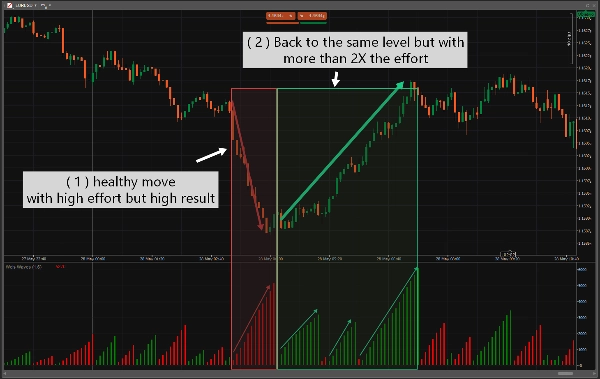
Der Weis Wave Indikator basiert auf der Arbeit von David Weis, einem Techniker, der Wyckoff-Analyse mit moderner Charttechnik kombinierte. Er nutzte diese Volumenwellen, um zu erkennen, wann kluge Investoren aktiv teilnehmen oder sich zurückziehen, gemäß dem Wyckoff-Prinzip, dass das Volumen die Kursbewegung bestätigt.
Wann man ihn verwendet:
[ Trendbestätigung ]
[ Momentumerschöpfung ]
[ Divergenz ][ Absorption]
Zusammenfassung
KI-Zusammenfassung
The Weis Waves indicator is based on the original work of David Weis, who integrated Wyckoff analysis with modern charting techniques. It analyzes volume waves to identify when informed market participants ("smart money") are actively involved or withdrawing, following the Wyckoff principle that volume confirms price movements. This indicator is used primarily for trend confirmation, detecting momentum exhaustion, spotting divergences, and identifying absorption phases in the market. It processes bar data with volume information and provides visualizations, filters, and trading signals related to trend strength, reversals, and divergences. The indicator is categorized under volume-based tools and supports analysis of supply and demand zones, imbalances, and on-balance volume concepts.
Indikatorprofil
Indikatorkategorie
Volumen
Ausgabetyp
Visualisierung
Filter
Signale
Datenanforderungen
Nur Balken
Volumen
Unterstützte Signale
Wendepunkt
Trendstärke
Abweichung
Kundenbewertungen
5.0
Bewertungen: 1
5 | 100 % | |
4 | 0 % | |
3 | 0 % | |
2 | 0 % | |
1 | 0 % |
Kundenbewertungen
July 19, 2026
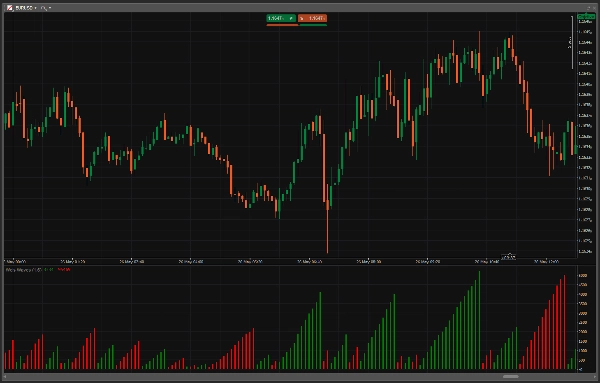
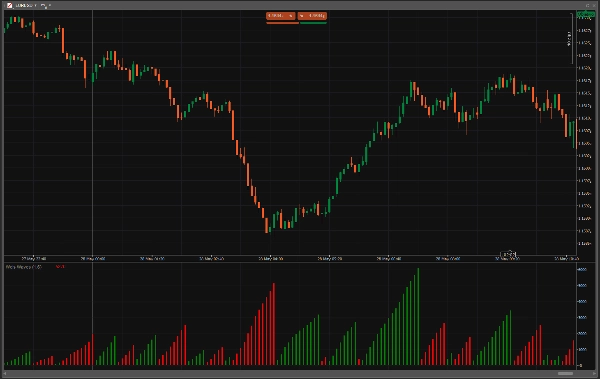
Weis Waves is a solid, classic implementation of David Weis's volume wave concept for cTrader. It perfectly aggregates tick volume into directional waves, making Wyckoff principles like effort vs. result and momentum exhaustion visually obvious. The color-coded up/down volume separation is clean, and the indicator runs flawlessly across Forex and Gold. While it lacks built-in alerts for volume spikes, it’s an essential, lightweight tool for traders reading market context through volume.
Diskussion
Häufig gestellte Fragen (FAQ)
Imbalance
OBV
Volume
Supply & Demand
Über den cTrader Store verfügbare Produkte, einschließlich Handelsbots, Indikatoren und Plugins, werden von externen Entwicklern bereitgestellt und nur zu Informations- und technischen Zugriffszwecken verfügbar gemacht. cTrader Store ist kein Broker und erbringt keine Anlageberatung, persönlichen Empfehlungen oder eine Garantie für zukünftige Performance.






Preis
Seit 24/03/2026
13
Verkäufe
110
Kostenlose Installationen