


الوصف
الفكرة
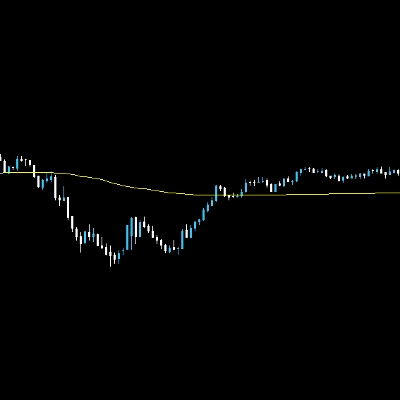
متوسط متحرك يتكيف مع تطور الاتجاه بدلاً من إجبار الاتجاه على فترة ثابتة.
المشكلة
معظم المتوسطات المتحركة تتطلب فترة نظر ثابتة.
لكن الاتجاهات لا تتطور في مدد ثابتة.
الفترة القصيرة تستجيب بسرعة، لكنها قد تتأثر بسهولة بالحركات قصيرة الأجل.
الفترة الطويلة تُخفف المزيد من الضوضاء، لكنها قد تتأخر بشكل كبير عندما يتحرك السعر بقوة.
المشكلة ليست في اختيار الفترة "الصحيحة".
المشكلة هي أن الفترة نفسها ثابتة بينما الاتجاه يتطور باستمرار.
المفهوم الأساسي: الاتجاه يحدد الفترة. المتوسط المتحرك يتكيف معها.
المتوسطات المتحركة التقليدية تجعل الفترة المرجع الأساسي.
متوسط الحركة الفائق الاتجاه يجعل هيكل الاتجاه المرجع الأساسي.
بدلاً من السؤال:
"أي فترة ثابتة للمتوسط المتحرك يجب أن أستخدم؟"
يسأل المؤشر:
"كيف تطور الاتجاه الحالي حتى الآن؟"
الاتجاه يحدد من أين يبدأ المتوسط المتحرك التكيفي وكيف يتطور طوله الفعّال مع مرور الوقت.
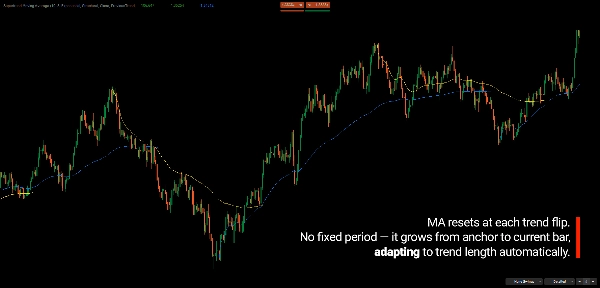
عندما يبدأ اتجاه جديد، يتم تثبيت المتوسط المتحرك عند الحد الهيكلي للاتجاه السابق ويتطور للأمام من تلك النقطة. مع استمرار الاتجاه الجديد، ينمو الطول الفعّال مع عدد الشموع التي تطورت من نقطة التثبيت.
الاتجاه يحدد الهيكل. المتوسط المتحرك يتكيف معه.
ما يفعله
المؤشر يتكيف ديناميكياً مع طول المتوسط المتحرك الفعّال حسب تطور الاتجاه الحالي.
يبدأ الاتجاه المكتشف حديثاً بطول فعّال أقصر، مما يسمح للمتوسط المتحرك بالاستجابة بسرعة أكبر.
مع استمرار الاتجاه، يصبح الطول الفعّال أطول، مما يسمح للمتوسط المتحرك بأن يصبح أكثر سلاسة تدريجياً.
المتوسط المتحرك لا يُحسب ببساطة من عدد ثابت من الشموع الأخيرة. حسابه يتطور من نقطة تثبيت هيكلية تم تأسيسها بواسطة الاتجاه السابق.
عندما يتغير الاتجاه، يتم إعادة تعيين المرجع الهيكلي ويبدأ قياس تكيفي جديد.
هذا يخلق متوسطاً متحركاً يغير سلوكه حسب ما فعله الاتجاه بالفعل.
لا يحاول التنبؤ بمدة استمرار الاتجاه التالي.
يتكيف مع المدة والهيكل التي تطورت بالفعل.
كيف يعمل
- يحدد Supertrend الاتجاه الحالي وانتقاله الهيكلي.
- يحدد المؤشر الإغلاق الأقصى للاتجاه السابق.
- يصبح هذا الحد الهيكلي نقطة التثبيت للمتوسط المتحرك التكيفي.
- مع تطور الاتجاه الجديد، يحدد عدد الشموع من نقطة التثبيت طول المتوسط المتحرك الفعّال.
- يعيد المتوسط المتحرك الحساب باستخدام هذا الطول المتطور.
- عندما يتغير الاتجاه، يتم إعادة تعيين المرجع الهيكلي ويبدأ العملية من جديد.
يمكن دمج الطول التكيفي مع طرق حساب مختلفة للمتوسط المتحرك.
رؤيتان للاتجاه
يوفر المؤشر مرجعين لـ Supertrend:
Supertrend الهيكلي
مرجع اتجاه أوسع مصمم لالتقاط التغيرات الهيكلية الأكبر مع تقليل الحساسية لتقلبات السعر قصيرة الأجل.
Supertrend الأصلي
مرجع أكثر تفاعلية يستجيب بسرعة أكبر لحركة السعر ويمكن أن يكشف عن تحولات الزخم قصيرة الأجل ضمن الاتجاه الأوسع.
الرؤيتان ليستا إشارات تلقائية.
علاقتهما توفر سياقاً إضافياً حول كيفية تطور الاتجاه.
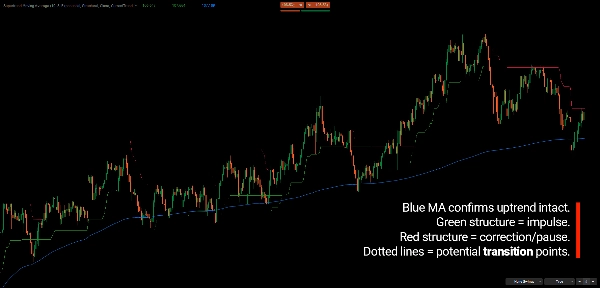
عندما يتحرك المرجعان معاً، يوفران رؤية أوضح للتوافق الاتجاهي.
عندما يتباعدان، يمكن أن يوفر الفرق سياقاً للتصحيحات أو الانتقالات أو الحركات قصيرة الأجل ضمن الاتجاه الأوسع.
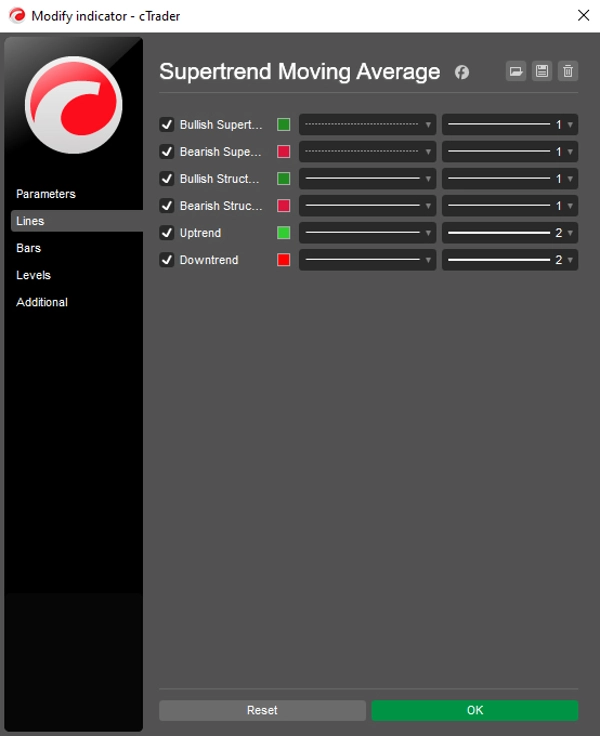
يتم رسم Supertrend الأصلي (النقطي) فقط على الشموع التي يختلف فيها عن الهيكلي، لذا يبرز التباعد. يمكن عرض كل رؤية أو إخفاؤها بشكل مستقل.
سياق متعدد الأطر الزمنية
الاتجاه المستخدم للتحكم في المتوسط المتحرك لا يجب أن يأتي من إطار الزمن الحالي للرسم البياني.
على سبيل المثال، يمكن لاتجاه يومي أن يتحكم في متوسط متحرك تكيفي معروض على رسم بياني زمني ساعة واحدة.
هذا يسمح لاتجاه الإطار الزمني الأعلى بتحديد سلوك القياس بينما يوفر الإطار الزمني الأدنى رؤية أكثر تفصيلاً لتطور السعر.
يغطي متعدد الأطر الزمنية (MTF) ثلاثة مخرجات، كل منها قابل للتبديل بشكل مستقل:
- المتوسط المتحرك – المتوسط المتحرك التكيفي مدفوع باتجاه الإطار الزمني الأعلى.
- Supertrend – يتم حساب Supertrend الهيكلي والأصلي على شموع الإطار الزمني الأعلى ويتم رسمهما على الرسم البياني. يتم تحديثهما مع كل نبضة بينما لا تزال شمعة الإطار الزمني الأعلى تتشكل.
- نقاط التأرجح – يتم حساب التأرجحات والدعم/المقاومة التلقائي على شموع الإطار الزمني الأعلى. العلامات توضع عند الحد الأقصى للسعر داخل شمعة الإطار الزمني الأعلى، ويتم تقييم المسح، الانعكاس، والإبطال عند إغلاق شمعة الإطار الزمني الأعلى. لا تزال تسميات الدعم/المقاومة ونهايات الخطوط تحدث مع كل شمعة على الرسم البياني.
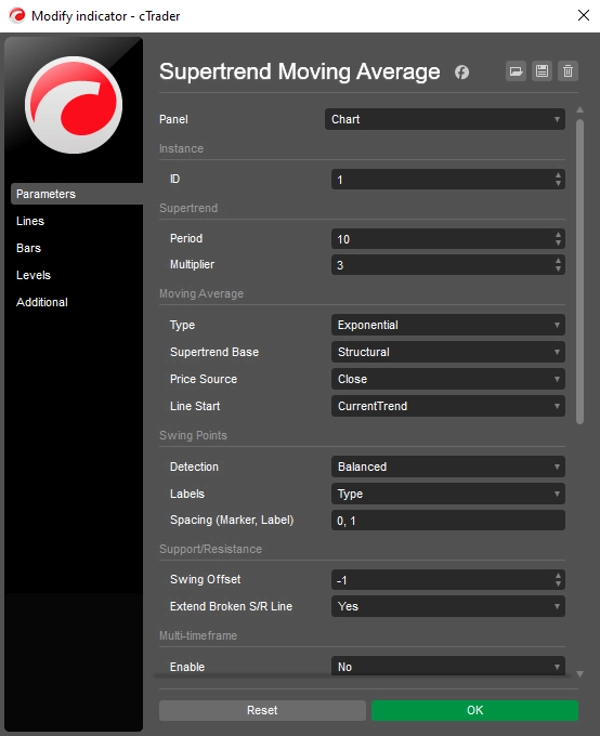
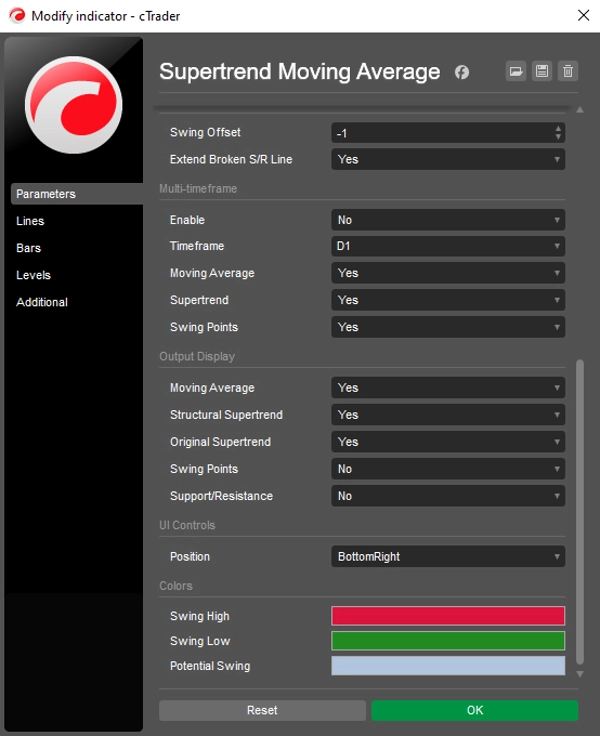
مجموعة معلمات متعدد الأطر الزمنية تحتوي على تمكين، الإطار الزمني، ومفتاح تبديل لكل من المتوسط المتحرك، Supertrend، ونقاط التأرجح. يكون MTF مغلقاً بشكل افتراضي؛ بمجرد التمكين، تستخدم المخرجات الثلاثة الإطار الزمني المحدد ما لم تقم بإيقاف تشغيلها بشكل فردي.
يمكن أن يكون إطار MTF أعلى من، مساويًا، أو أقل من إطار الرسم البياني. عندما يكون أقل من أو مساويًا لإطار الرسم البياني، يستخدم كل شمعة في الرسم البياني آخر شمعة من الإطار الزمني الأعلى بداخلها (القيمة عند إغلاق شمعة الرسم البياني)، وتقع علامات التأرجح على شمعة الرسم البياني التي تحتوي على افتتاح شمعة الإطار الزمني الأعلى.
ملاحظة: يقوم المتوسط المتحرك للإطار الزمني الأعلى بتقييم كل شمعة عند ظهورها لأول مرة، لذا لا يتغير أثناء تشكيل تلك الشمعة.
تحميل التاريخ التلقائي
يحتاج المتوسط المتحرك للإطار الزمني الأعلى إلى تاريخ كافٍ لإعادة بناء اتجاه الإطار الزمني الأعلى. عندما يحتوي الرسم البياني على عدد قليل جدًا من الشموع، يطلب المؤشر المزيد من التاريخ بنفسه ويكرر الطلب حتى يتم تلبية المتطلبات.
يظهر تحذير على الرسم البياني ("تحميل N شمعة إضافية") فقط كملاذ أخير: عندما لا يتوفر المزيد من التاريخ، أو لم يضف الطلب الأخير شيئًا، أو انتهى وقت الطلب، أو كانت المتطلبات كبيرة جدًا.
سياق التأرجح الاختياري
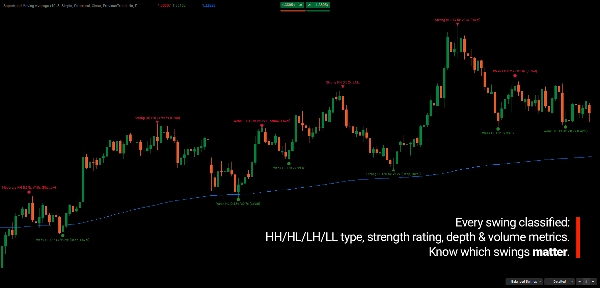
يمكن للمؤشر أيضًا عرض معلومات التأرجح مثل:
- HH / HL / LH / LL
- قوة التأرجح
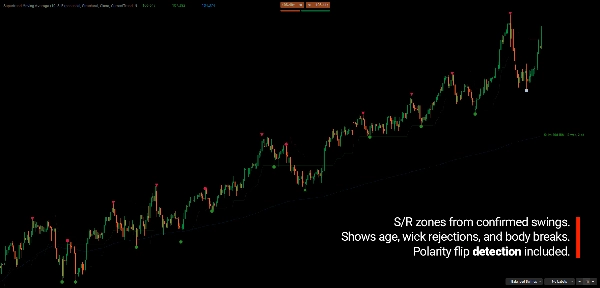
- مناطق التأرجح والدعم/المقاومة التلقائي
- قطبية التأرجح
- علاقات التأرجح
توفر هذه معلومات إضافية عن هندسة السعر حول المتوسط المتحرك التكيفي دون تغيير حسابه الأساسي.
يمكن تبديل نقاط التأرجح والدعم/المقاومة بشكل مستقل (الدعم/المقاومة يتطلب نقاط التأرجح). يتم الاحتفاظ بخيار الدعم/المقاومة الخاص بك أثناء إيقاف نقاط التأرجح ويُطبق مرة أخرى عند إعادة تشغيلها.
عرض المخرجات
اختر بالضبط ما يتم رسمه: المتوسط المتحرك، Supertrend الهيكلي، Supertrend الأصلي، التأرجحات، والدعم/المقاومة. بشكل افتراضي المتوسط المتحرك، الهيكلي، والأصلي مفعلة؛ التأرجحات والدعم/المقاومة معطلة.
- إخفاء مخرج يؤدي أيضًا إلى تخطي حسابه. مع إيقاف المتوسط المتحرك، يتم تخطي كل عمل المتوسط المتحرك (الأصلي والإطار الزمني الأعلى، بما في ذلك تحميل شموع الإطار الزمني الأعلى)؛ مع إيقاف التأرجحات، يتم تخطي الكشف عن التأرجح والرسم.
- يظهر Supertrend الأصلي المنقط فقط حيث يختلف عن الهيكلي، حتى عندما يكون الخط الهيكلي مخفيًا.
- يتراوح إزاحة التأرجح من -100 إلى -1 (الافتراضي -1). يتم التحكم في إظهار أو إخفاء الدعم/المقاومة بواسطة مفتاح الدعم/المقاومة.
عناصر التحكم على الرسم البياني
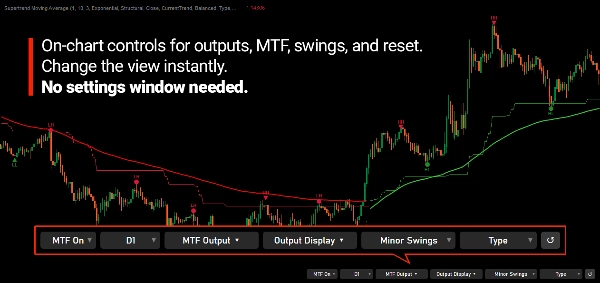
غيّر ما تراه دون إعادة فتح مربع الحوار الخاص بالمعلمات:
- عرض المخرجات – مربعات اختيار للمتوسط المتحرك، Supertrend الهيكلي، Supertrend الأصلي، التأرجحات، والدعم/المقاومة. يبقى على الأقل واحد من المتوسط المتحرك، Supertrend الهيكلي، Supertrend الأصلي، أو التأرجحات محددًا.
- MTF – تشغيل/إيقاف، إطار الزمن الأعلى، ومخرجات MTF (المتوسط المتحرك، Supertrend، التأرجحات؛ يبقى على الأقل واحد محددًا). التغييرات تطبق فورًا، دون إعادة تحميل المؤشر: يتم إعادة بناء المتوسط المتحرك، Supertrend، والتأرجحات حسب الحاجة.
- عناصر تحكم التأرجح – وضع الكشف، عرض التسميات، وإزاحة الدعم/المقاومة. عندما تكون التأرجحات معطلة، يتم إخفاؤها ويتم إزالة كائنات التأرجح والدعم/المقاومة من الرسم البياني؛ تظهر أزرار الإزاحة فقط عندما يكون كل من التأرجحات والدعم/المقاومة مفعلاً.
- زر إعادة التعيين (↺) – يعيد كل عنصر تحكم، بما في ذلك MTF وعناصر تحكم التأرجح، إلى قيم مربع الحوار الخاصة بالمعلمات.
- الإعدادات المحفوظة – يتم حفظ الخيارات على الرسم البياني (بما في ذلك MTF وعناصر تحكم التأرجح) لكل رمز ومعرف مثيل ويتم استعادتها في المرة القادمة. إذا قمت بتغيير معلمة في مربع الحوار، فإن تلك القيمة لها الأولوية على القيمة المحفوظة.
- معرف المثيل – استخدم معرفات مختلفة للحفاظ على إعدادات منفصلة لعدة مثيلات على نفس الرمز.
- التبديل – تشغيل المتوسط المتحرك يعيد بنائه (الأصلي والإطار الزمني الأعلى) وإيقافه يمسحه. تبديل أي من Supertrend فقط يحدث تحديثًا لمخرجاته الخاصة.
ما يمكنك ملاحظته
تم تصميم المؤشر لجعل عدة أشياء مرئية:
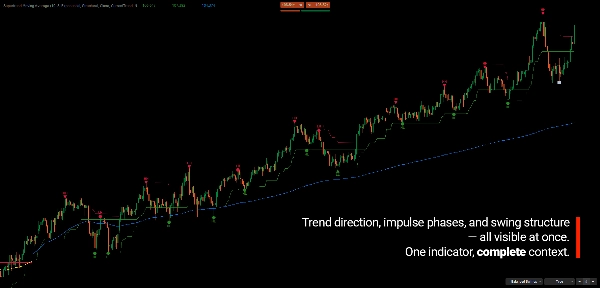
- اتجاه الاتجاه الحالي
- مدة الاتجاه
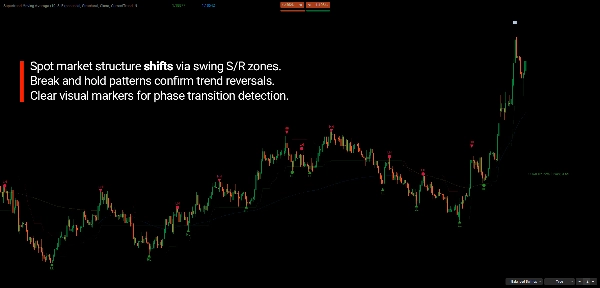
- التغيرات في هيكل الاتجاه
- التراجعات والتصحيحات
- الاستمرار بعد التصحيحات
- سياق الإطار الزمني الأعلى
- التغيرات في سلوك السعر حول المتوسط المتحرك التكيفي
المتوسط المتحرك هو أداة قياس، وليس نظام شراء/بيع مستقل.
مصمم للقياس التكيفي
الهدف ليس إيجاد فترة متوسط متحرك مثالية واحدة.
بل إزالة الافتراض بأن فترة ثابتة واحدة يجب أن تظل مناسبة طوال عمر الاتجاه.
الاتجاه الجديد والاتجاه الناضج هما مراحل مختلفة من نفس الحركة.
المتوسط المتحرك يتكيف مع ذلك التطور بدلاً من معاملة المرحلتين بنفس الطريقة.
الهدف ليس تحسين فترة المتوسط المتحرك الثابتة باستمرار. تتطور الفترة تلقائيًا من هيكل الاتجاه وحركة السعر التي حدثت بالفعل.
الميزات الرئيسية
- متوسط متحرك تكيفي قائم على هيكل الاتجاه
- نقطة تثبيت هيكلية تعتمد على إغلاق الحد الأقصى للاتجاه السابق
- يتطور طول المتوسط المتحرك الفعّال مع الاتجاه الجديد
- إعادة تعيين هيكلية تلقائية عند تغير الاتجاه
- طرق حساب متعددة للمتوسط المتحرك
- رؤية Supertrend الهيكلية
- رؤية Supertrend الأصلية
- السياق بين رؤى الاتجاه الهيكلية والتفاعلية
- معلومات تأرجح اختيارية ودعم/مقاومة تلقائي
- تصنيف HH / HL / LH / LL
- قوة التأرجح والمناطق
- متعدد الأطر الزمنية للمتوسط المتحرك، Supertrend، ونقاط التأرجح، كل منها مستقل
- يمكن أن يكون الإطار الزمني الأعلى أقل من، مساويًا، أو أعلى من إطار الرسم البياني
- Supertrend حي للإطار الزمني الأعلى أثناء تشكيل شمعة الإطار الزمني الأعلى
- عناصر تحكم عرض المخرجات وMTF مباشرة على الرسم البياني
- زر إعادة التعيين، الإعدادات المحفوظة، ومعرف المثيل
- تحميل تلقائي لتاريخ الرسم البياني للمتوسط المتحرك للإطار الزمني الأعلى
- عرض قابل للتخصيص
من الجيد معرفته
- يقيم المتوسط المتحرك للإطار الزمني الأعلى كل شمعة مرة واحدة عند ظهورها لأول مرة، لذلك لا يتغير أثناء تشكيل تلك الشمعة. بينما يتم تحديث Supertrend للإطار الزمني الأعلى بشكل حي.
- ينطبق تحذير "تحميل N شمعة إضافية" والتحميل التلقائي للتاريخ على المتوسط المتحرك للإطار الزمني الأعلى فقط.
- تباعد التأرجح هو قيمة ثابتة بالنقاط، لذا قد تبدو إزاحة العلامة صغيرة على تأرجحات الإطار الزمني الأعلى.
- يتم تشغيل إعادة حساب التأرجح على خيط واجهة المستخدم، لذا قد يتجمد الرسم البياني لفترة وجيزة عند إعادة حساب التأرجحات في حال وجود تاريخ طويل جدًا.
- التأرجحات المقتطعة من تاريخ 100 تأرجح تحتفظ بكائنات الرسم البياني الخاصة بها.
---
هذا المؤشر هو أداة لتحليل السوق ولا يقدم نصائح مالية أو يضمن نتائج التداول.
الملخص
The indicator integrates dual Supertrend analyses: a Structural Supertrend that identifies major trend direction by filtering out noise and confirming genuine directional changes, and the Original Supertrend that highlights momentum shifts within the trend. Comparing these two provides context for distinguishing strong trend continuation from corrective movements.
Key features include:
- Adaptive anchor-based moving averages with options for Simple, Exponential, or Arnaud Legoux (ALMA) types.
- Multi-timeframe capability to apply higher timeframe Supertrend context on lower timeframe charts.
- Integrated swing detection with configurable modes and strength classification.
- Color-coded trend lines and swing markers for clear visual interpretation.
This tool is suited for trend and swing traders, multi-timeframe analysts, and discretionary traders seeking a structural framework to track trend development and market rhythm objectively. It emphasizes market structure and context over fixed signals, supporting clearer interpretation of price behavior.
تقييمات العملاء
5 | 67 % | |
4 | 33 % | |
3 | 0 % | |
2 | 0 % | |
1 | 0 % |
مناقشة
الأسئلة الشائعة













السعر