Açıklama
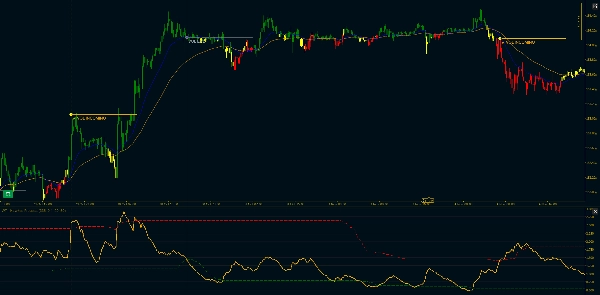
Volatilite Kırılma Göstergesi - Hawkes Volatilite Motoru
Bu gösterge, anlık işlem hareketleri için değil, bağlam sağlamak içindir. Volatilite bileşeni, piyasa koşullarının ne zaman değiştiğini anlamanıza yardımcı olur - düşük volatilite dönemleri genellikle büyük hareketlerden önce gelir ve yüksek volatilite dönemleri sonunda tükenir. EWMA bileşeni, gelişen trendle sizi yönlendirir ve fiyatın trendden ne zaman uzaklaştığını vurgular.
Bu iki perspektifi birleştirin - volatilite rejimi ve trend bağlamı - kendi işlem metodolojiniz ve yargınızla. Gösterge size ortamı gösterir - içinde ne yapacağınıza siz karar verirsiniz.
Sürüm 2.0
Gelecek güncellemeler için açık
-----------------------------------------------------------------------------------------------------------------------------------------------------------------------
Genel Bakış
-----------------------------------------------------------------------------------------------------------------------------------------------------------------------
Bu gösterge, işlemcilere volatilite rejimlerini ve trend koşullarını aynı anda tanımlamada yardımcı olmak için iki farklı bileşeni birleştirir.
İlk bileşen, piyasa volatilitesindeki değişiklikleri tespit etmek için bir Hawkes Süreci kullanır. Geleneksel volatilite göstergelerinin aksine, yön tahmini yapmaz—sadece piyasanın sessiz sıkışmadan aktif volatiliteye veya tam tersine geçiş yaptığını sinyaller. Bunu bir volatilite durumu algılayıcısı olarak düşünün: fiyatın hangi yöne hareket edeceğini değil, durumun ısındığını veya soğuduğunu size söyler.
İkinci bileşen, fiyat grafiğinizin üzerine bindirilen çift EWMA (Üssel Ağırlıklı Hareketli Ortalama) sistemi ekler. Bu, hızlı ve yavaş hareketli ortalamanın kesişimiyle trend bağlamı sağlar ve fiyatın trendden saptığını göstermek için mum renklendirmesi katmanı ekler.
-----------------------------------------------------------------------------------------------------------------------------------------------------------------------
Nasıl çalışır
-----------------------------------------------------------------------------------------------------------------------------------------------------------------------
Volatilite Tespiti: Gösterge, Parkinson Yüksek-Düşük Volatilite tahmincisini kullanır—standart ATR yönteminden daha verimli çünkü tam bar aralığını kullanır. Bu normalize edilmiş volatilite, Hawkes Süreci hesaplamasına beslenir ve dinamik kantil tabanlı eşiklerle karşılaştırılır.
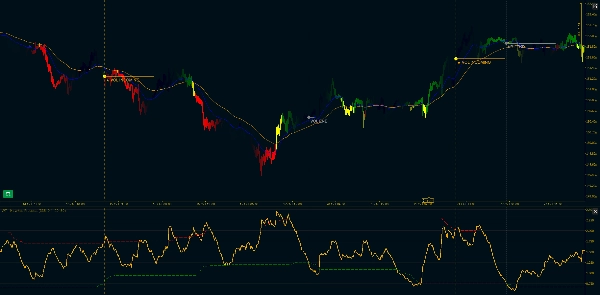
Volatilite, sıkışma döneminden sonra üst eşik seviyesini aşarsa "VOL GELİYOR" sinyali alırsınız. Alt eşik seviyesinin altına düşerse "VOL BİTİYOR" görürsünüz. Bunlar giriş sinyalleri değildir—volatilite rejimi değişiklikleridir. Piyasa ya uyanıyor ya da uykuya geçiyor.
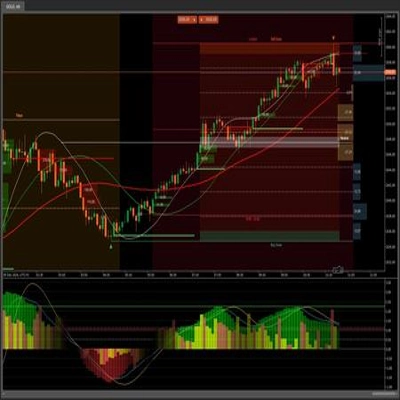
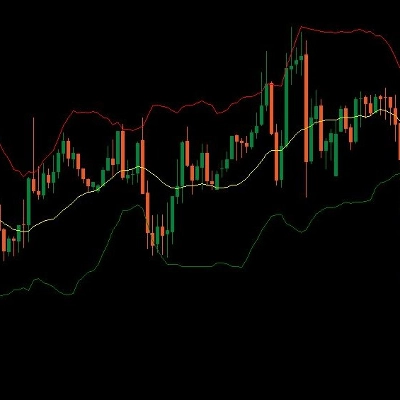
Trend Bağlamı: İki üssel ağırlıklı hareketli ortalama (Hızlı ve Yavaş) ana grafiğinizde görünür. Hızlı MA mavi, Yavaş MA turuncudur. Hızlı, Yavaş'ın üzerindeyse trend yukarı, altında ise trend aşağıdır.
Sapma Filtresi: İşte işin ilginç kısmı. Bazen fiyat trendden önemli ölçüde uzaklaşır. Tüm mum (açılış, yüksek, düşük, kapanış) yükselen trend sırasında Hızlı MA'nın altında veya düşen trend sırasında üzerinde olduğunda, bar sarı renge döner. Bu katı bir filtredir—mum fitili bile Hızlı MA'ya dokunursa, normal trend rengiyle kalır.
Sarı barlar genellikle geri çekilmelerde veya tükenme noktalarında görünür, ancak unutmayın: size sonraki hareketi söylemez, sadece fiyatın geçici olarak trend çizgisinden ayrıldığını gösterir.
-----------------------------------------------------------------------------------------------------------------------------------------------------------------------
Ana Özellikler
-----------------------------------------------------------------------------------------------------------------------------------------------------------------------
Volatilite Bileşeni:
- Parkinson Yüksek-Düşük Volatilite normalizasyonu (standart ATR yönteminden daha verimli)
- Ayarlanabilir azalma ile Hawkes Süreci hesaplaması (Kappa parametresi)
- Dinamik kantil tabanlı eşikler (özelleştirilebilir yüzdelikler)
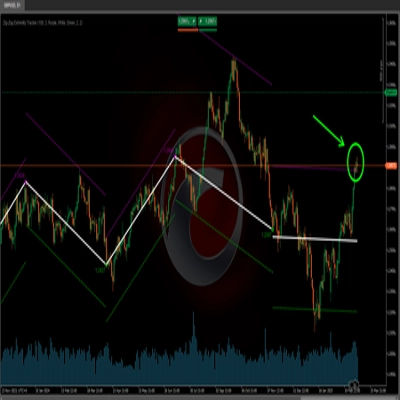
- Görsel işaretler: volatilite kırılmalarında "VOL GELİYOR", sıkışmalarda "VOL BİTİYOR"
- Devam filtresi: sadece ilk kırılma işaretlenir, her sıçrama değil
- İsteğe bağlı yatay trend çizgileri ve dikey işaretler
EWMA Trend Bileşeni:
- Pandas uyumlu EWMA hesaplaması (adjust=True formülü)
- Ana fiyat grafiğinde Hızlı ve Yavaş MA çizgileri gösterilir
- Özelleştirilebilir periyot uzunlukları (varsayılan: 20/50)
- Minimum dönem desteği (yeterli veri olana kadar çıktı bastırılır)
- Boşlukları işlemek için NA yoksayma seçeneği
- Üç renkli mum sistemi: Yeşil (yükselen trend), Kırmızı (düşen trend), Sarı (sapma)
Özelleştirme Seçenekleri:
- Parkinson Periyodu (volatilite hesaplaması için geriye bakış)
- Hawkes Kappa (azalma oranı, duyarlılığı etkiler)
- Kantil Geriye Bakış Periyodu
- Düşük ve Yüksek Volatilite Eşikleri (yüzdelikler)
- Yıllıklaştırma açma/kapama ve segment uzunluğu
- Hızlı ve Yavaş hareketli ortalama periyotları
- Boğa, Ayı ve Sapma renkleri
- Trend çizgisi uzatma uzunluğu
- Dikey işaretleri göster/gizle
----------------------------------------------------------------------------------------------------------------------------------------------------------------------------
Teknik Not: Hawkes Süreci bileşeni, gerçek zamanlı kullanım için optimize edilmiş özyinelemeli üssel hesaplama kullanır. EWMA uygulaması, Python tabanlı backtest ile tutarlılık için Pandas davranışına uygundur. Her iki bileşen de yeniden boyama önlemek için sadece kapanmış barlar üzerinde hesaplama yapar.
Özet
1. Volatility Detection: Utilizes Parkinson's High-Low volatility estimator and a Hawkes Process calculation with adjustable decay to detect shifts in market volatility regimes. The indicator signals transitions between low volatility (compression) and high volatility (breakout) phases with visual markers labeled "VOL INCOMING" and "VOL END." These signals indicate changes in volatility state but do not predict price direction.
2. Trend Context: Features dual Exponentially Weighted Moving Averages (EWMA) — a fast (blue) and slow (orange) moving average — displayed on the price chart to provide trend direction. When the fast MA is above the slow MA, the trend is considered up; when below, down. A divergence filter colors candles yellow when price bars fully separate from the fast MA during a trend, highlighting potential retracements or exhaustion points.
The indicator supports customizable parameters including volatility lookback periods, Hawkes decay rate, quantile thresholds, and moving average spans. It is applicable across multiple markets such as Forex, stocks, commodities, indices, and cryptocurrencies. Calculations are performed on closed bars to avoid repainting, and the EWMA implementation aligns with standard Python Pandas behavior for consistency in backtesting.
Müşteri değerlendirmeleri
5 | 100 % | |
4 | 0 % | |
3 | 0 % | |
2 | 0 % | |
1 | 0 % |