

Descrizione
L'IDEA
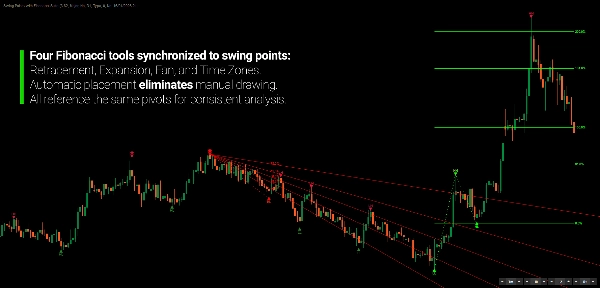
Quattro strumenti Fibonacci costruiti dalla stessa struttura di swing rilevata automaticamente invece di fare affidamento su riferimenti di swing separati per ogni strumento.
IL PROBLEMA
Fibonacci Retracement, Expansion, Fan e Time Zones possono tutti essere modi utili per esaminare il movimento del prezzo.
Ma quando ogni strumento utilizza un riferimento di swing selezionato manualmente diverso, possono finire per descrivere interpretazioni diverse del mercato.
Il problema non è avere più strumenti Fibonacci.
Il problema è mantenere la loro struttura di riferimento sottostante coerente.
IL CONCETTO FONDAMENTALE: LA STRUTTURA DI SWING È CONDIVISA. LE VISIONI FIBONACCI RESTANO COLLEGATE.
Swing Points con Fibonacci Suite rileva la struttura di swing una volta e utilizza quella mappa di swing condivisa come riferimento strutturale comune per tutti e quattro gli strumenti Fibonacci. Ogni strumento può comunque fare riferimento alle strutture di swing correnti o precedenti in modo indipendente.
Invece di chiedere a ogni strumento:
“Quali punti di swing dovrei usare?”
la suite stabilisce prima una mappa di swing unica.
Gli strumenti Fibonacci diventano quindi modi diversi di misurare la stessa geometria di prezzo sottostante.
Una struttura di swing. Molteplici visioni Fibonacci.
COSA FA
L'indicatore rileva automaticamente i punti di swing e li usa come riferimenti per:
- Fibonacci Retracement
- Fibonacci Expansion
- Fibonacci Fan
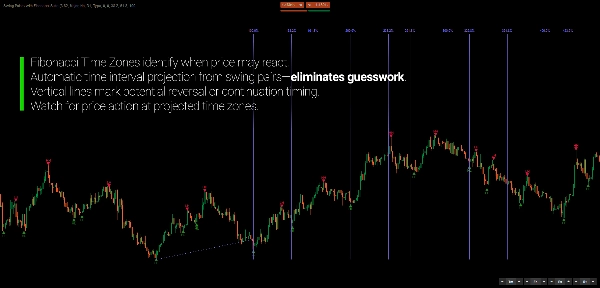
- Fibonacci Time Zones
Quando la struttura di swing si sviluppa, le proiezioni Fibonacci si aggiornano di conseguenza.
Questo elimina la necessità di identificare manualmente e ridisegnare riferimenti di swing separati per ogni strumento Fibonacci.
LO SWING VIENE PRIMA
La struttura di swing viene rilevata utilizzando un motore di rilevamento swing basato sulla regressione.
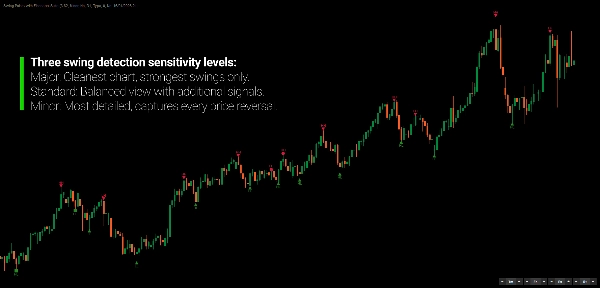
Sono disponibili tre livelli di sensibilità:
- Maggiore
- Standard
- Minore
Questo ti permette di decidere quanta della geometria del prezzo vuoi includere nell'analisi.
Lo scopo non è definire una struttura di swing universalmente corretta.
È fornire una struttura di riferimento coerente per gli strumenti.
QUATTRO MODI PER MISURARE LA STESSA STRUTTURA
Ogni strumento Fibonacci osserva una dimensione diversa della stessa mappa di swing.
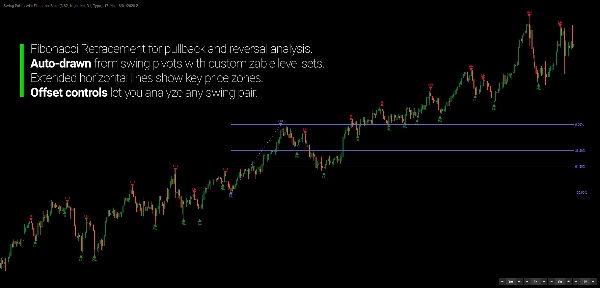
Retracement
Misura il movimento proporzionale del prezzo.
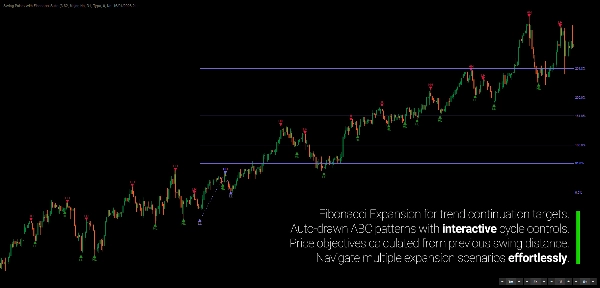
Expansion
Proietta le relazioni di prezzo da una struttura a tre swing.
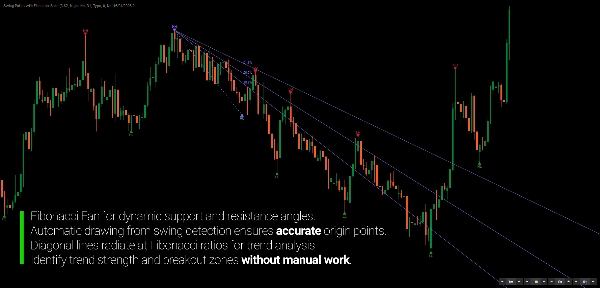
Fan
Esamina le relazioni diagonali tra il prezzo e la struttura di swing.
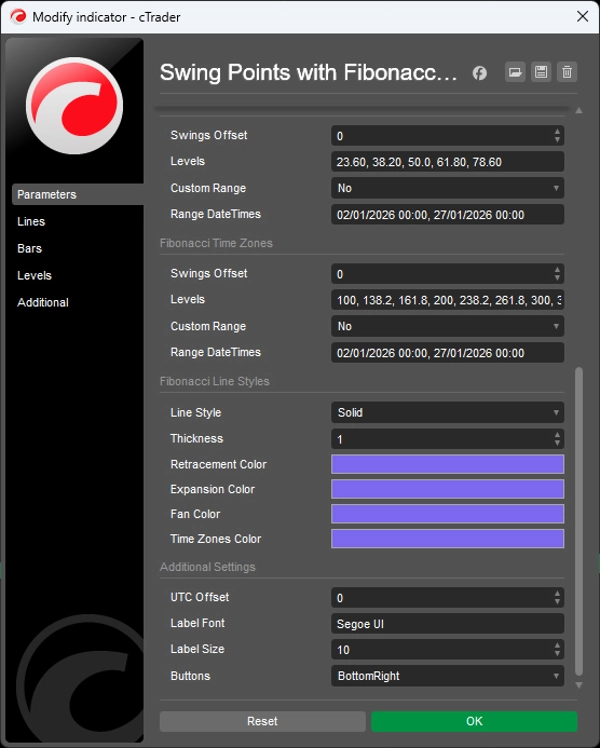
Time Zones
Esamina la spaziatura temporale tra punti di swing importanti.
L'obiettivo non sono quattro segnali separati.
Sono quattro misurazioni diverse dello stesso movimento sottostante.
LA STRUTTURA PUÒ CAMBIARE
Il mercato continua a svilupparsi dopo che uno swing è stato identificato.
Quando nuovi massimi o minimi cambiano la struttura di swing rilevata, le proiezioni Fibonacci possono aggiornarsi di conseguenza.
La geometria quindi rimane collegata alla mappa di swing corrente invece di diventare permanentemente legata a un riferimento manuale obsoleto.
TU CONTROLLI ANCORA IL RIFERIMENTO
L'automazione non significa rinunciare al controllo.
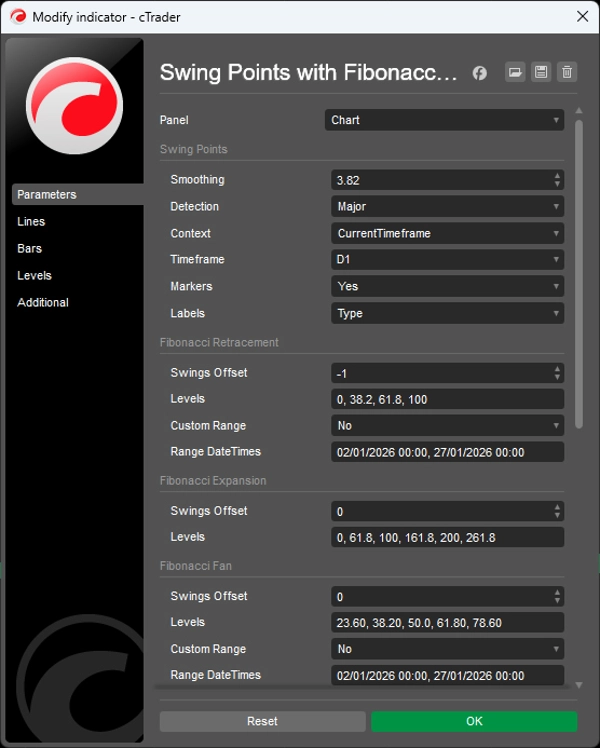
Ogni strumento Fibonacci ha uno sfasamento di riferimento indipendente.
- 0 — struttura corrente
- -1 — struttura precedente
- -2 — due strutture indietro
Questo permette a uno strumento di esaminare lo swing corrente mentre un altro guarda a una struttura precedente.
Il rilevamento dello swing è condiviso.
La selezione del riferimento rimane tua.
PUOI ANCHE DEFINIRE TU STESSO L'INTERVALLO
Il rilevamento automatico dello swing è il default, ma puoi sovrascriverlo quando vuoi studiare un intervallo storico specifico o un evento di mercato.
La Modalità Intervallo Personalizzato ti permette di definire i punti di inizio e fine esatti per l'analisi Fibonacci invece di fare affidamento sui punti di swing rilevati.
FIBONACCI A TIMEFRAME SUPERIORE SUL TUO GRAFICO ATTUALE
La struttura di swing può essere calcolata da un timeframe superiore mentre la geometria Fibonacci viene visualizzata sul grafico corrente.
Ad esempio, gli swing giornalieri possono fornire la struttura di riferimento mentre analizzi il movimento del prezzo su un grafico H1.
Questo rende visibile la geometria del prezzo a timeframe superiore senza lasciare il timeframe corrente.
INFORMAZIONI SULLO SWING QUANDO VUOI PIÙ DETTAGLI
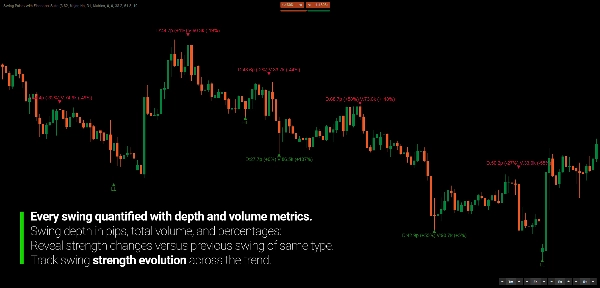
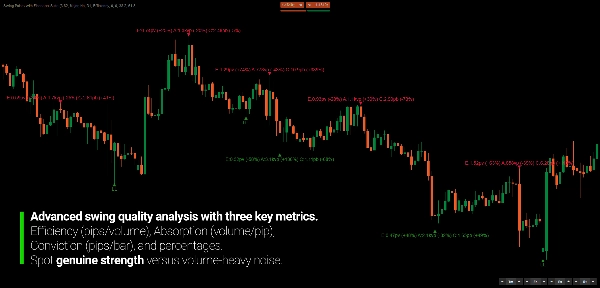
L'indicatore può anche mostrare informazioni aggiuntive su ogni swing rilevato, inclusi:
- HH / HL / LH / LL
- Profondità dello swing
- Volume tick
- Durata dello swing
- Efficienza
- Assorbimento
- Convinzione
- Confronto con swing precedenti dello stesso tipo
Queste misurazioni forniscono un contesto aggiuntivo intorno alla geometria senza modificare il riferimento di swing sottostante.
LEGGI FIBONACCI COME UNA MAPPA, NON UN SEGNALE
I livelli Fibonacci sono punti di riferimento.
Non prevedono cosa il prezzo debba fare quando li raggiunge.
Lo stesso livello può essere osservato come parte di un retracement, espansione, relazione diagonale o proiezione temporale a seconda dello strumento utilizzato.
L'indicatore automatizza il disegno.
Sei tu a decidere cosa significa la geometria.
PROGETTATO PER L'ANALISI STRUTTURALE FIBONACCI
Progettato per trader che già utilizzano l'analisi Fibonacci e vogliono che i diversi strumenti rimangano collegati alla stessa struttura di swing sottostante.
Usalo per esaminare:
- Retracement
- Espansioni
- Relazioni diagonali
- Proiezioni temporali
- Geometria swing-to-swing
- Contesto Fibonacci a timeframe superiore
- Molteplici riferimenti di swing storici
CARATTERISTICHE PRINCIPALI
- Rilevamento automatico dello swing
- Motore di swing basato sulla regressione
- Sensibilità Maggiore / Standard / Minore
- Riferimento di swing unificato per tutti gli strumenti
- Fibonacci Retracement
- Fibonacci Expansion
- Fibonacci Fan
- Fibonacci Time Zones
- Sfasamenti di riferimento indipendenti
- Classificazione HH / HL / LH / LL
- Profondità dello swing
- Volume tick
- Durata dello swing
- Efficienza
- Assorbimento
- Convinzione
- Confronto tra swing dello stesso tipo
- Analisi a timeframe superiore
- Aggiornamenti strutturali in tempo reale
- Livelli Fibonacci e visualizzazione personalizzabili
---
Il trading comporta rischi. Questo indicatore è uno strumento di analisi tecnica e dovrebbe essere usato insieme a una gestione del rischio appropriata.
Riepilogo
All Fibonacci tools are anchored to the same detected swings, ensuring internal consistency and eliminating subjectivity common in manual Fibonacci analysis. Users can adjust which swing pairs drive each tool independently via on-chart controls, and a custom range mode allows manual specification of analysis intervals. Multi-timeframe capability enables detection of swings on higher timeframes while displaying results on lower timeframe charts, providing broader structural context without switching views.
Additional features include swing classification (higher highs, lower lows, etc.) and metrics such as depth, volume, duration, efficiency, absorption, and conviction, supporting detailed market structure analysis. This indicator is designed for traders who use Fibonacci as a structural reference framework, particularly swing and position traders seeking comprehensive, consistent Fibonacci analysis across multiple timeframes.
Discussioni
Recensioni dei clienti
Domande frequenti
Altro da questo autore





Prezzo