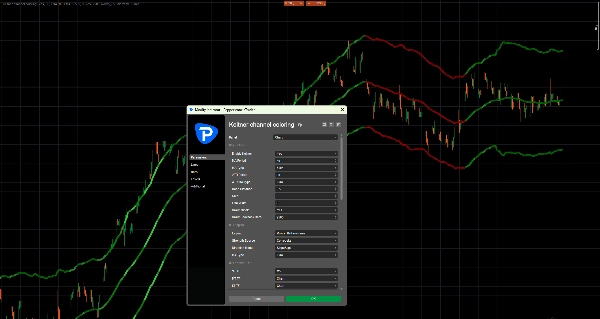
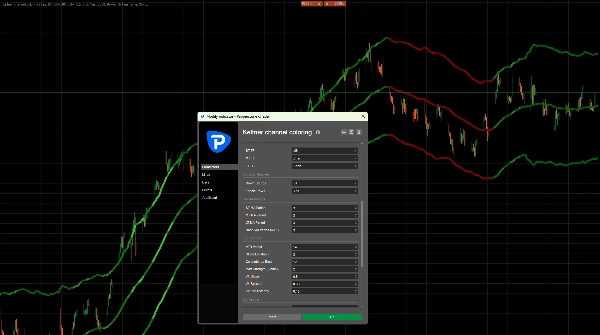
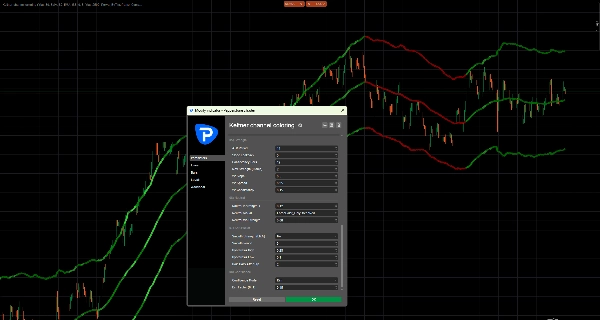
Description
ALGO XL — Keltner HeatFlow is not a normal Keltner Channel.
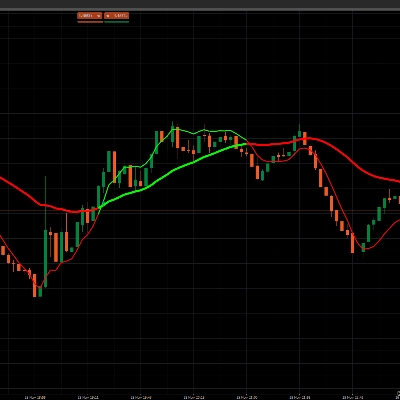
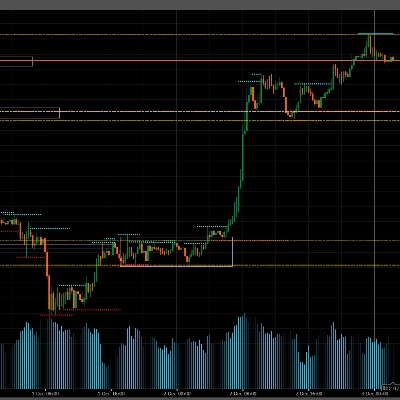
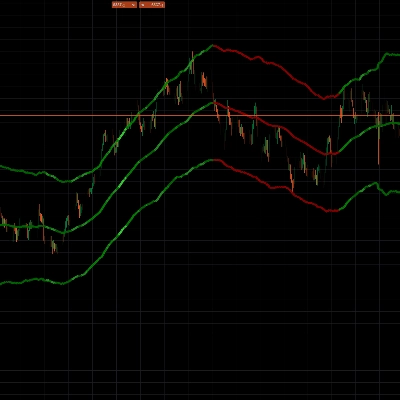
It’s a heat-colored volatility corridor that turns the classic Keltner bands into a live trend-strength dashboard — with the same “companion-grade” logic you’re used to: direction + intensity + anti-flicker + optional confluence, all mapped directly onto the Keltner outer lines.
What Keltner HeatFlow does
- Draws a true Keltner Channel (MA ± ATR × distance)
- Colors the outer bands (and optionally the middle line) using a multi-level heat engine
- Keeps the channel visually stable and readable using neutral handling + anti-flicker hysteresis
- Optionally applies confluence vs LT (long-term) to dim or require alignment
- Supports multi-timeframe sourcing (ST / MT / LT) with chart-safe fallback for tick selections
Core features (at a glance)
1) Heat-colored Keltner bands (not random coloring)
Most Keltner channels are static: same color forever.
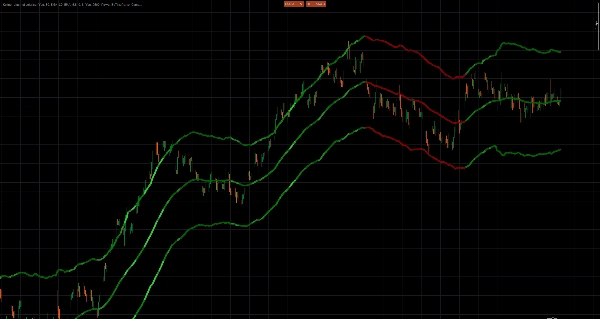
HeatFlow dynamically colors the channel based on real market behavior:
- Bull heat = deep green → lime → yellow-lime (higher intensity)
- Bear heat = dark red → red → orange-red (higher intensity)
- 6-level strength ladder (from weak to explosive)
So you instantly see:
- whether the market is bullish or bearish right now
- whether that move is weak / normal / strong / explosive
- whether the channel is “cool and drifting” or “hot and expanding”
2) Companion-grade strength engine (Composite / Slope / Spread / Consistency)
HeatFlow doesn’t guess momentum — it calculates it.
You can choose how “strength” is measured:
- Composite (best overall): weighted blend of
- slope vs ATR
- MA spread vs ATR
- directional consistency (trend persistence)
- Or run Slope_ATR, Spread_ATR, Distance_ATR, or Consistency alone
This makes HeatFlow flexible:
- scalpers often love Slope_ATR
- trend traders often prefer Composite
- mean-reversion users like Distance_ATR (stretch/pressure)
3) Direction logic that fits your style
Two professional direction modes:
- SlopeSign → slope up = bullish, slope down = bearish
- PriceAboveBelowMA → price above MA = bullish bias, below = bearish bias
Choose what matches your execution model:
- momentum-based entries → slope
- location/bias trading → above/below
4) Neutral handling (no “grey fog”)
When strength drops below your threshold, HeatFlow can:
- ForceColor (Only Green/Red) → holds last direction (cleanest)
- Gray → show neutral as gray
- Hide → hide when neutral (minimalist)
This matters because a Keltner channel is a context tool — it should stay readable, not flicker into uncertainty every few bars.
5) Anti-flicker hysteresis (professional stability)
Fast charts can make any coloring system flip-flop.
HeatFlow includes a real anti-flicker pipeline:
- Hysteresis High / Low thresholds
- Hold bars after flip (stops rapid re-flips)
- Optional strength smoothing (EMA)
Result: the bands stay stable and trustworthy — even on fast markets.
6) Confluence vs LT (long-term) — optional “alignment filter”
HeatFlow can compare your active heat direction to the long-term direction:
- Dim → still show, but reduce intensity when LT disagrees
- Require → if LT disagrees, direction can be suppressed
This is huge for discipline:
- it helps prevent trading “hot short-term bursts” against the bigger flow
7) Multi-timeframe horizons (ST / MT / LT)
HeatFlow can source its heat engine from:
- Chart timeframe
- M1–W1 (true MTF support)
- Tick selections fall back to chart safely (API-safe)
You can run:
- ST = chart, MT = higher TF, LT = even higher TF
…and color the channel using the horizon you trust most.
8) Performance-safe segmented drawing
HeatFlow draws the bands as short colored segments, so the color can change precisely bar-by-bar.
To keep it fast:
- it draws only within a lookback window
- it automatically removes old segments
- it avoids heavy full-history redraw loops
What you’ll feel when trading with it
Keltner HeatFlow gives you immediate answers:
- Is the channel bullish or bearish?
- Is momentum cooling, healthy, or overheating?
- Are we trending cleanly “inside the corridor,” or is the flow losing energy?
- Is the short-term heat aligned with the long-term flow?
This turns a Keltner channel from “just a volatility band” into a live market pressure corridor.
Best use-cases
- Trend continuation: trade with the band color + intensity
- Pullback zones: watch price return toward the corridor while heat stays directional
- Momentum expansion: identify hot phases early (lime/yellow-lime or orange-red)
- Avoiding chop: neutral rules + hysteresis reduce false flips
Tagline ideas (for your store page)
- “Turn your Keltner Channel into a live heat corridor.”
- “A volatility channel that shows direction and intensity — not just distance.”
- “Heat-colored Keltner bands for instant momentum awareness.”