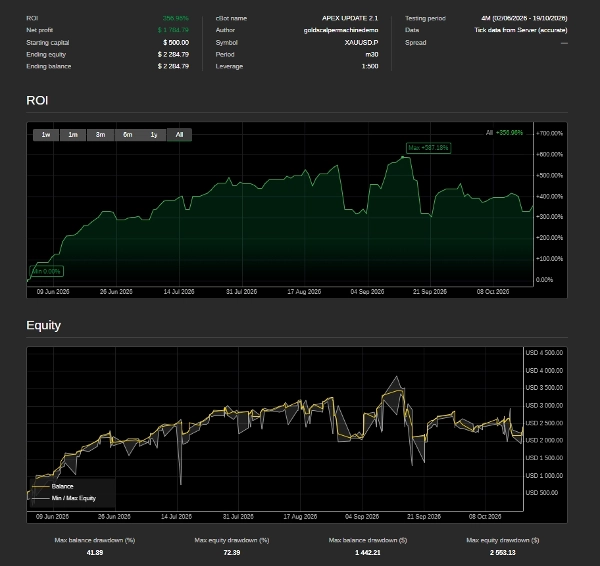
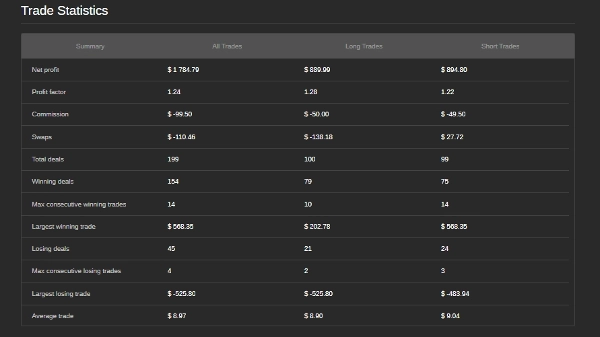

Description
WE ALWAYS OPTIMISE OUR ALGORITHMS TO MARKET CONDITIONS, WHICH MEANS YOU CAN DO TOO !
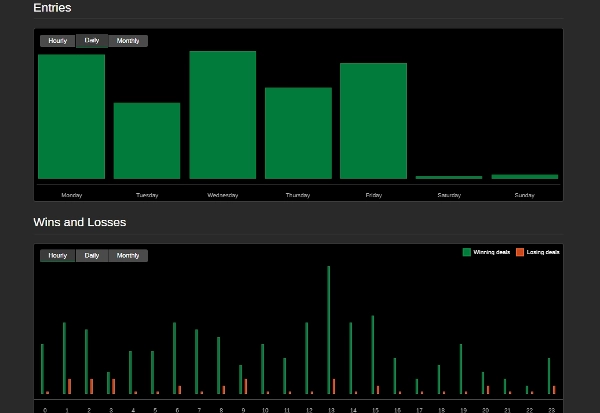
CLICK ON THE LINK TO SEE LIVE STATS: https://ctrader.blackbull.com/investor/TfC86A5ztw?lang=en&theme=light&platform=ios
for any trader that buys APEX 2.1, Datarum Algorithmica will gift a free plugin to run Monte Carlo simulations for your Optimisation and Backtests. The plugin will be gifted by email to your unique cTrader ID (without source code). Buy 1 cBot, get 1 plugin for free! Latest algorithm update available in store is APEX 7.0
APEX SYSTEM LIVE Native Multi-Trigger Forex & Gold cBot (USDJPY / XAUUSD)
Markets don't move in straight lines — and neither should your strategy. Apex is a precision-engineered trading system that reads price action through multiple lenses simultaneously, then adapts its response in real time.
Why it performs
- Tick-native, not bar-close. Signals are evaluated on the forming bar on every incoming tick. Entries fire the moment conditions are met — not at the next bar close — so you capture the move instead of chasing it. MA, VWAP, StochRSI and the regime state are all recomputed on the forming bar each tick.
- Multiple independent triggers. A fast/slow trend trigger, an EMA×VWAP trigger and an optional fast scalper can run together or independently. Each is arm-gated so a single crossing produces a single entry, even across hundreds of ticks.
- One risk engine for everything. Break-even, trailing stop, trailing break-even and profit-lock all measure from the peak profit reached, not the current price. A spike is never forgotten the moment price retraces. The trailing stop never moves below the break-even lock.
- Adaptive stops & targets. Volatility-aware (ATR-blended) distances with a hard floor, so stops never collapse below your configured minimum. Fixed-distance mode is available if you prefer it.
- Grid with guardrails. Optional averaging-in with a hard distance ceiling, maximum level cap and a cooldown between legs — so a runaway trend cannot keep adding exposure forever.
- Session & spread awareness. Trades only inside your configured hours, only when spread is inside limits, and only when the market is actually open. A rolling spread median (not a single bad quote) decides whether conditions are tradeable.
- Feed & clock safety. If the data feed stalls, resting orders are cancelled and new entries are blocked until the feed recovers. Clock skew between terminal and server halts entries. No trading on stale prices.
- Margin & budget checks. Before every order, the bot checks free margin headroom and an optional account-wide position/risk budget, so it never over-commits.
- Order-outcome verification. If a broker response is lost after acceptance, the bot resolves the fill against the live book instead of blindly retrying — preventing the duplicate positions that cost real money.
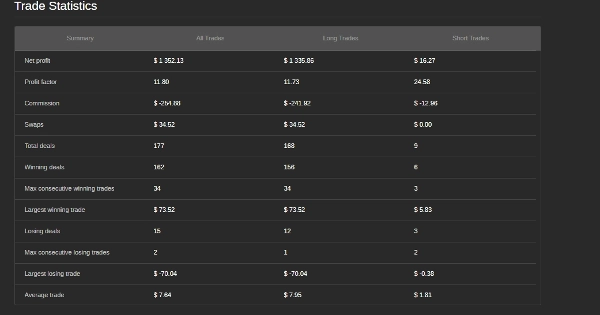
Backtest evidence — H1 (USDJPY.P, 23/06/2026 – 19/10/2026)
MetricResult
Net profit
+$339.95 (+34.0% ROI) on $1,000
Total trades
110 (73 long / 37 short)
Win rate
93.6% (103 wins / 7 losses)
Profit factor
Max consecutive wins
29
Largest single loss
-$160.90 (isolated, 2-loss max streak)
Data source
Tick data from server (real ticks, no synthetic spread)
Commissions
$0.10 per $1M, applied
Equity curve is smooth and monotonic with shallow drawdowns; the only notable dip is a single outlier loss that the trailing logic recovered from within the same session.
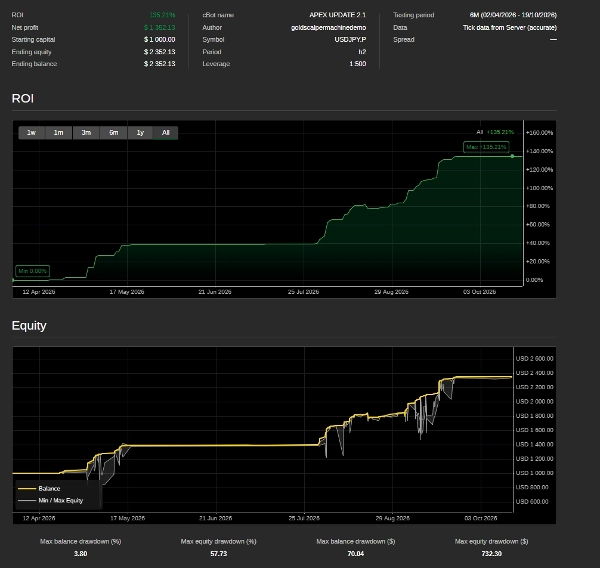
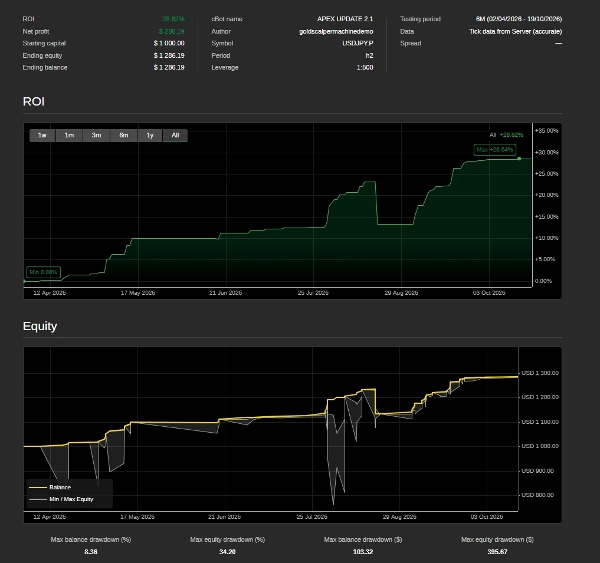
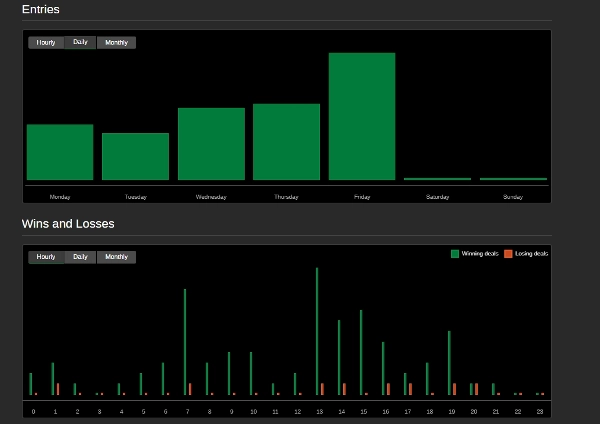
4. Walk-forward evidence — H2 (USDJPY.P, 02/04/2026 – 19/10/2026)
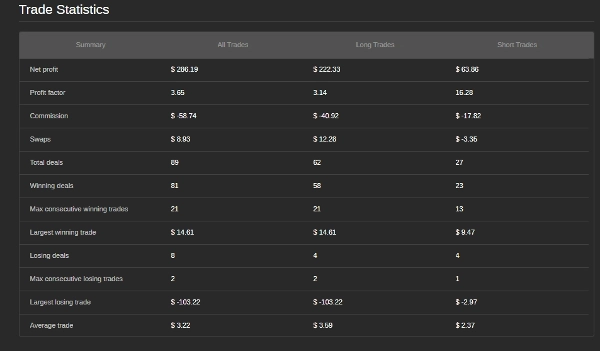
A second, longer test (~6.5 months, 89 trades) confirms the edge is not timeframe-specific and gets cleaner as noise is filtered out:
Read-across: on a slower timeframe the bot takes fewer trades (89 vs 110) but each is higher quality — profit factor nearly doubles (3.65 vs 1.94), the worst single loss is 36% smaller (-$103 vs -$161), and shorts are exceptionally clean (PF 16.28, largest loss only -$2.97). The strategy keeps ~91% of its win rate while cutting its worst-case loss by a third. This is the signature of a trend-following edge that gets cleaner as noise is filtered out, not one that depends on high-frequency churn.
5. Monte Carlo robustness — 6 suites, 60,000 simulated paths
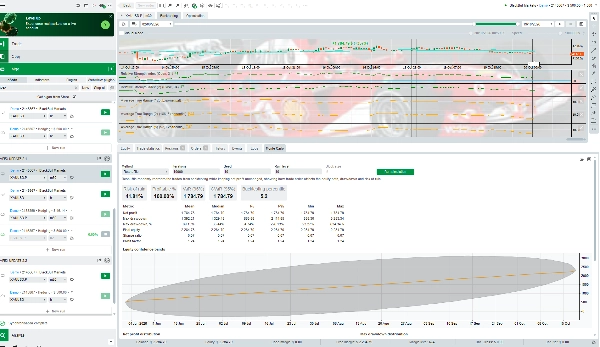
The backtest results are not one-offs. Resampling the trades 10,000 times with three methods (Bootstrap, Reshuffle, Stationary Bootstrap, block size 5) on both timeframes
What the Monte Carlo means for a buyer
The results are reproducible, not lucky. All three methods centre on +$340–$344 (H1) / +$286–$288 (H2) — within 1.2% of each other. The backtest's own net profit sits at the 45th–65th percentile of the simulated distribution, i.e. it is a typical, not an exceptional, outcome. No curve-fitting signature.
You make money in ~94 out of 100 (H1) / ~98.5 out of 100 (H2) alternate histories. Bootstrap and Stationary Bootstrap (which preserve the time-series dependence of the original trades) show 93.9% / 94.9% (H1) and 98.5% / 98.4% (H2) probability of ending in profit. The 5th-percentile outcome is essentially breakeven on H1 (-$31 / -$2.40) and positive on H2 (+$72.57 / +$72.59) — the downside tail is shallow to non-existent.
Risk of ruin is zero across all 60,000 simulated paths (10,000 × 3 methods × 2 timeframes), against a $10 ruin floor on a $1,000 account. Even the worst 5% of paths never blow the account.
Drawdowns are controlled and predictable. Median worst drawdown ~13% (H1) / ~8.3% (H2); 95th percentile 20.6–30.7% (H1) / 10.2–17.0% (H2). The single 96.6% outlier in the plain H1 Bootstrap is an artefact of that method's assumption of independent trades (it reorders trades freely, which can stack the one -$160.90 loss on top of itself); the Stationary Bootstrap — the method that respects the original time order — caps the worst case at 71.05% (H1) / 40.40% (H2). In live trading the bot's own session/spread/risk guards further constrain this.
Profit factor stays above 2 in the median path (2.06 / 1.94 / 2.02 on H1; 3.77 / 3.65 / 3.80 on H2). The mean profit factor is inflated by the many high-win scenarios — the median is the honest number, and it is comfortably above 1.0 in both timeframes.
The honest caveat. Sharpe is modest (mean 0.16–0.26 on H1, 0.27–0.55 on H2) because the system's edge is a high win rate on small, frequent gains rather than a few large runners. This is a consistency profile, not a home-run profile — which is exactly what the 91–93.6% win rate and 21–29 trade win streaks suggest. If you are looking for 5R moonshots, this is not that bot; if you want a bot that wins most days and compounds steadily, the Monte Carlo says it does, on both timeframes.
Bottom line: two independent timeframes, two independent backtests, six Monte Carlo suites (60,000 simulated equity curves), zero ruin in every single one, profitable probability 94% (H1) / 98.5% (H2), median drawdown 13% / 8.3%, profit factor 1.94 / 3.65. The edge reproduces across methods, timeframes and resampling schemes — it is not a single lucky month.
Transparency you can verify
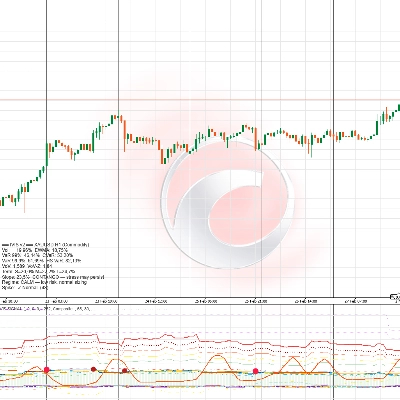
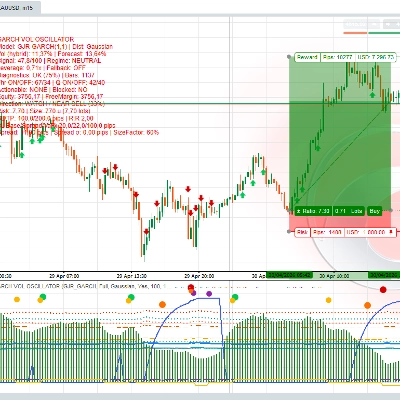
- On-chart panel shows live status, ATR, VWAP, positions per trigger, daily P/L, drawdown %, win streak and a reconciliation line.
- Per-trigger attribution — every closed trade is attributed to the trigger that opened it (net/gross, commission, swap, pips, MFE, MAE, max drawdown, R-multiple). Printed at stop and persisted across restarts.
- Rejection funnel — counts why signals die (spread, session, risk, cap, LDC, cooldown, VWAP, stochastic, grid distance, market state, stale feed, clock skew, budget, margin, plan, broker, rate limit). One line per interval.
- R-multiples — average R, R standard deviation, share of trades ≥ 2R and MFE capture ratio per trigger. Apples-to-apples comparison between triggers regardless of lot size.
- Persistence — peak profit per position survives a restart, so trailing never forgets a high it already locked.
Risk management at a glance
- Initial stop always attached (no naked positions on new entries).
- Break-even lock with configurable trigger and offset; trailing never moves below the break-even lock.
- Watchdog audits every position periodically and repairs missing/wrong-side levels.
- Startup reconciliation: restores state, attributes offline closes, cancels unsafe pendings, gates new entries until clean.
- Daily profit target / consecutive-loss protection (optional).
- Peak-equity drawdown tracking.
- Order-outcome verification prevents duplicate positions on lost broker responses.
📊 IMPORTANT NOTE ON LIVE STATISTICS & ALGORITHM OPTIMIZATION
The Live Statistics displayed on this store listing (including Win Rate, Profit Factor, Sharpe Ratio, and Drawdown) represent one of many possible configurations of this trading algorithm. These figures are purely representative and illustrative of a specific trading setup applied to a specific market condition during a specific historical period.
Your Success Depends on Optimization
Financial markets are dynamic, and no single "one-size-fits-all" setup exists. We strongly encourage all traders to actively engage with the cTrader Optimization Engine to fine-tune this algorithm. By optimizing the parameters, you can align the strategy with:
- Your chosen CFD Instrument (e.g., Forex, Indices, Metals, or Crypto).
- Your specific Account Size & Base Currency (to manage margin requirements effectively).
- Your individual Risk Tolerance (adjusting Stop Loss, Take Profit, and Lot Sizing).
You Can Beat the Base Stats
Because the displayed Live Stats are just a baseline, it is entirely possible—and indeed expected—that traders will discover parameter combinations that significantly outperform the figures shown here. We actively encourage you to experiment, backtest, and forward-test to find the optimal configuration that fits your unique trading style.
⚠️ Risk Disclosure
Trading financial instruments carries a high level of risk and may not be suitable for all investors. Past performance, historical replay results, or backtest data are not indicative of future results. APEX-Adaptive Multi-Engine Position Algorithmic System is designed to assist with systematic, rule-based trading but does not guarantee profits or eliminate the possibility of loss. Users are solely responsible for understanding market risks, conducting thorough testing, and managing their own capital allocation. Always trade with funds you can afford to lose.
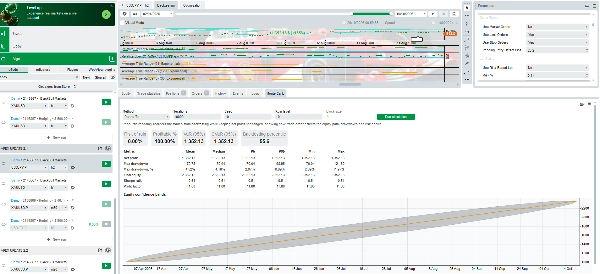
For backtesting the Try Product, you can input these parameters for standard and ECN raw accounts.
With the Try Product optimisation,n any trader can find many setups to backtest and try with Demo.
⚠️ Important Disclaimers
- No Performance Guarantees: Trading financial instruments involves substantial risk. Past performance, including backtested or historical replay results, is not indicative of future results. The developer makes no representations or warranties regarding profitability, consistency, or drawdown behaviour in live markets.
- Market & Broker Dependency: Actual results vary based on broker execution quality, spread conditions, slippage, liquidity, news volatility, and server infrastructure. The algorithm’s filters and hedging logic assume stable, low-latency execution environments.
- Parameter Responsibility: All configurable settings (grid spacing, multipliers, risk per trade, session filters, lot sizing, etc.) are user-adjustable. Improper configuration may increase exposure, breach margin limits, or trigger unintended position clustering. Users must thoroughly test parameter sets in demo environments before live deployment.
- Use at Your Own Risk: By installing or running CBOTs, you acknowledge that you have read, understood, and accepted all technical requirements, configuration responsibilities, and risk disclosures. The developer assumes no liability for losses, margin calls, platform errors, or execution deviations resulting from live trading.
- Electronic Communication Network (Finance/Trading): a computerised system that automatically matches buy and sell orders for securities. It allows major brokerages and individual traders to trade directly without an intermediary like a stock exchange specialist. Broker-dealers ' quality of matching engine and order-filling varies across the industry and requires traders to actively monitor slippage and spreads, limiting max spread and max slippage to obtain optimal order matching. Important to understand that Broker-dealer desks often do not match retail traders' algorithmic strategies, as this is due to the technical requirement of VPS latency <1ms. but also on Brokers' routing choices. CFDs are synthetic prices, not centrally cleared at the stock exchange level, but algorithmically matched by Broker-Dealers ' desks.
Important on Optimisation Requirements
This algorithm is designed for both beginner and expert traders, but it is absolutely not suitable for lazy traders. For each financial instrument you wish to trade, whether it is a currency pair, index, commodity like gold or silver, or individual stock, you must perform your own optimisation process to find the optimal settings. Market behaviour differs significantly between instruments, and what works perfectly on one symbol will not work on another without proper tuning. The algorithm provides a state-of-the-art, high-quality framework and unique fitness optimisation tools, but you must be willing to invest the effort to adapt it to your chosen markets. This is a precision tool for serious, active traders who understand that market adaptation is the key to long-term profitability.
Past performance, including the backtest results, does not guarantee future results. The algorithm's performance will vary based on market conditions, broker execution quality, latency, and parameter configuration. No representation is being made that any account will or is likely to achieve profits or losses similar to those shown in backtests.
The algorithm requires instrument-specific optimisation. Parameters that perform well on one symbol or timeframe may produce losses on another. Users are solely responsible for conducting their own testing and validation before deploying the algorithm on a live account.
© APEX-Adaptive Multi-Engine Position Algorithmic System | Engineered for cTrader Platform | Multi-Asset Adaptive Architecture
© 2026 Datarum Algorithmica. All Rights Reserved.
Apex — Adaptive Multi-Engine Position Algorithmic System is the exclusive intellectual property of Datarum Algorithmica. All source code, algorithms, logic structures, parameter configurations, documentation, and associated materials are protected by international copyright laws and treaties.
Unauthorised reproduction, distribution, reverse engineering, decompilation, disassembly, modification, rental, resale, or creation of derivative works — in whole or in part — is strictly prohibited without express written consent from Datarum Algorithmica.
This software is licensed, not sold. Purchase of a license grants the buyer non-exclusive, non-transferable rights to use Apex on the specified number of trading accounts for personal or proprietary trading purposes only. Licenses may not be shared, sublicensed, or redistributed.
The Datarum Algorithmica name, logo, and product identifiers are registered trademarks. All other trademarks referenced herein are the property of their respective owners.
Risk Disclosure: Trading foreign exchange carries a high level of risk and may not be suitable for all investors. Past performance of any trading system or methodology is not necessarily indicative of future results. Datarum Algorithmica makes no guarantees regarding profitability, account growth, or risk mitigation. The user assumes full responsibility for all trading decisions and outcomes.
Summary
The algorithm features a modular architecture with a conservative default configuration and additional engines for precision scalping and profit accumulation, which can be unlocked as account size and risk tolerance grow. It operates primarily on mid-to-higher timeframes (H1 and above) and is optimized for exotic FX pairs but adaptable to majors, minors, indices, and commodities with sufficient liquidity.
Risk management tools include fixed lot sizing, stop loss, take profit, trailing stops, break-even management, session and spread filters, daily profit targets, and automatic equity protection. The system supports market, limit, stop, and stop-limit orders, with a maximum of 50 simultaneous positions and a recommended minimum balance of $1,000. Users must perform instrument-specific optimization and use a reliable VPS for uninterrupted execution. The product is suitable for systematic, rule-based trading with configurable risk parameters.
Discussion
Customer reviews
5 | 33 % | |
4 | 33 % | |
3 | 33 % | |
2 | 0 % | |
1 | 0 % |