
Açıklama
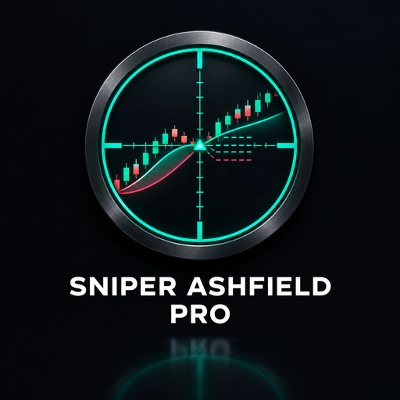
Sniper Ashfield Pro bir olayı bekler - hızlı EMA'nın yavaş olanı kesmesi - ve sonra herhangi bir şey çizmeye başlamadan önce altı
soru sorar. Hızlı EMA doğru tarafta mı? Fiyat oturum VWAP'ının doğru tarafında mı?
RSI 50'nin üzerinde mi? MACD sinyal çizgisinin üzerinde mi yoksa altında mı? ADX yeterince güçlü mü,
fiyat hızlı EMA'nın doğru tarafında mı? Hacim ortalamasının üzerinde mi, doğru şekilde kapanan bir mumda mı?
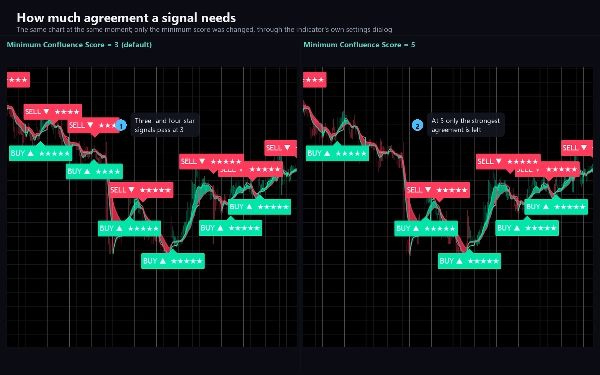
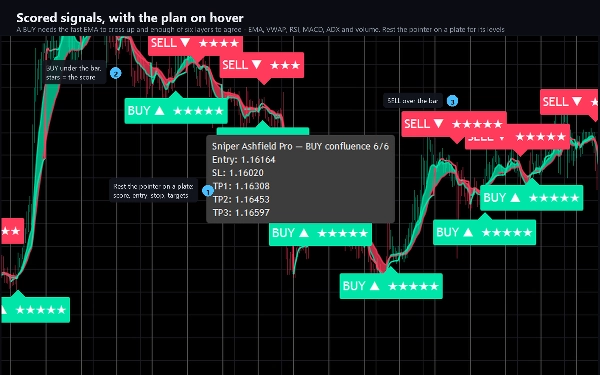
Her evet bir puandır. Puan minimumunuza ulaştığında, sinyal yıldızlarla puanıyla çizilir ve bir planla gelir.
NE ÇİZER
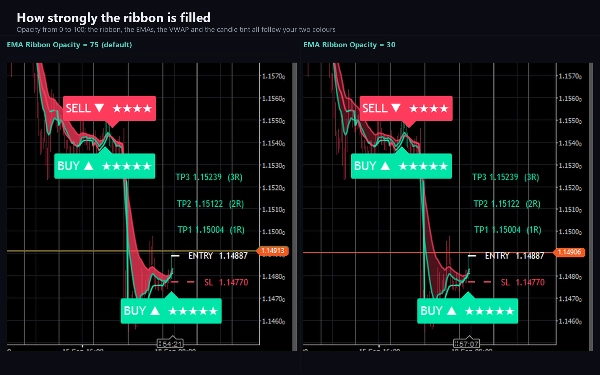
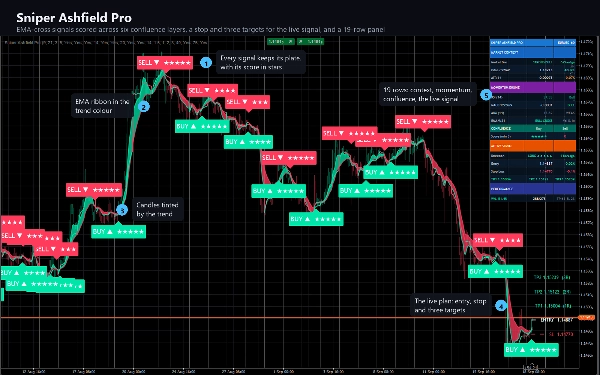
- Aralarında dolu bir şerit bulunan hızlı ve yavaş EMA, mevcut trendin renginde.
- Fiyatın hangi tarafında olduğuna göre renklendirilen oturum VWAP'ı.
- EMA trendine göre renklendirilmiş mumlar, böylece yön bir bakışta okunabilir.
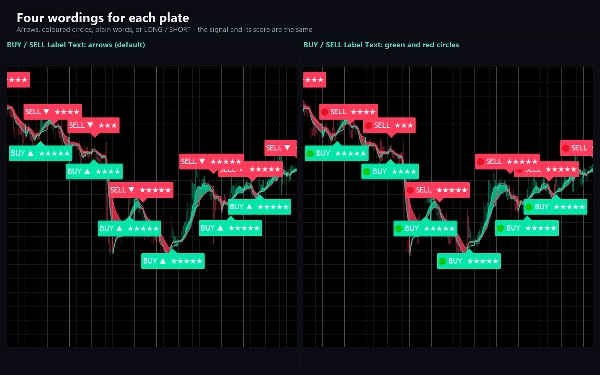
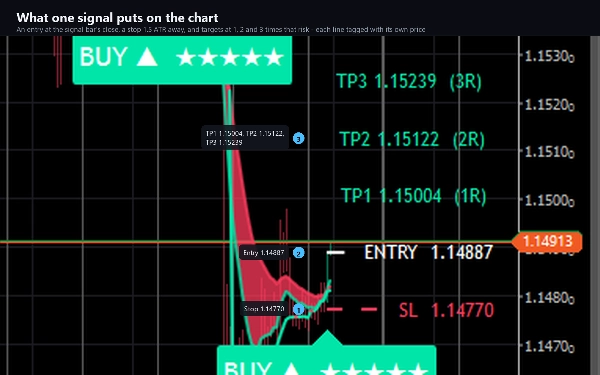
- Her sinyal çubuğunda bir plaka - çubuğun altında AL, üstünde SAT - puan yıldızlarla. Plakanın üzerine fareyi getirerek puanını, girişini, stopunu ve üç hedefini görebilirsiniz.
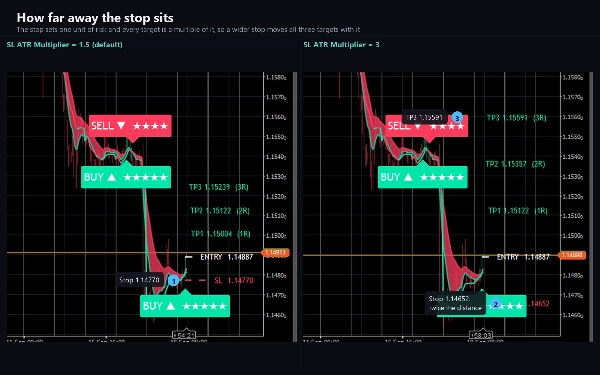
- En son sinyal için: bir giriş çizgisi, 1.5 ATR uzaklıkta bir stop ve bu riskin 1, 2 ve 3 katı olan üç hedef, her biri fiyat etiketiyle. Ulaşılan hedef yeniden stilize edilir; işlem üçüncü hedefine veya stopuna ulaştığında çizgileri kaldırılır ve bir sonraki sinyal onları değiştirir.
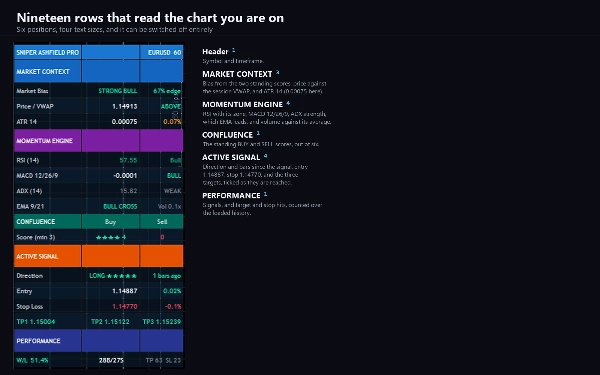
- On dokuz satırlık panel: piyasa eğilimi, fiyatın VWAP'a karşı durumu, ATR, RSI, MACD, ADX, hangi EMA'nın önde olduğu, hacim ortalamasına karşı, her iki duran puan, canlı sinyal giriş, stop ve hedeflerle ve sinyallerin, ulaşılan hedeflerin ve ulaşılan stopların sayımı.
NASIL KARAR VERİR
Sinyaller sadece EMA'ların kesiştiği çubukta değerlendirilir ve aynı yöndeki bir sinyal, sizin belirlediğiniz bir soğuma süresi için bekletilir. EMA'dan sonra gelen beş filtreden her biri kapatılabilir - ve kapalı bir filtre otomatik olarak puanını verir, bu yüzden filtreleri kapatmak sinyallerin DAHA sık olmasını sağlar, daha az değil. Filtreleri kapatırsanız minimum puanı yükseltin. Varsayılan olarak Non-Repaint Modu açıktır: bir sinyal çubuğu kapandığında karar verilir ve sonrasında hareket etmez.
ANA AYARLAR
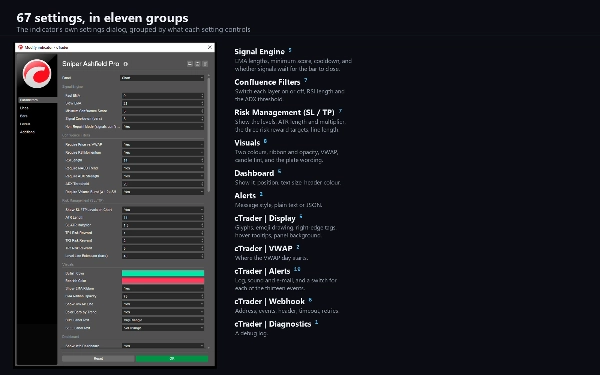
On bir grupta 67 ayar. İki EMA uzunluğu, minimum puan ve soğuma süresi; her filtre açık veya kapalı, RSI uzunluğu ve ADX eşiği; stop için ATR uzunluğu ve çarpanı, üç risk-getiri hedefi ve seviye çizgilerinin uzunluğu; iki renk, şerit ve opaklığı, VWAP, mum rengi ve plakalar için dört yazım; panelin konumu, boyutu ve başlık rengi; ve cTrader grupları için görüntüleme, VWAP günü, uyarılar ve webhook.
UYARILAR VE WEBHOOK
Her biri kendi anahtarı olan on üç olay: AL, SAT, her ikisi, her iki EMA kesişimi, fiyatın VWAP'ı her iki yönde kesmesi, RSI'nın 50'yi her iki yönde kesmesi, üç hedef ve stop. cTrader günlük satırı, seçtiğiniz bir ses ve e-posta olarak iletilir. Bir sinyal uyarısı giriş, stop, üç hedef ve puanı taşır. Gösterge geçmişte gezinirken hiçbir şey tetiklenmez ve geriye dönük testte de tetiklenmez.
Bir webhook sinyalleri - ve isterseniz hedefleri, stopları ve kesişimleri - JSON olarak girdiğiniz herhangi bir adrese gönderir: bir ticaret botu, bir günlük, bir röle, bir otomasyon akışı. Bir adres girene kadar kapalı kalır, her olay için her çubukta yinelenenler engellenir, dakikada yirmi mesajla sınırlandırılır ve bir hata atılmak yerine kaydedilir. cTrader'ın kendi ağ hizmeti üzerinden gönderilir, bu yüzden gösterge dosya veya ağ erişim haklarına ihtiyaç duymaz.
TÜR VE PENCERE
Bir üst üste binen gösterge: her şey fiyat grafiği üzerine çizilir ve ayrı bir panel eklemez.
ZAMAN ÇERÇEVELERİ VE ENSTRÜMANLAR
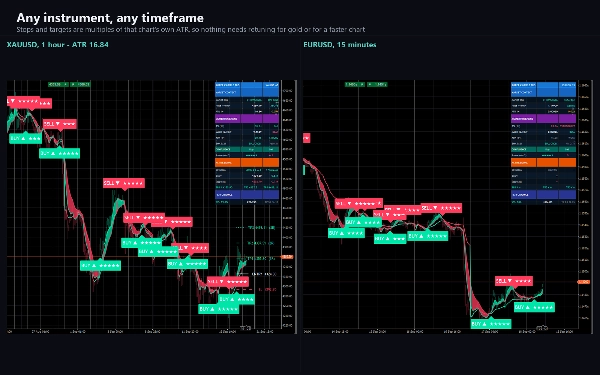
Herhangi biri. Stop ve hedefler o grafiğin kendi ATR'sinin katlarıdır ve fiyatlar brokerınızın kendi tickine göre formatlanır, bu yüzden on beş dakikalık grafik ile günlük grafik arasında veya beş ondalıklı çift ile altın arasında yeniden ayar yapmaya gerek yoktur. Hacim gereklidir: VWAP ve altı katmandan biri brokerınızın tick hacmini okur.
KULLANIM ALANLARI
- Momentum, trend gücü ve hacim kesişimle uyumlu olduğunda sadece trend devamlarını ticaret yapmak.
- Bir sinyali bir plana dönüştürmek: hareket etmeden önce çizilen bir stop ve üç hedef.
- Bir grafiğin geçmişini hızlıca taramak: her sinyal plakasını ve puanını korur.
- Bir sinyal tetiklendiğinde veya bir hedefe ulaşıldığında günlük satırı, ses, e-posta veya webhook ile bilgilendirilmek.
KİMLER İÇİN
Hareketli ortalama kesişimlerini seven ancak filtrelenmiş olmasını isteyen tüccarlar ve bir sinyalin sadece bir ok yerine bir stop ve hedef seti ile gelmesini isteyen herkes.
DENEME
Ücretsiz deneme sadece EURUSD üzerinde tam göstergedir - her broker eki çalışır. Başka herhangi bir sembolde bir bildirim gösterir ve hiçbir şey çizmez. Zaman sınırı yok, geçmiş kısıtlaması yok, eksik özellik yok. Tam sürüm sembol kısıtlamasını kaldırır ve başka hiçbir şeyi değiştirmez.
TEKNİK NOTLAR VE SINIRLAMALAR
Erişim hakları: yok. Gösterge kendi başına dosya okuyamaz, işlem başlatamaz veya bağlantı açamaz.
Bu bir grafik ve analiz aracıdır. Emir vermez ve hesabınıza erişimi yoktur.
Panelin PERFORMANS satırı, çizilen seviyelerin grafiğinizde yüklü olan çubuklarda neyle karşılaştığını sayar. İlk hedeften sonra ulaşılan bir stop kazanç olarak sayılır ve daha yeni bir sinyalle değiştirilen işlem sayılmaz. Bu geçmişin bir tanımıdır, geriye dönük test veya tahmin değildir.
DESTEK
Sorular Tartışma sekmesi üzerinden iletilir. Brokerınızı, sembolünüzü, zaman çerçevenizi, cTrader sürümünüzü ve bir ekran görüntüsünü ekleyin, ilk seferde faydalı bir cevap alacaksınız.
Ticaret risk içerir. Geçmiş performans gelecekteki sonuçları garanti etmez.
Özet
The indicator visually overlays the price chart with the fast and slow EMAs connected by a colored ribbon indicating trend direction, session VWAP colored by price position, and candles tinted by EMA trend. Signals are marked with BUY or SELL plates showing their score in stars, accompanied by an entry price, an ATR-based stop loss, and three risk-to-reward targets. Targets update visually when reached, and signals respect a cooldown period to avoid repetition.
A detailed nineteen-row panel provides real-time market bias, indicator values, signal details, and performance counts. Alerts for multiple events—including EMA crosses, VWAP crossings, RSI levels, targets, and stops—can be delivered via cTrader log, sound, email, or webhook in JSON format for integration with external systems. The indicator operates in non-repaint mode and includes extensive customization options across eleven setting groups.
Müşteri değerlendirmeleri
5 | 100 % | |
4 | 0 % | |
3 | 0 % | |
2 | 0 % | |
1 | 0 % |