
الوصف
KUMO FORGE PRO
نظام إيشيموكو تتكيف فتراته مع التقلبات، مع تقييم كل إشارة من 100 قبل رسمها.
.
ما يعرضه على الرسم البياني الخاص بك
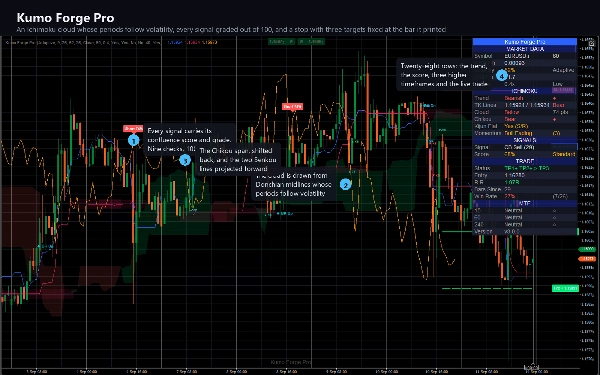
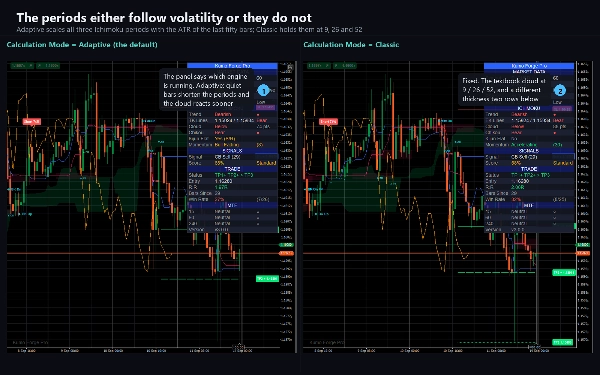
الصورة الكاملة لإيشيموكو - تنكان-سن، كيجون-سن، سحابة كومو ومدى تشيكو - مع اختلاف واحد عن النسخة المدرسية: في الوضع التكيفي تمتد الفترات الثلاث وتضغط مع التقلب المقاس، لذا تستجيب السحابة بشكل أسرع في السوق السريع وأبطأ في السوق الهادئ. الوضع الكلاسيكي يعطيك 9 / 26 / 52 الثابتة إذا فضلت ذلك.
بالإضافة إلى ذلك:
- لوحات الإشارة التي تظهر شراء أو بيع مع درجة التلاقي عليها.
- علامات اختراق وإعادة اختبار كومو، علامات ارتداد كيجون وحدود السحابة، وعلامات اختراق تشيكو.
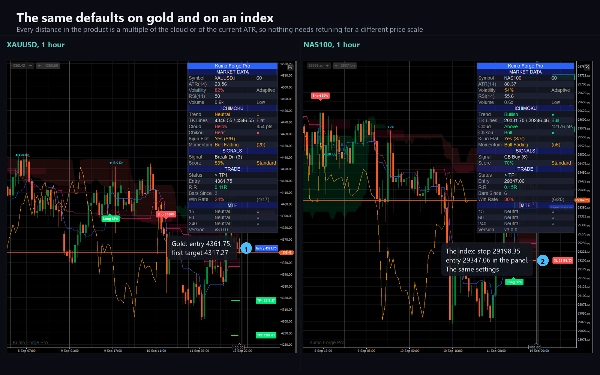
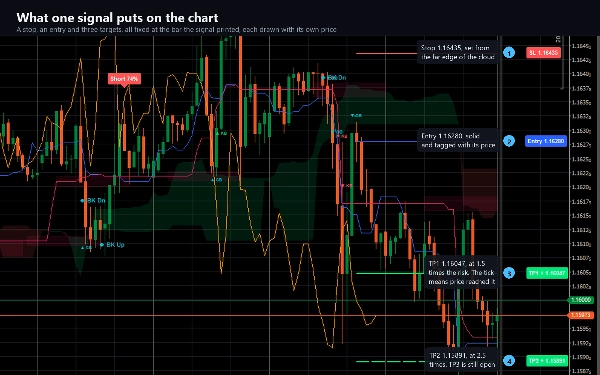
- رسم تجارة كامل بعد كل إشارة: الدخول، وقف الخسارة، وثلاثة مستويات جني أرباح، كل منها خط معنَّى يحمل سعره الخاص.
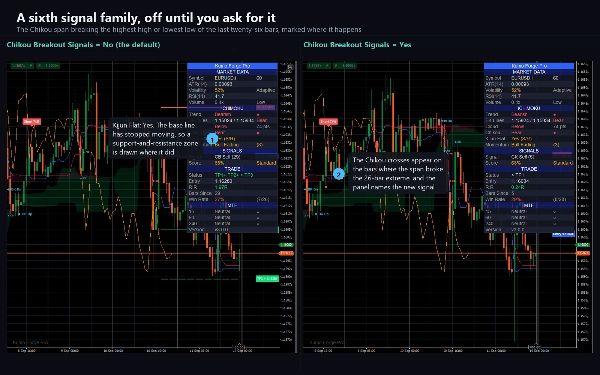
- مناطق دعم ومقاومة مرسومة حيثما يصبح كيجون-سن مستويًا.
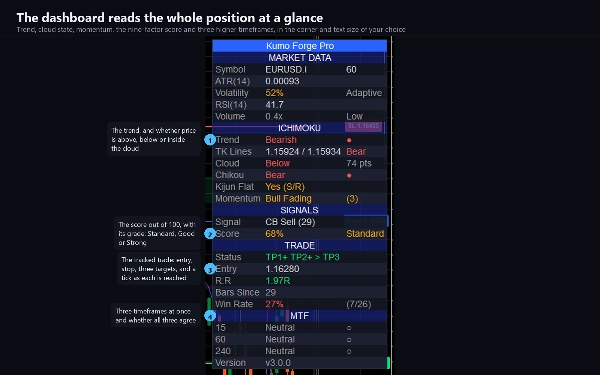
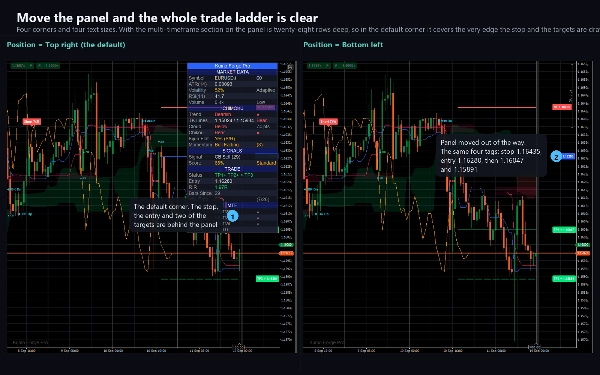
- لوحة معلومات تصل إلى 28 صفًا: ATR، التقلب، RSI، الحجم، الاتجاه، قيم الخطين، حالة السحابة وسمكها، تشيكو، الزخم، الإشارة ودرجتها، حالة التجارة الحية، نسبة المخاطرة إلى العائد، ولوحة توافق ثلاث أطر زمنية.
كيف يعمل التقييم
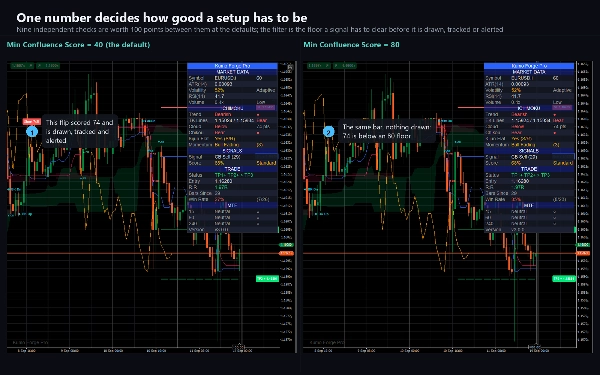
تسعة عوامل، كل منها يستحق عددًا ثابتًا من النقاط: السعر مقابل السحابة (20)، توافق الخطين (15)، اتفاق تشيكو (15)، اتجاه السحابة (10)، سمك السحابة (8)، الحجم (10)، الزخم (12)، تسارع الزخم (10)، واختياريًا RSI (10). يجب أن تصل الإشارة إلى الحد الأدنى لدرجة التلاقي - 40 من 100 بشكل افتراضي - قبل أن يتم رسمها على الإطلاق. ارفعها للحصول على إشارات أقل وأفضل؛ خفضها للمزيد.
اثنان من التسعة لا يعتمدان على الاتجاه، لذا فإن السحابة الرقيقة مع حجم منخفض تخفض كل من درجات الشراء والبيع معًا، ولا تطلق أي إشارة في أي اتجاه. هذا مقصود: السوق يخبرك بأنه لا يوجد شيء هناك.
خمسة أنواع من الإشارات، كلها على أشرطة مغلقة
1. تقاطع تنكان/كيجون، الزناد الكلاسيكي، مع الدرجة على اللوحة.
2. ارتداد كيجون - ينخفض السعر إلى الخط الأساسي ويغلق فوقه في اتجاه صاعد.
3. ارتداد حافة السحابة - نفس الفكرة مقابل حدود السحابة.
4. اختراق كومو، مع شرط حجم، بالإضافة إلى علامة إعادة اختبار عندما يعود السعر إلى الحافة المخترقة.
5. اختراق تشيكو، التأكيد الأكثر تأخيرًا، معطّل افتراضيًا.
يتم تقييم كل إشارة على شريط مغلق ولا تتحرك أبدًا بمجرد إغلاق ذلك الشريط.
محرك TP/SL الذكي
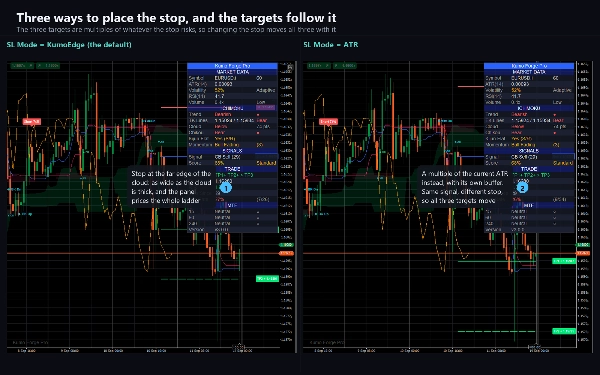
بعد كل إشارة يرسم دخولًا، وقف خسارة وثلاثة أهداف. يأتي الوقف من أقرب حافة سحابة، خط كيجون، أو مضاعف ATR مباشر - اختيارك - والأهداف الثلاثة هي مضاعفات مخاطرة له، 1.5R، 2.5R و4R بشكل افتراضي. تتتبع اللوحة أي منها تم الوصول إليه وتعرض نسبة المخاطرة إلى العائد الحية للفكرة المفتوحة.
لوحة الأطر الزمنية المتعددة
ثلاثة أطر زمنية - M15، H1 وH4 بشكل افتراضي، أي ثلاثة تختارها - كل منها يبلغ عن صعودي، هبوطي أو محايد من نفس اختبار إيشيموكو، بالإضافة إلى ما إذا كانت الثلاثة متفقة. يستقر صف الإطار الزمني الأعلى عند إغلاق شريط ذلك الإطار.
التنبيهات
ثلاثة وعشرون حدثًا عبر ثلاثة عشر مفتاحًا: كلا التقاطعين، كلا الاختراقين، كلا إعادة الاختبار، كلا ارتدادي كيجون، كلا ارتدادي السحابة، كلا اختراقات تشيكو، كل من الأهداف الثلاثة، الوقف، حدثي التوافق، تغييرات الاتجاه الثلاثة وحدثي الإشارة القوية. كل منها يذهب إلى سجل cTrader، صوت وبريد إلكتروني، مع جسم JSON متاح لأي شيء يقرأ سجلك.
الإعدادات الرئيسية
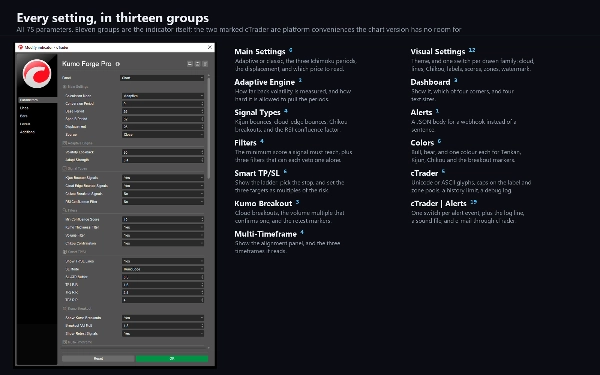
وضع الحساب يختار بين التكيفي والكلاسيكي. الفترات الثلاثة لإيشيموكو والإزاحة كلها قابلة للتعديل. الحد الأدنى لدرجة التلاقي هو المؤشر الوحيد الذي يغير كمية ما يتم رسمه. وضع وقف الخسارة والمضاعفات الثلاثة لنسبة المخاطرة إلى العائد تشكل رسم التجارة. كل عنصر بصري له مفتاحه الخاص، اللوحة لها أربع مواضع وأربع أحجام نص، وكل الألوان الستة لك.
خمسة وسبعون معلمة في المجموع، كل واحدة موثقة، مع الإعدادات الافتراضية التي تعمل على أول رسم بياني تضعه عليه.
نوع المؤشر والنافذة
مؤشر تراكبي: يرسم على مخطط السعر، وليس في جزء منفصل. يقرأ الأشرطة وحجم التيك فقط.
الأطر الزمنية والأدوات المفضلة
M15 إلى H1 هو المكان الذي صممت فيه فترات 9 / 26 / 52 للعمل وحيث يجلس مجموعة الأطر الزمنية المتعددة الافتراضية بشكل طبيعي فوق الرسم البياني. H4 وD1 تعطي إشارات أقل وأبطأ مع سحب أوسع. M1 وM5 تعمل لكنها تنتج إشارات أكثر بكثير - ارفع الحد الأدنى لدرجة التلاقي أولاً.
تم البناء والتحقق على EURUSD؛ المنطق غير مرتبط بالرمز ويستخدم على أزواج الفوركس الرئيسية والثانوية، الذهب والفضة، المؤشرات، النفط والعملات الرقمية. يحتاج فلتر الحجم إلى رمز يحمل حجم التيك في تغذيته، وهو ما تفعله الفوركس والعقود مقابل الفروقات.
لمن هو
المتداولون الذين يقرأون إيشيموكو ويريدون أن تواكب السحابة السوق المتغير، الحساب التوافقي المنجز لهم، ومستويات التجارة المرسومة بدلاً من قياسها يدويًا. يناسب التداول المتأرجح واليومي على M15 وما فوق.
ما ليس عليه
ليس نظامًا آليًا. لا يضع أوامر، ولا يفتح اتصال شبكة ولا يقرأ ملفات - لا يعلن عن أي حقوق وصول على الإطلاق، وهو ما يمكنك التحقق منه في تفاصيل الخوارزمية.
التجربة
التجربة هي نفس المنتج مقيد بـ EURUSD، مع قبول أي لاحقة للوسيط. لا يوجد حد زمني ولا شيء محجوز: كل أنواع الإشارات الخمسة، كل الفلاتر الأربعة، محرك TP/SL الكامل، المناطق، اللوحة، لوحة المعلومات، كل التنبيهات الـ 23 وكل المعلمات الـ 75. النسخة الكاملة تضيف كل الرموز الأخرى.
ملاحظات تقنية
cTrader Desktop 5.x. الإشارات لا تعيد الرسم. يتم إعادة رسم خطوط التجارة الخمسة في كل شريط بحيث تستمر في الوصول إلى الحافة اليمنى، وتستقر صفوف الأطر الزمنية المتعددة عند إغلاق شريطها الخاص - كلاهما موثق في الحزمة. يعرض cTrader هامشًا يمينيًا فقط مع تفعيل Chart Shift، لذا تُثبّت علامات السعر داخل الحافة اليمنى مباشرة.
الدعم
من خلال تبويب النقاش في هذه الصفحة. يرجى تضمين وسيطك، الرمز، الإطار الزمني، نسخة cTrader وصورة شاشة كاملة للرسم البياني بما في ذلك اللوحة.
التداول ينطوي على مخاطر. الأداء السابق لا يضمن النتائج المستقبلية.
الملخص
The indicator displays the full Ichimoku components—Tenkan-Sen, Kijun-Sen, Kumo cloud, and Chikou span—enhanced with nine-factor confluence scoring to evaluate signals out of 100 before plotting. It supports five signal types on closed bars: Tenkan/Kijun cross, Kijun bounce, cloud-edge bounce, Kumo breakout with retest, and Chikou breakout (optional).
Kumo Forge Pro automatically draws trade setups including entry, stop loss (configurable via cloud edge, Kijun line, or ATR), and three take-profit levels based on risk multiples. It also marks support/resistance zones where Kijun-Sen is flat.
A multi-timeframe panel displays Ichimoku signals across three user-selectable timeframes, indicating bullish, bearish, or neutral trends and their alignment. The dashboard provides up to 28 data rows covering volatility, momentum, volume, trend, and live trade status.
The indicator supports symbols with tick volume data, including major and minor forex pairs, metals, indices, oil, and crypto. It does not automate trading or place orders but offers extensive alerts and customization with 75 parameters.

![شعار "Gaussian Channel [Iridio Capital]"](https://cdn.ctrader.com/image/webp/2c4f9ca9-4e9b-476d-b5a6-787c8095032b_61546)