
Description
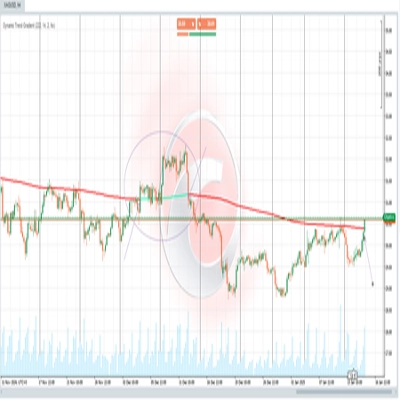
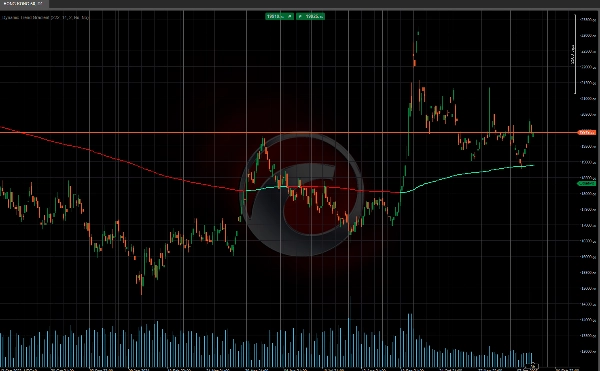
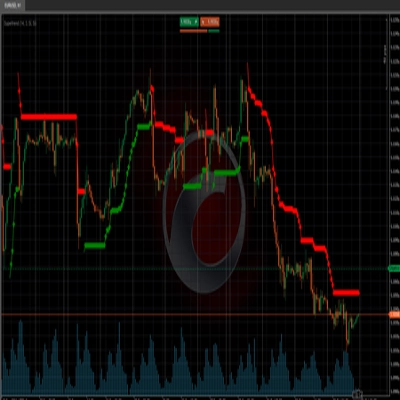
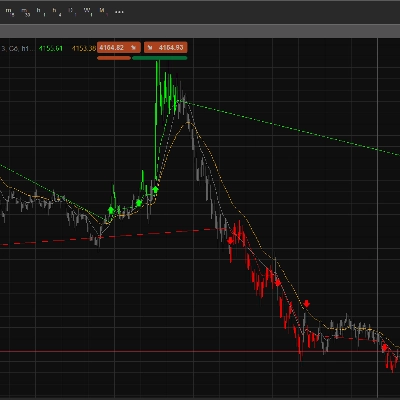
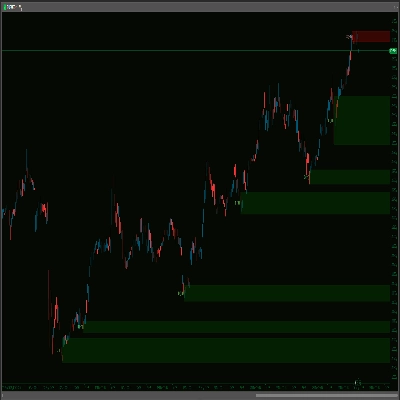
📈 This indicator is a tool that helps us identify and visualize the direction of the trend in a price chart. 📊 Its operation is based on the calculation of trend levels using exponential moving averages and a measure of volatility to determine the zones where the price is expected to move. Below, I’ll explain in detail how it works:
📐 Calculation of Trend Levels
The indicator starts by calculating what is called the "basis level." This level is obtained by averaging two exponential moving averages: one short-term (based on a user-defined length, in this case, 222) and one long-term (double the length of the first). These averages give us a reference for the overall trend.
Next, volatility is calculated using the standard deviation of the closing prices, and this value is smoothed with an additional exponential moving average. The smoothed volatility is multiplied by a parameter called "sensitivity," which gives us the upper and lower levels around the basis level. These levels act as trend bands and help identify whether the price is above or below the trend.
📉📈 Trend Status
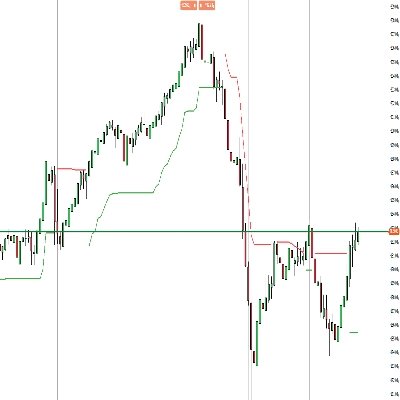
With these levels calculated, the indicator evaluates the trend status in the market. If the price is above the basis level, it assumes a bullish trend 🐂, and if it’s below, the trend is bearish 🐻. If the price crosses the upper or lower levels, the indicator changes its trend signal, indicating a possible reversal or shift in market momentum.
This tool is perfect for traders looking to stay ahead of market trends! 🚀📉📈
Ctrader Store indicators:
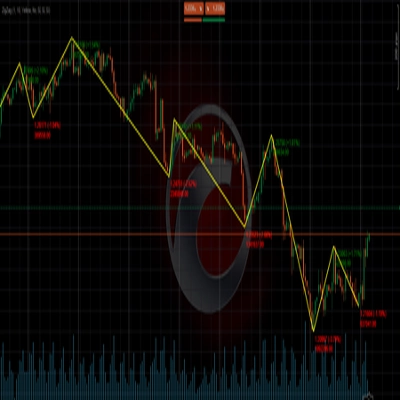
Dynamic Market Structure
Analysis of Turning Points
Fibonacci Linear
Regression Multi-timeframe
Multi-Level Candle Bias
Tracker
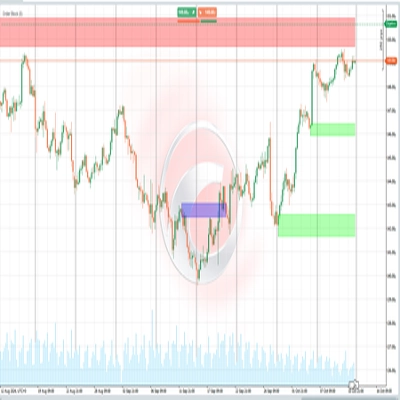
Auto Support and
Resistance Trend Lines
Summary
The indicator also measures volatility by computing the standard deviation of closing prices, smoothing it with an additional EMA. This smoothed volatility is scaled by a sensitivity parameter to establish upper and lower trend bands around the basis level. These bands define zones where price movement is expected.
Trend status is determined by the price position relative to the basis level: prices above indicate a bullish trend, while prices below indicate a bearish trend. Crossing the upper or lower bands signals potential trend reversals or shifts in market momentum.
This indicator supports traders in monitoring trend direction and detecting possible market turning points by combining moving averages and volatility measures. It is applicable across various markets where price data and EMAs are relevant.
Discussion
Customer reviews
5 | 20 % | |
4 | 80 % | |
3 | 0 % | |
2 | 0 % | |
1 | 0 % |



!["Gaussian Channel [Iridio Capital]" logo](https://cdn.ctrader.com/image/webp/2c4f9ca9-4e9b-476d-b5a6-787c8095032b_61546)