

Açıklama
GENEL BAKIŞ
Hacim Yayılım Analizi (VSA), eski bir sendika tüccarı olan Tom Williams tarafından, 1900'lerin başında Richard Wyckoff'un çalışmalarına dayanarak geliştirilmiş bir metodolojidir. VSA, arz ve talep dengesizliklerini belirlemek için hacim, fiyat yayılımı (aralık) ve kapanış konumu arasındaki ilişkiyi yorumlar.
Temel VSA Kavramları:
- Hacim aktivite miktarını gösterir - kim katılıyor
- Yayılım oynaklık ve belirsizliği gösterir - fiyat ne kadar hareket etti
- Kapanış Konumu barı kimin kazandığını gösterir - alıcılar mı yoksa satıcılar mı
- Bağlam piyasa döngüsünde nerede olduğumuzu gösterir - güç veya zayıflık aşaması
Hacim geniş yayılım ile artarken fiyat çok az ilerliyorsa, bu absorpsiyonu (bir tarafın diğerinin baskısını emmesi) gösterir. Hacim dar yayılım ile azalıyorsa, bu katılım eksikliğini (potansiyel zayıflık) gösterir.
Bu Uygulama:
Bu gösterge, VSA kavramlarını istatistiksel yöntemlerle nicelendirir. Geleneksel VSA'dan birkaç yönden farklıdır:
- Verimlilik metriği olarak
(kapanış - açılış) / aralıkkullanır (orijinal VSA'da yoktur) - Absorpsiyon desenleri geleneksel "baskı emilimi" yerine "bir tarafın kazanması" olarak tanımlanır
- ENR (Çaba Sonuç Yok) verimlilik eşiği kullanılarak nicelendirilir; orijinal VSA daha yorumlayıcıdır
- Hacim ortalaması için kırpılmış ortalama (aykırı değerlere dayanıklı) ve yayılım için yüzde sıralaması kullanır
- Dahil edilmez: Durdurma Hacmi, Yukarı Atış, Test, Shakeout desenleri
Bu, VSA kavramlarına nicel, algoritmik bir yaklaşımdır. Geleneksel VSA daha yorumlayıcı ve bağlama bağlıdır. Bu göstergeleri tek başına sinyal olarak değil, birçok analitik araçtan biri olarak kullanın.
BU GÖSTERGE NE YAPAR
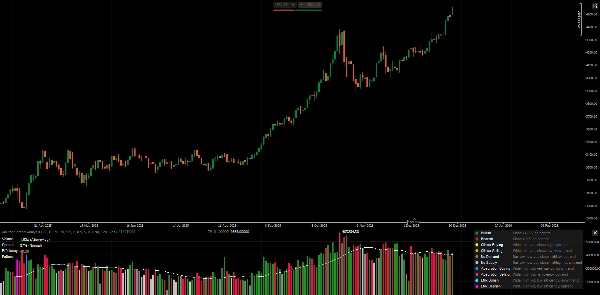
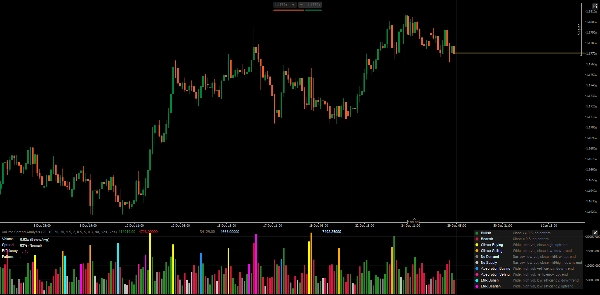
Her barın hacmini, yayılımını ve kapanış konumunu analiz ederek potansiyel arz/talep dengesizliklerini tespit eder. Desen türüne göre renklendirilmiş hacim histogramı ve gerçek zamanlı metrik paneli gösterir.
DESEN TANIMLARI
1. Standart Barlar (Desensiz)
- Boğa: Kapanış aralıkta ≥ 0.5, özel desen yok
- Ayı: Kapanış aralıkta < 0.5, özel desen yok
2. Doruk Desenleri (Olası Tükenme)
- Doruk Alımı: Geniş yayılım + ultra yüksek hacim + yüksek kapanış + yükseliş trendinde
-
- Yorum: Olası alım tükenmesi, dönüşe dikkat edin
- Doruk Satışı: Geniş yayılım + ultra yüksek hacim + düşük kapanış + düşüş trendinde
-
- Yorum: Olası satış tükenmesi, dönüşe dikkat edin
3. Zayıf Desenler (İnanç Eksikliği)
- Talep Yok: Dar yayılım + düşük hacim + orta/düşük kapanış + yükseliş trendinde
-
- Yorum: Alıcılar ralliyi desteklemiyor, potansiyel zayıflık
- Arz Yok: Dar yayılım + düşük hacim + orta/yüksek kapanış + düşüş trendinde
-
- Yorum: Satıcılar aşağı itmiyor, potansiyel güç
4. Absorpsiyon Desenleri (Bir Tarafın Kazanması)
- Absorpsiyon Alımı: Geniş yayılım + yüksek hacim + pozitif verimlilik + düşüş trendinde
-
- Yorum: Alıcılar satış baskısını emiyor, potansiyel yukarı dönüş
- Absorpsiyon Satışı: Geniş yayılım + yüksek hacim + negatif verimlilik + yükseliş trendinde
-
- Yorum: Satıcılar alım baskısını emiyor, potansiyel aşağı dönüş
5. ENR Desenleri (Net Sonuç Olmadan Çaba)
- ENR Boğa: Geniş yayılım + yüksek hacim + düşük verimlilik + düşüş trendinde
-
- Yorum: Yüksek çaba ama net kazanan yok, potansiyel destek/kararsızlık
- ENR Ayı: Geniş yayılım + yüksek hacim + düşük verimlilik + yükseliş trendinde
-
- Yorum: Yüksek çaba ama net kazanan yok, potansiyel direnç/kararsızlık
METRİK PANELİ AÇIKLAMASI
Hacim
- Mevcut bar hacmini kırpılmış ortalamaya oran olarak gösterir (örneğin, "1.85x")
- Sınıflandırma: Düşük / Ortalama Altı / Ortalama Üstü / Yüksek / Ultra Yüksek
- Yüksek hacim = piyasa katılımı, ancak bağlam önemlidir
Yayılım
- Son barlara göre yüzde sıralaması (0-100%) gösterir
- Sınıflandırma: Dar / Normal / Geniş
- Geniş yayılım = oynaklık/belirsizlik, mutlaka yön değil
Verimlilik
- Formül:
(kapanış - açılış) / (yüksek - düşük) - Aralık: -1.0 ile +1.0 arasında
- Pozitif = boğa gövdesi aralığı domine eder
- Negatif = ayı gövdesi aralığı domine eder
- Sıfıra yakın = küçük gövde, uzun fitil, kararsızlık
Desen
- Mevcut tespit edilen desen (yoksa "-")
PARAMETRELER
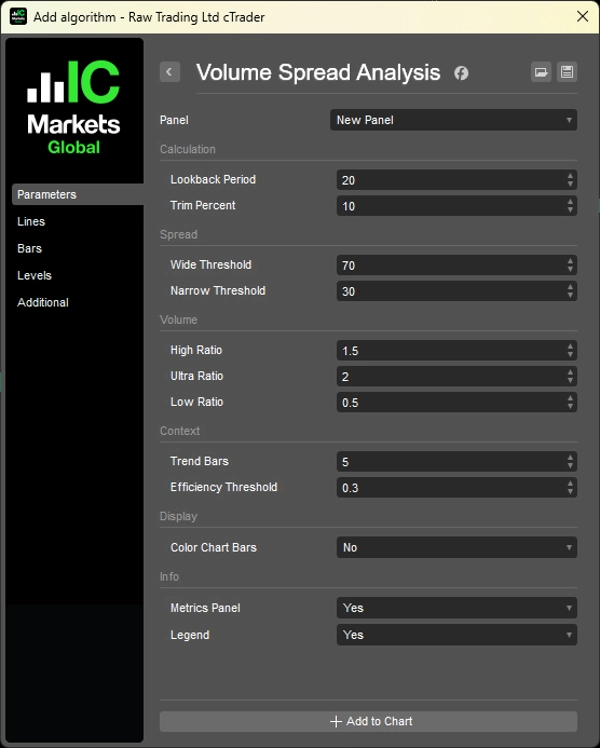
1. Hesaplama
- Geriye Bakış Dönemi (20): Hacim/yayılım istatistikleri için kullanılan barlar
- Kırpma Yüzdesi (10%): Hacim hesaplamasından aykırı değerleri çıkarır
2. Yayılım Sınıflandırması
- Geniş Eşik (70%): "Geniş" olarak sınıflandırmak için yüzde sırası
- Dar Eşik (30%): "Dar" olarak sınıflandırmak için yüzde sırası
3. Hacim Sınıflandırması
- Yüksek Oran (1.5x): Ortalama üstü eşik
- Ultra Oran (2.0x): Ultra yüksek eşik
- Düşük Oran (0.5x): Ortalama altı eşik
4. Bağlam
- Trend Barları (5): Trend yönünü karşılaştırmak için geriye dönük barlar
- Verimlilik Eşiği (0.3): "Güçlü" verimlilik için minimum
5. Görüntüleme
- Grafik Barlarını Renklendir: Fiyat grafiğine desen renklerini uygular
- Metrik Paneli: Gerçek zamanlı metrikleri gösterir
- Açıklama: Desen referans rehberini gösterir
KULLANIM ŞEKLİ
1. Desenleri doğrudan işlem sinyali olarak kullanmayın - potansiyel bağlamı gösterir, girişleri değil.
2. Fiyat yapısı ile birleştirin - VSA, fiyat yapısının gösterdiklerini doğrulamada en iyi şekilde çalışır.
3. Bağlamı izleyin - aynı desen destek ve dirençte farklı anlamlar taşıyabilir.
4. Hacim perspektifi önemlidir - ana seviyede yüksek hacimli absorpsiyon > rastgele bar absorpsiyonu.
Forex Hacim Sınırlaması
Forex spot piyasası gerçek işlem hacmi yerine tik hacmi (fiyat değişikliği sayısı) gösterir. Desenler, gerçek hacim verisi olan vadeli işlemler/hisselere göre daha az güvenilir olabilir.
AÇIKLAMA (Yerleşik Referans)
"Açıklama" parametresini etkinleştirerek desen açıklamalarını doğrudan grafikte görüntüleyin.
__________________________________________________________________________________________
DAHA FAZLA ÜCRETSİZ GÖSTERGE
Yapı ve hacimden regresyon, oynaklık ve özel zaman dilimlerine kadar geniş bir piyasa analiz araçları yelpazesini keşfedin.
Kaynak kodu GitHub deposunda mevcuttur.
Kullanımı tamamen ücretsizdir. Ancak kahve desteği göndermek isterseniz, buradan gönderebilirsiniz.
Destek/Direnç
Hacim
- Hacim Aktivite Profili
- Hacim Verimlilik Analizörü
- Hacim Profili Analitiği
- Hacim Profili - Güncellenmiş
- Hacim Yayılım Analizi
- VWAP (Hacim Ağırlıklı Ortalama Fiyat)
Hareketli Ortalamalar
- SSL Kanalı
- Çapa Hareketli Ortalaması
- Sapma Ölçekli Hareketli Ortalama
- Gann Yüksek Düşük Aktivator
- Anlık Trend Çizgisi
- Trend Vizyonlu Kaufman Adaptif MA
- Hareketli Ortalama Kanalı
- Hareketli Ortalamalar Paketi
- Trend Kanalı Hareketli Ortalaması
Araçlar/Özel
Regresyona Dayalı
Oynaklık
Osilatörler
__________________________________________________________________________________________
FERAGATNAME
Ticaret risk içerir. Bu gösterge yalnızca teknik analiz amaçlıdır — her zaman uygun risk yönetimi uygulayın ve sorumlu şekilde işlem yapın.
GERİ BİLDİRİM & GELİŞTİRMELER
Önerileriniz, özellik talepleriniz veya geliştirme fikirleriniz varsa, lütfen Tartışma sekmesinde yorum bırakın. Geri bildiriminiz göstergenin herkes için geliştirilmesine yardımcı olur.
Özet
This implementation quantifies VSA concepts using statistical methods, including an efficiency metric defined as (close - open) / range, trimmed mean volume averaging, and percentile ranking for spread. It identifies several bar patterns: Standard (bullish/bearish), Climax (buying/selling exhaustion), Weak (No Demand/No Supply), Absorption (one side winning), and ENR (Effort No Result), each indicating different market conditions.
The indicator displays a volume histogram colored by detected pattern type and provides a real-time metrics panel showing volume ratio, spread percentile, efficiency, and current pattern. Parameters allow customization of lookback periods, volume/spread thresholds, and display options such as coloring chart bars and showing a pattern legend.
VSA is applicable across markets including Forex, stocks, indices, commodities, and crypto. Note that Forex volume reflects tick volume, which may affect pattern reliability. The indicator is designed as an analytical tool to complement price structure analysis rather than as standalone trade signals.
Müşteri değerlendirmeleri
5 | 100 % | |
4 | 0 % | |
3 | 0 % | |
2 | 0 % | |
1 | 0 % |
Tartışma
SSS
Bu oluşturanın diğer ürünleri












!["[Stellar Strategies] Wave Trend Pro" logosu](https://cdn.ctrader.com/image/webp/5f226fbb-245a-41cd-9cdd-b018257d5e6d_28617)






Fiyat