

Descripción
VISIÓN GENERAL
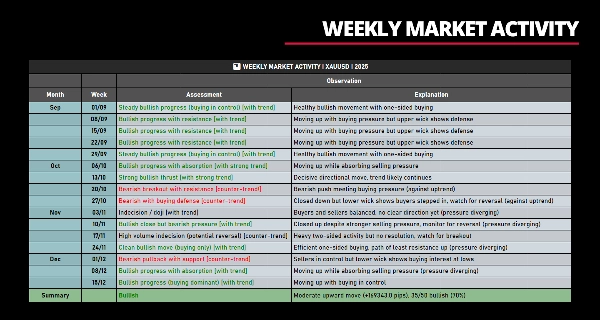
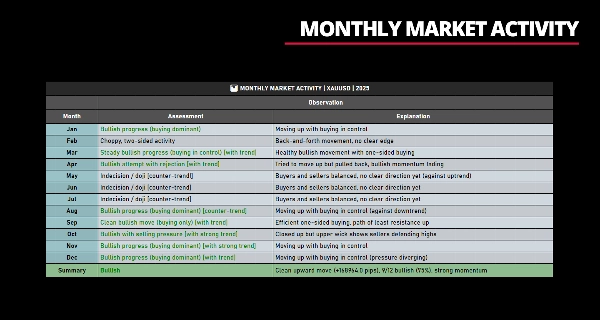
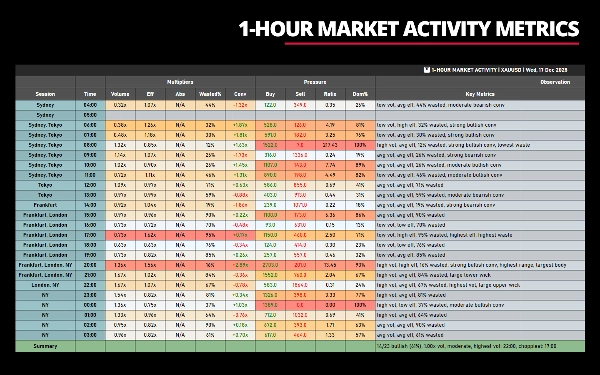
Analizador de Eficiencia de Volumen es una herramienta integral de análisis barra por barra que mide la relación entre el volumen (esfuerzo) y el movimiento del precio (resultado). Fue originalmente creada para uso personal para responder a una pregunta específica: "¿El mercado se está moviendo eficientemente, o hay mucha actividad sin un progreso significativo?"
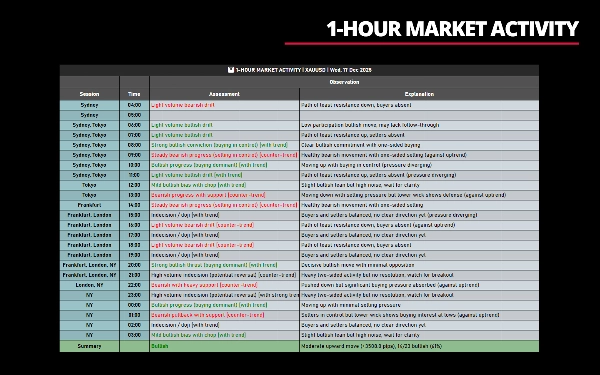
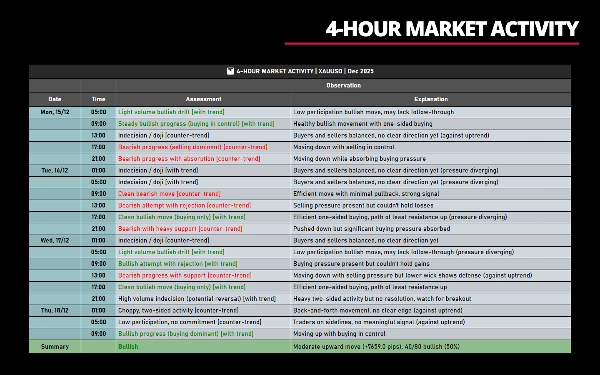
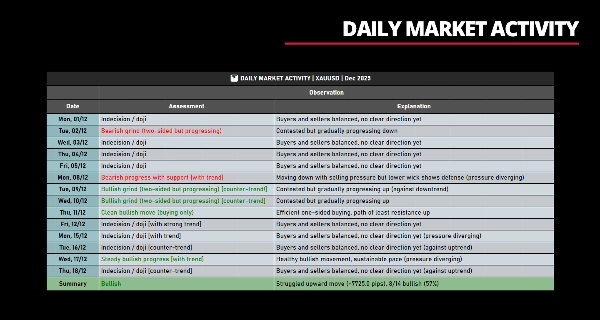
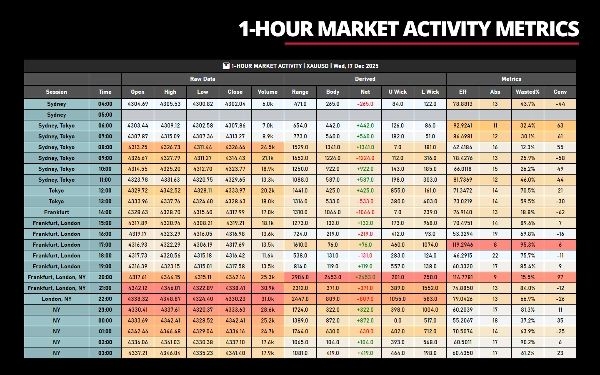
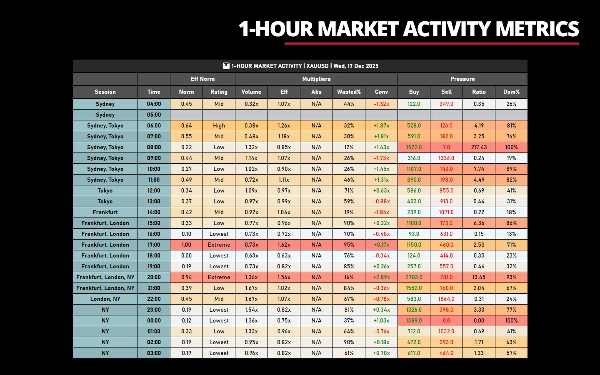
Este indicador NO produce ninguna salida gráfica. Muestra análisis estadísticos y métricas solo en formato de tabla—sin líneas, señales ni superposiciones de precio. Estas métricas miden y cuantifican la calidad y características de la acción del precio y el comportamiento del mercado, ayudándote a entender si los movimientos son decisivos, agotados, disputados o indecisos—después de que ocurren.
__________________________________________________________________________________________
DE UN VISTAZO
Salida: Datos estadísticos (sin gráficos)
Visualización: Formato de tabla
Marcos de tiempo: Desde subdiarios hasta mensuales
Métricas: Más de 20 indicadores de eficiencia/presión
Ideal para: Análisis de volumen, evaluación de calidad
__________________________________________________________________________________________
CONCEPTO CENTRAL: ESFUERZO VS RESULTADO
La premisa fundamental es simple:
- Esfuerzo = Volumen de ticks (actividad de trading)
- Resultado = Movimiento del precio (rango, cuerpo, cambio neto)
Los mercados eficientes producen movimientos de precio sustanciales con un volumen razonable—los movimientos son limpios y decisivos.
Los mercados ineficientes muestran alto volumen pero progreso neto limitado—los movimientos son irregulares, disputados o absorbidos.
Midiendo esta relación a través de barras individuales y períodos agregados, puedes identificar:
- Condiciones de tendencia vs. rango
- Compromiso vs. indecisión
- Agotamiento vs. continuación
- Mercados unilaterales vs. bilaterales
__________________________________________________________________________________________
CONFIGURACIÓN DE PARÁMETROS CLAVE
Estos cinco parámetros controlan qué datos muestra el indicador. Entender cómo funcionan es crucial para un uso efectivo.
1. Parámetro de Fecha
Propósito: Define qué fecha/período analizar.
Ejemplos de formato:
""(vacío) – Día de trading más reciente con datos"18/12/2025"– Fecha específica (DD/MM/AAAA)"12/2025"– Mes completo (MM/AAAA)"2025"– Año completo (AAAA)
2. Parámetro de Rango de Tiempo
Propósito: Filtra qué horas mostrar en marcos de tiempo subdiarios.
Aplica a: Solo marcos de tiempo subdiarios (1 minuto a 1 hora)
Ejemplos de formato:
""(vacío) – Día de trading completo de 24 horas"8-16"– 8:00 AM a 4:00 PM"08:00-16:30"– 8:00 AM a 4:30 PM"14"– 2:00 PM hasta la hora actual
3. Parámetro de Rango de Semanas
Propósito: Filtra qué semanas del mes mostrar.
Aplica a: Solo marcos de tiempo multi-hora (2 a 12 horas)
Ejemplos de formato:
""(vacío) – Todas las semanas del mes"1"– Solo la primera semana"1,3"– Semanas 1 y 3"2,3,4"– Semanas 2, 3 y 4
4. Parámetro de Rango de Meses
Propósito: Filtra qué meses del año mostrar.
Aplica a: Solo marcos de tiempo semanales
Ejemplos de formato:
""(vacío) – Todos los meses del año"1"– Solo enero"1,6,12"– Enero, junio, diciembre"3,4,5,9,10,11"– Q1 (primavera) y Q4 (otoño)
5. Parámetro MaxDataRows
Propósito: Limita cuántas filas (barras) se muestran en la tabla.
Aplica a: Todos los marcos de tiempo
Valor predeterminado: 24
Formato:
-1o0– Mostrar todos los datos disponibles (sin límite)- Cualquier número positivo – Mostrar ese máximo de filas
__________________________________________________________________________________________
CARACTERÍSTICAS
Flexibilidad
- 8 Grupos de Columnas: Alterna la visibilidad de Datos en Crudo, Derivados, Métricas, Normalización de Eficiencia, Multiplicadores, Presión, Observaciones Clave, Métricas Clave
- Múltiples Marcos de Tiempo: Funciona en subdiarios (1m-1h), multi-hora (2h-12h), diarios, semanales y mensuales
- Filtrado: Filtro de rango horario (ej., "8:00-16:00"), filtro de semanas (ej., "1,3"), filtro de meses (ej., "1,6,12")
- Máximo de Filas: Limita la visualización a los N períodos más recientes o centrado alrededor de la barra en formación
- Resaltado de Color: Resaltado opcional en gradiente para cualquier grupo de columnas basado en la métrica seleccionada
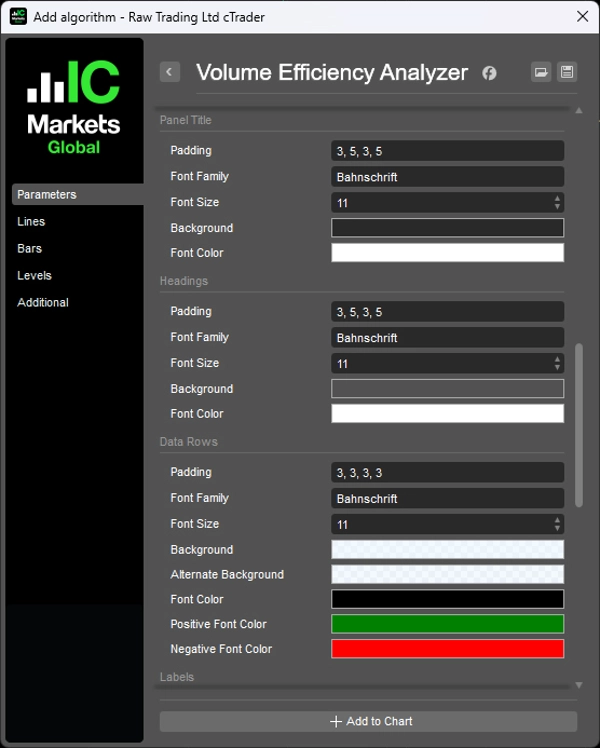
- Estilo Personalizable: Control total sobre fuentes, colores, relleno, anchos de columna
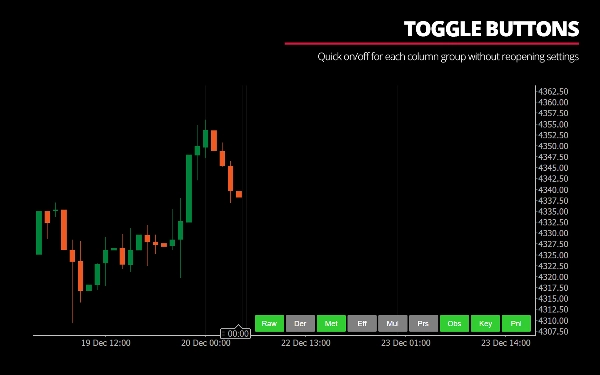
- Botones de Alternancia: Encendido/apagado rápido para cada grupo de columnas sin reabrir configuraciones
Soporte de Zona Horaria
- Ajusta la hora del servidor del broker vs. tu hora local
- Horas configurables de inicio de sesión (Sídney, Tokio, Frankfurt, Londres, NY)
- Inicio del día de trading por hora (ej., 4:00 AM para traders de sesión asiática)
Optimizaciones de Rendimiento
- Búsqueda binaria para consultas eficientes de barras
- Cálculos de min/máx en un solo paso para resaltado
- Limitación de 500ms en actualizaciones en tiempo real para evitar retrasos
- Sugerencias de búsqueda para evitar consultas redundantes
__________________________________________________________________________________________
ENTENDIENDO LAS MÉTRICAS
¿Qué Hace un Buen Movimiento?
- Alta Eficiencia: Se desplazó mucho con poco volumen
- Bajo % Desperdiciado: Mínimas mechas, cuerpos direccionales limpios
- Presión Alineada: Presión de compra dominante en cierres alcistas (o viceversa)
- Fuerte Convicción: Alto compromiso direccional
¿Qué Hace un Mal Movimiento?
- Baja Eficiencia: Requirió mucho volumen para moverse poco
- Alto % Desperdiciado: Grandes mechas, cuerpos pequeños (ruido)
- Presión Contradictoria: Cierre alcista pero presión de venta dominante
- Convicción Débil: Sin compromiso direccional a pesar del volumen
¿Qué Significa la Absorción?
Cuando el precio lucha por moverse a pesar del alto volumen, el mercado está "absorbiendo" ese volumen. Esto indica:
- Alta Absorción: Resistencia/soporte presente, difícil mover el precio
- Baja Absorción: Movimiento fácil, poca oposición
Interpretaciones de Ejemplo:
"Fuerte empuje alcista (compra dominante)"
- Alto volumen + Alta eficiencia + Bajo desperdicio + Neto alcista + Presión de compra dominante
"Indecisión de alto volumen (posible reversión)"
- Alto volumen + Desperdicio extremo + Cuerpo pequeño + Presión equilibrada
"Cierre alcista a pesar de presión bajista"
- Cerró al alza pero la presión de venta superó a la de compra (divergencia, posible trampa)
"Baja participación, sin compromiso"
- Bajo volumen + Eficiencia promedio + Sin dominio claro de presión
__________________________________________________________________________________________
VENTAJAS Y BENEFICIOS
1. Cuantifica la Intuición
- Si alguna vez sentiste "esto parece irregular" o "este movimiento parece débil", este indicador cuantifica esas observaciones
- Proporciona métricas objetivas para evaluaciones subjetivas
2. Análisis Multidimensional
- La mayoría de las herramientas muestran volumen O patrones de precio. Esto muestra su relación
- Combina volumen, estructura de precio, sesgo direccional y dinámica de presión en una vista
3. Consciente del Contexto
- Las evaluaciones de barras individuales consideran el contexto de la tendencia
- Distingue entre "consolidación en tendencia alcista" vs. "consolidación en tendencia bajista"
- Marca movimientos contrarios a la tendencia que podrían ser trampas
4. Educativo
- Interpretaciones en lenguaje natural que te ayudan a aprender la dinámica del mercado
- Con el tiempo, comenzarás a reconocer patrones de eficiencia sin el indicador
5. Aplicación Versátil
- Traders de tendencia: Identifican cuándo las tendencias son fuertes vs. agotándose
- Traders de rango: Detectan zonas de consolidación con alto desperdicio
- Traders de ruptura: Detectan rupturas decisivas de alto volumen vs. falsas rupturas
- Traders de volumen: Ven el volumen en el contexto de lo que logró
6. Sin Retardo
- Todos los cálculos se basan en barras completadas (o barra en formación actual)
- Sin suavizados, sin medias móviles, sin repintado
__________________________________________________________________________________________
DESAFÍOS Y PREOCUPACIONES
Antes de usar este indicador, entiende estas consideraciones importantes:
Este Indicador NO es para Todos:
1. Alta Complejidad
- Más de 20 métricas en 8 grupos de columnas
- Requiere comprensión de análisis de volumen, acción del precio y microestructura del mercado
- Curva de aprendizaje empinada—espera 1-2 semanas de observación antes de que los patrones sean claros
2. Sobrecarga de Información
- La vista predeterminada "mostrar todo" es abrumadora
- Debes personalizarla para que coincida con tu enfoque de trading
- Es posible la parálisis por decisión si intentas usar todas las métricas a la vez
3. No es un Sistema de Trading
- Este indicador NO te dice cuándo comprar o vender
- Te dice qué está haciendo el mercado, no qué DEBES hacer
- Debes integrarlo con tus propias reglas de entrada/salida
4. Requiere Interpretación
- "Indecisión de alto volumen" podría significar pre-ruptura O agotamiento
- "Movimiento alcista eficiente" no garantiza continuación
- Necesitas contexto de mercado más allá de lo que muestra el indicador
5. Limitaciones del Volumen
- Forex usa volumen de ticks (conteo de transacciones), no volumen real
- Instrumentos con baja liquidez pueden mostrar lecturas erráticas de eficiencia
- Eventos noticiosos pueden crear picos de volumen que distorsionan métricas temporalmente
6. Rendimiento en Marcos de Tiempo Bajos
- En gráficos de 1 minuto con más de 100 barras visibles, la interfaz puede sentirse lenta
- Más barras = más cálculos por actualización
- Recomendado: Usar gráficos de ≥5 minutos para monitoreo en tiempo real
7. Sin Alertas
- Actualmente no genera alertas para condiciones específicas
- Debes monitorear la visualización manualmente
8. Umbrales Subjetivos
- Volumen "alto" se define como 1.25x promedio—este es mi umbral personal
- Desperdicio "extremo" es ≥80%—también subjetivo
- Puedes no estar de acuerdo con estas definiciones, pero están codificadas
__________________________________________________________________________________________
CÓMO FUNCIONA
1. Recolección de Datos
- Define el período de análisis (rango de fecha/hora)
- Para cada barra en el período, recopila datos OHLCV de las barras del gráfico
- Calcula métricas derivadas y de eficiencia para cada barra
- Agrega métricas para establecer promedios y extremos
2. Lógica de Interpretación
Las evaluaciones en lenguaje natural siguen una matriz de decisión basada en prioridades:
Prioridad 1: Patrones de Indecisión
- % desperdiciado extremo (≥80%) o cuerpo pequeño con mechas altas → Señales de Doji/Rechazo
- Alto volumen + desperdicio extremo → Posible agotamiento
Prioridad 2: Escenarios de Alto Volumen
- Alto volumen + alta eficiencia + bajo desperdicio → Empuje decisivo
- Alto volumen + alta eficiencia + alto desperdicio → Ruptura con resistencia
- Alto volumen + baja eficiencia + alto desperdicio → Movimiento de absorción/disputado
Prioridad 3: Señales Basadas en Eficiencia
- Alta eficiencia independientemente del volumen → Movimientos limpios/eficientes
- Baja eficiencia → Deriva, molienda o movimientos débiles
Prioridad 4: Respaldo por Nivel de Volumen
- Bajo volumen → Deriva, sin compromiso
- Volumen promedio → Evaluado por convicción, % de cuerpo, nivel de desperdicio
3. Refinamientos:
- El análisis de presión detecta contradicciones (ej., "cierre alcista pero presión de venta dominante")
- El análisis de mechas identifica rechazo (mechas superiores en barras alcistas = vendedores defendieron máximos)
- El contexto de tendencia añade marcadores "[con tendencia]" o "[contra tendencia]"
4. Cálculo Resumen
- Cuenta barras alcistas vs. bajistas
- Calcula eficiencia direccional (movimientos alcistas vs. bajistas)
- Mide ratios de absorción (cuánta resistencia enfrentó cada lado)
- Calcula movimiento neto acumulado y contexto de tendencia
- Genera sesgo unificado que combina conteo, magnitud y dirección de tendencia
__________________________________________________________________________________________
NOTAS TÉCNICAS
Método de Cálculo
- Usa análisis acumulativo de barras dentro de cada período
- Suma el volumen, mechas y cuerpos de todas las sub-barras
- Calcula sesgo direccional neto a partir de datos acumulativos
- Más preciso que un análisis simple OHLC
Normalización
- Eficiencia normalizada respecto a min/máx en el conjunto de datos visible
- Asegura que las calificaciones sean contextualmente apropiadas
- Escala de calificaciones: Extremo (80-100%) → Alto (60-80%) → Medio (40-60%) → Bajo (20-40%) → Más bajo (0-20%)
Contexto de Tendencia
- Calcula pips netos acumulados sobre todos los períodos anteriores
- Identifica períodos direccionales consecutivos
- Compara eficiencia y presión recientes vs. previas
- Etiquetas: "Tendencia alcista (fuerte)", "Tendencia bajista (débil)", "Rango"
__________________________________________________________________________________________
NOTA FINAL
Este indicador fue creado con la creencia de que entender la calidad del mercado es más valioso que predecir la dirección.
En lugar de preguntar "¿subirá el precio?", pregunta:
- "¿Es este movimiento de alta calidad?"
- "¿Están los compradores/vendedores luchando o siendo eficientes?"
- "¿Es esta ruptura sostenible o débil?"
- "¿Están las dinámicas actuales alineadas o divergentes?"
Al enfocarse en la calidad sobre la predicción, los traders pueden:
- Evitar configuraciones de baja probabilidad
- Entrar en movimientos con compromiso detrás
- Salir cuando el esfuerzo excede el resultado
- Entender cuándo mantenerse fuera (ambiente de baja calidad)
Si valoras la transparencia, educación y entender por qué el precio se mueve como lo hace, este indicador puede ser valioso para ti.
Si prefieres simplicidad y señales rápidas, otras herramientas te servirán mejor.
__________________________________________________________________________________________
MÁS INDICADORES GRATUITOS
Explora una amplia gama de herramientas de análisis de mercado—desde estructura y volumen hasta regresión, volatilidad y marcos de tiempo personalizados.
El código fuente está disponible en el repositorio de GitHub repository.
Todos son gratuitos. Pero si quieres apoyar con un café, puedes hacerlo aquí.
Soporte/Resistencia
Volumen
- Perfilador de Actividad de Volumen
- Analizador de Eficiencia de Volumen
- Análisis de Perfil de Volumen
- Perfil de Volumen - Actualizado
- Análisis de Spread de Volumen
- VWAP (Precio Promedio Ponderado por Volumen)
Medias Móviles
- Canal SSL
- Media Móvil Anclada
- Media Móvil Escalada por Desviación
- Activador Gann High Low
- Línea de Tendencia Instantánea
- Media Móvil Adaptativa Kaufman con Visión de Tendencia
- Canal de Media Móvil
- Suite de Medias Móviles
- Media Móvil de Canal de Tendencia
Utilidades/Personalizados
Basado en Regresión
Volatilidad
Osciladores
__________________________________________________________________________________________
DESCARGO DE RESPONSABILIDAD
El trading implica riesgos. Este indicador está destinado solo para análisis técnico — siempre aplica una gestión adecuada del riesgo y opera responsablemente.
COMENTARIOS Y MEJORAS
Si tienes sugerencias, solicitudes de funciones o ideas para mejoras, por favor deja un comentario en la pestaña de Discusión. Tus comentarios ayudan a mejorar el indicador para todos.
Resumen
Key features include customizable column groups, color highlighting, and time zone adjustments for various trading sessions. The indicator quantifies market conditions by identifying efficient versus inefficient moves, absorption levels, and directional pressure, helping traders distinguish between decisive, exhausted, or indecisive price actions after they occur. It incorporates trend context and natural language interpretations to aid understanding of market dynamics.
Volume Efficiency Analyzer does not generate buy/sell signals or alerts; it is intended to complement traders’ own strategies by providing objective metrics that quantify market quality rather than predict direction. It requires familiarity with volume analysis and market microstructure due to its complexity and information density. The indicator is suitable for trend, range, breakout, and volume-focused traders seeking a comprehensive, multi-dimensional view of market behavior.
Valoraciones de clientes
5 | 100 % | |
4 | 0 % | |
3 | 0 % | |
2 | 0 % | |
1 | 0 % |
Conversación
Preguntas frecuentes
Más de este autor






![Logotipo de "Gaussian Channel [Iridio Capital]"](https://cdn.ctrader.com/image/webp/2c4f9ca9-4e9b-476d-b5a6-787c8095032b_61546)


Precio