

Descrizione
PANORAMICA
L'indicatore Balance of Power misura la forza degli acquirenti rispetto ai venditori valutando la capacità di ciascuna parte di spingere i prezzi a livelli estremi.
Introdotto da Igor Levshin nel numero di agosto 2001 della rivista Technical Analysis of Stocks & Commodities, BOP calcola il rapporto del movimento del prezzo all'interno dell'intervallo di ogni barra per rivelare le dinamiche di forza interna indipendentemente dalla direzione del prezzo.
CONCETTO
Balance of Power misura dove il prezzo si chiude all'interno dell'intervallo di ogni barra per rivelare la battaglia interna tra acquirenti e venditori.
Il principio di base è semplice: gli acquirenti spingono i prezzi verso l'alto, i venditori verso il basso. Dove il prezzo si chiude infine all'interno di quell'intervallo rivela chi ha dominato il periodo di trading.
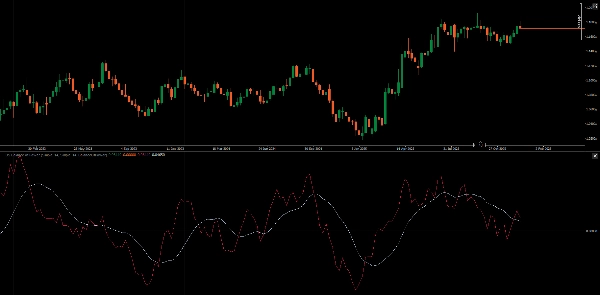
I valori grezzi sono smussati usando una media mobile per ridurre il rumore e rivelare una pressione direzionale sostenuta, trasformando letture erratiche barra per barra in un indicatore di momentum pulito che traccia i cambiamenti nel controllo del mercato.
APPLICAZIONE ALLA STRUTTURA DI MERCATO
BOP fornisce un'analisi della forza interna che può confermare o contraddire la struttura del prezzo:
Identificazione della Fase di Trend
- Forte trend rialzista: BOP costantemente sopra zero con minimi crescenti
- Forte trend ribassista: BOP costantemente sotto zero con massimi decrescenti
- Consolidamento: BOP che oscilla intorno alla linea zero
- Zone di transizione: BOP che rompe la struttura precedente (massimo più alto/minimo più basso)
Confluenza Supporto/Resistenza
- Il ritorno di BOP a zero spesso coincide con il test di livelli chiave da parte del prezzo
- Letture estreme di BOP (+0,8 a +1,0 o -0,8 a -1,0) possono indicare esaurimento vicino alla struttura
- La divergenza ai livelli di struttura suggerisce un potenziale rifiuto o superamento
Distribuzione/Accumulo
- Prezzi in aumento con BOP in calo: potenziale fase di distribuzione
- Prezzi in calo con BOP in aumento: potenziale fase di accumulo
- Queste divergenze sono più significative vicino ai principali livelli di struttura
STRATEGIA MULTI-TIMEFRAME
L'uso di BOP su diversi timeframe fornisce contesto e precisione:
1. Timeframe Superiore (HTF) - Bias Direzionale:
- BOP Daily/4H sopra zero → cercare opportunità di acquisto su timeframe inferiori
- BOP Daily/4H sotto zero → cercare opportunità di vendita su timeframe inferiori
- BOP HTF che attraversa zero → cambiamento importante di trend, attendere conferma
2. Timeframe Inferiore (LTF) - Tempistica di Entrata:
- BOP 1H/15M allineato con HTF → setup ad alta probabilità
- Incrocio BOP/Segnale LTF nella direzione HTF → trigger di entrata
- Espansione dell'istogramma LTF conferma il momentum
3. Allineamento dei Timeframe:
- Tutti i timeframe in accordo → operazioni con la convinzione più forte
- HTF e LTF divergenti → attendere risoluzione o evitare l'operazione
- Inversione LTF contro HTF → potenziale scalp contro-trend solo
LINEA DI SEGNALE & ISTOGRAMMA
Linea di Segnale (MA di BOP):
- Gli incroci BOP/Segnale forniscono segnali di entrata/uscita filtrati
- La pendenza della linea di segnale indica la persistenza del momentum
- La distanza tra BOP e Segnale mostra l'estensione del movimento
Modalità Istogramma:
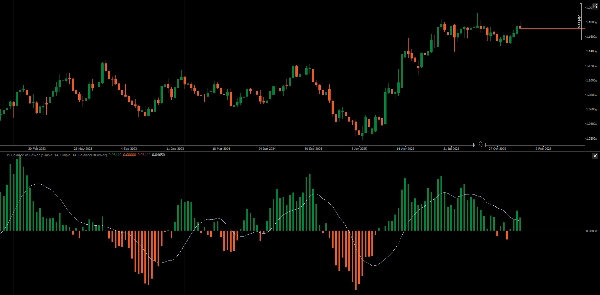
- Modalità Valore: mostra la polarità di BOP rispetto a zero (dominanza acquirenti/venditori)
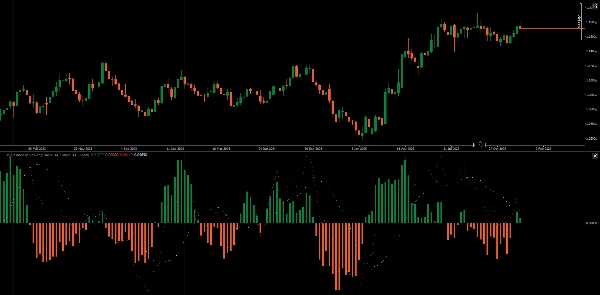
- Modalità Segnale: mostra la differenza BOP - Segnale, rivelando i cambiamenti di momentum prima degli incroci
In modalità Segnale, gli incroci della linea zero dell'istogramma avvengono prima degli incroci tra BOP e linea di Segnale, offrendo un avviso precoce del cambiamento di momentum.
CARATTERISTICHE
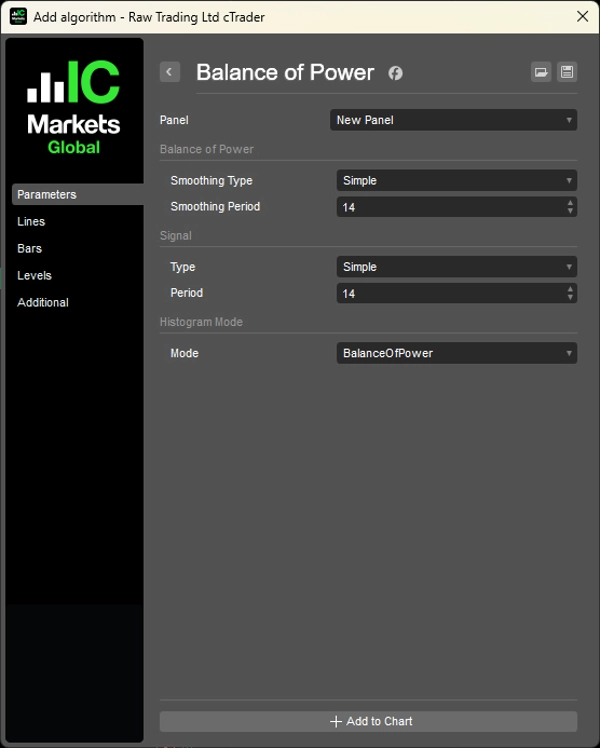
- Periodo di Smussamento: periodo MA regolabile per BOP (default 14)
- Tipo di Smussamento: scelta tra tipi di MA (SMA, EMA, ecc.)
- Periodo Segnale: periodo MA regolabile per la linea di Segnale (default 14)
- Tipo Segnale: scelta tra tipi di MA per la linea di Segnale
- Modalità Istogramma: commutazione tra visualizzazione Valore e differenza Segnale
ESEMPIO PRATICO
- HTF (Daily): BOP sopra zero e in aumento → bias rialzista
- Il prezzo ritraccia verso il supporto
- LTF (1H): BOP incrocia sopra la linea di Segnale → trigger di entrata
- Istogramma (modalità Segnale) si espande → conferma accelerazione del momentum
- Uscita quando l'istogramma LTF si contrae o BOP incrocia sotto la linea di Segnale
__________________________________________________________________________________________
ALTRI INDICATORI GRATUITI
Esplora un'ampia gamma di strumenti di analisi di mercato—dalla struttura e volume alla regressione, volatilità e timeframe personalizzati.
Il codice sorgente è disponibile nel repository GitHub.
Tutti gratuiti da usare. Ma se vuoi offrire un supporto per un caffè, puoi farlo qui.
Supporto/Resistenza
Volume
- Volume Activity Profiler
- Volume Efficiency Analyzer
- Volume Profile Analytics
- Volume Profile - Aggiornato
- Volume Spread Analysis
- VWAP (Prezzo Medio Ponderato per il Volume)
Medie Mobili
- SSL Channel
- Media Mobile Ancorata
- Media Mobile Scalata per Deviazione
- Gann High Low Activator
- Linea di Tendenza Istantanea
- Media Mobile Adattiva di Kaufman con Trend Vision
- Canale Media Mobile
- Suite Medie Mobili
- Media Mobile Canale di Trend
Utility/Personalizzati
Basati su Regressione
Volatilità
Oscillatori
__________________________________________________________________________________________
DICHIARAZIONE DI ESCLUSIONE DI RESPONSABILITÀ
Il trading comporta rischi. Questo indicatore è destinato solo all'analisi tecnica — applica sempre una corretta gestione del rischio e opera responsabilmente.
FEEDBACK E MIGLIORAMENTI
Se hai suggerimenti, richieste di funzionalità o idee per miglioramenti, lascia un commento nella scheda Discussione. Il tuo feedback aiuta a migliorare l'indicatore per tutti.
Riepilogo
Key functionalities include identifying trend phases—strong uptrends, downtrends, consolidation, and transition zones—by observing BOP behavior relative to the zero line. It also aids in detecting support and resistance confluence, with extreme BOP readings indicating potential exhaustion near key levels and divergences signaling possible rejections or breakthroughs. The indicator helps identify distribution and accumulation phases through price and BOP divergences.
BOP supports multi-timeframe analysis: higher timeframes provide directional bias, while lower timeframes offer entry timing signals via BOP and signal line crossovers and histogram momentum confirmation. The signal line is a moving average of BOP, with crossovers serving as filtered entry/exit triggers. The histogram can display either BOP polarity or the difference between BOP and its signal line, offering early momentum shift warnings.
Adjustable parameters include smoothing periods and types for both BOP and signal lines, and histogram display modes. The indicator is applicable across Forex, indices, commodities, cryptocurrencies, and stocks markets.
Discussioni
Recensioni dei clienti
Domande frequenti
Altro da questo autore
















Prezzo