
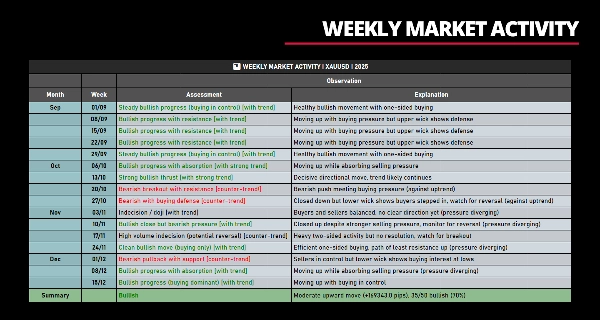
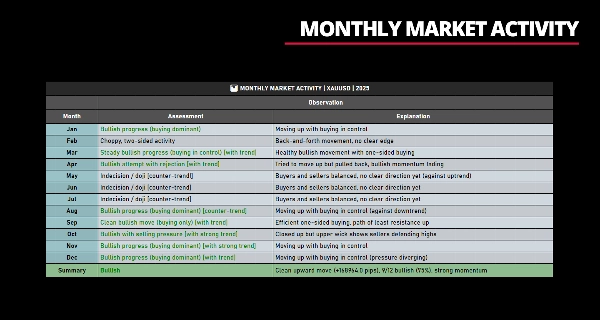
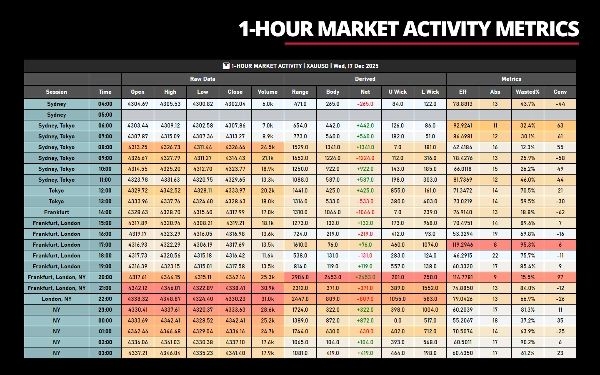
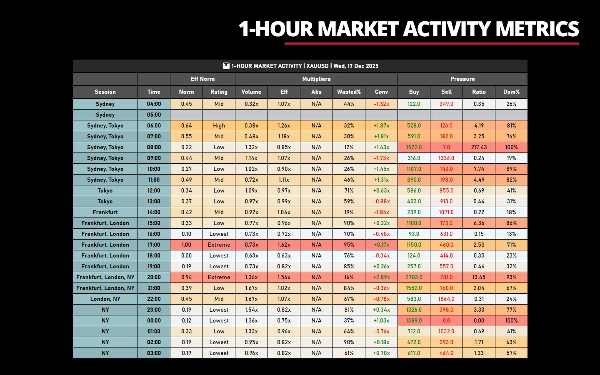

Mô tả
TỔNG QUAN
Trình Phân Tích Hiệu Suất Khối Lượng là một công cụ phân tích từng thanh toàn diện đo lường mối quan hệ giữa khối lượng (nỗ lực) và biến động giá (kết quả). Nó được xây dựng ban đầu cho mục đích cá nhân để trả lời một câu hỏi cụ thể: "Thị trường có đang di chuyển hiệu quả không, hay có nhiều hoạt động mà không có tiến triển đáng kể?"
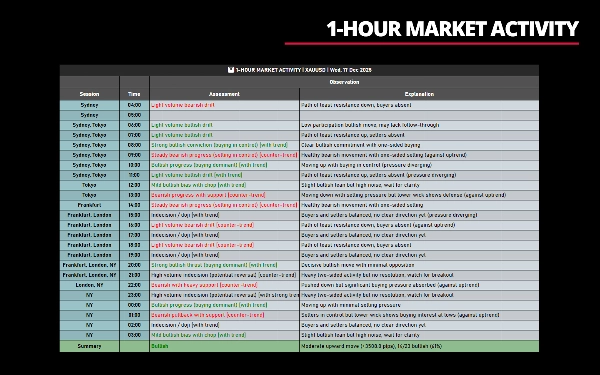
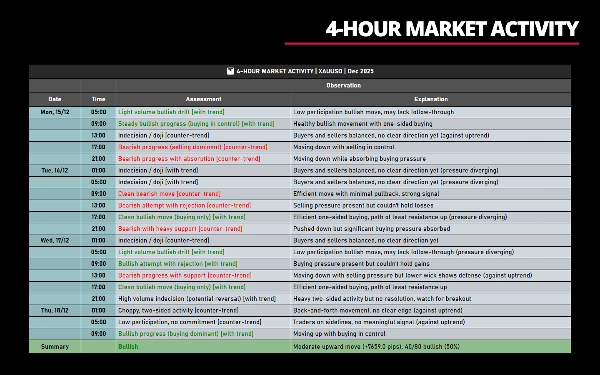
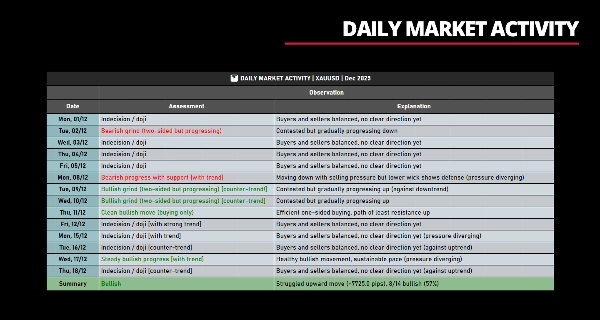
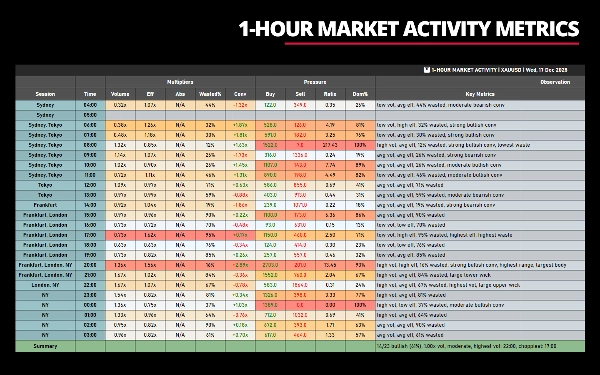
Chỉ báo này KHÔNG tạo ra bất kỳ biểu đồ nào. Nó chỉ hiển thị phân tích thống kê và các chỉ số dưới dạng bảng—không có đường, tín hiệu hay lớp phủ giá. Những chỉ số này đo lường và định lượng chất lượng cũng như đặc điểm của hành động giá và hành vi thị trường, giúp bạn hiểu liệu các chuyển động có quyết đoán, kiệt sức, tranh chấp hay thiếu quyết đoán—sau khi chúng xảy ra.
__________________________________________________________________________________________
TỔNG QUAN NHANH
Đầu ra: Dữ liệu thống kê (không có biểu đồ)
Hiển thị: Dạng bảng
Khung thời gian: Từ dưới ngày đến hàng tháng
Chỉ số: Hơn 20 chỉ số hiệu suất/áp lực
Phù hợp nhất cho: Phân tích khối lượng, đánh giá chất lượng
__________________________________________________________________________________________
KHÁI NIỆM CỐT LÕI: NỖ LỰC VS KẾT QUẢ
Tiền đề cơ bản rất đơn giản:
- Nỗ lực = Khối lượng Tick (hoạt động giao dịch)
- Kết quả = Biến động giá (phạm vi, thân nến, thay đổi ròng)
Thị trường hiệu quả tạo ra biến động giá đáng kể với khối lượng hợp lý—các chuyển động rõ ràng và quyết đoán.
Thị trường không hiệu quả thể hiện khối lượng cao nhưng tiến triển ròng hạn chế—các chuyển động lộn xộn, tranh chấp hoặc bị hấp thụ.
Bằng cách đo lường mối quan hệ này qua từng thanh riêng lẻ và các khoảng thời gian tổng hợp, bạn có thể xác định:
- Điều kiện xu hướng so với dao động
- Cam kết so với do dự
- Kiệt sức so với tiếp tục
- Thị trường một chiều so với hai chiều
__________________________________________________________________________________________
CẤU HÌNH THAM SỐ CHÍNH
Năm tham số này kiểm soát dữ liệu gì mà chỉ báo hiển thị. Hiểu cách chúng hoạt động là rất quan trọng để sử dụng hiệu quả.
1. Tham số Ngày
Mục đích: Xác định ngày/khoảng thời gian để phân tích.
Ví dụ định dạng:
""(trống) – Ngày giao dịch gần nhất có dữ liệu"18/12/2025"– Ngày cụ thể (DD/MM/YYYY)"12/2025"– Toàn bộ tháng (MM/YYYY)"2025"– Toàn bộ năm (YYYY)
2. Tham số Khoảng Thời Gian
Mục đích: Lọc những giờ để hiển thị trên các khung thời gian dưới ngày.
Áp dụng cho: Chỉ các khung thời gian dưới ngày (1 phút đến 1 giờ)
Ví dụ định dạng:
""(trống) – Toàn bộ ngày giao dịch 24 giờ"8-16"– 8:00 sáng đến 4:00 chiều"08:00-16:30"– 8:00 sáng đến 4:30 chiều"14"– 2:00 chiều đến thời gian hiện tại
3. Tham số Khoảng Tuần
Mục đích: Lọc những tuần trong tháng để hiển thị.
Áp dụng cho: Chỉ các khung thời gian nhiều giờ (2 giờ đến 12 giờ)
Ví dụ định dạng:
""(trống) – Tất cả các tuần trong tháng"1"– Chỉ tuần đầu tiên"1,3"– Tuần 1 và 3"2,3,4"– Tuần 2, 3 và 4
4. Tham số Khoảng Tháng
Mục đích: Lọc những tháng trong năm để hiển thị.
Áp dụng cho: Chỉ các khung thời gian hàng tuần
Ví dụ định dạng:
""(trống) – Tất cả các tháng trong năm"1"– Chỉ tháng Một"1,6,12"– Tháng Một, Sáu, Mười Hai"3,4,5,9,10,11"– Quý 1 (Mùa Xuân) và Quý 4 (Mùa Thu)
5. Tham số MaxDataRows
Mục đích: Giới hạn số hàng (thanh) được hiển thị trong bảng.
Áp dụng cho: Tất cả các khung thời gian
Giá trị mặc định: 24
Định dạng:
-1hoặc0– Hiển thị tất cả dữ liệu có sẵn (không giới hạn)- Bất kỳ số dương nào – Hiển thị tối đa số hàng đó
__________________________________________________________________________________________
TÍNH NĂNG
Tính linh hoạt
- 8 Nhóm Cột: Bật/tắt hiển thị Dữ liệu Thô, Dẫn xuất, Chỉ số, Chuẩn hóa Hiệu suất, Hệ số nhân, Áp lực, Quan sát Chính, Chỉ số Chính
- Nhiều Khung Thời Gian: Hoạt động trên khung thời gian dưới ngày (1m-1h), nhiều giờ (2h-12h), hàng ngày, hàng tuần và hàng tháng
- Lọc: Bộ lọc khoảng thời gian (ví dụ: "8:00-16:00"), bộ lọc tuần (ví dụ: "1,3"), bộ lọc tháng (ví dụ: "1,6,12")
- Giới hạn Hàng: Giới hạn hiển thị các khoảng thời gian gần nhất hoặc tập trung quanh thanh đang hình thành
- Tô Màu Nổi Bật: Tùy chọn tô màu gradient cho bất kỳ nhóm cột nào dựa trên chỉ số được chọn
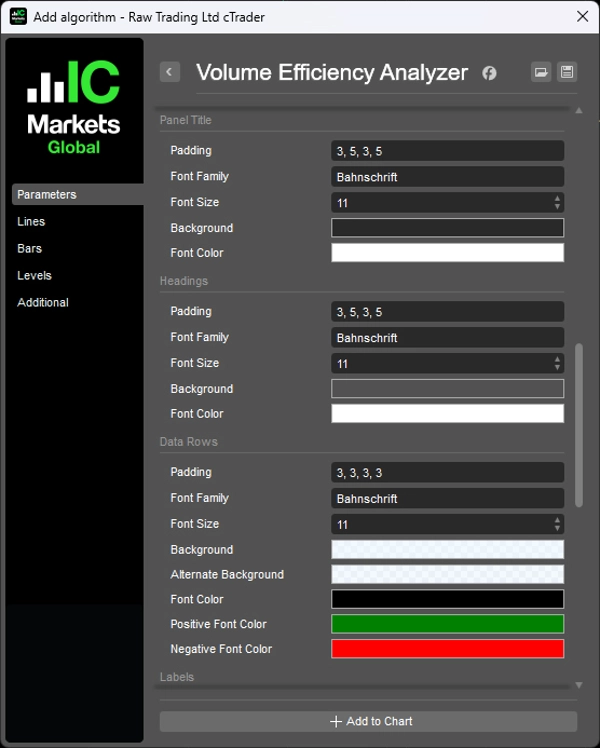
- Tùy chỉnh Kiểu dáng: Toàn quyền kiểm soát phông chữ, màu sắc, khoảng cách, độ rộng cột
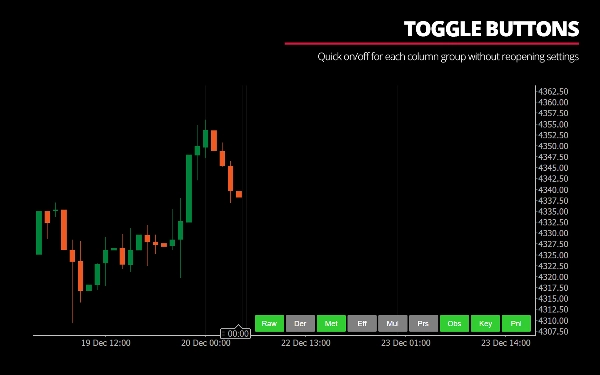
- Nút Bật/Tắt: Bật/tắt nhanh cho từng nhóm cột mà không cần mở lại cài đặt
Hỗ trợ Múi Giờ
- Điều chỉnh theo giờ máy chủ môi giới so với giờ địa phương của bạn
- Cấu hình giờ bắt đầu phiên (Sydney, Tokyo, Frankfurt, London, NY)
- Bắt đầu ngày giao dịch theo giờ (ví dụ: 4:00 sáng cho nhà giao dịch phiên Châu Á)
Tối ưu Hiệu suất
- Tìm kiếm nhị phân để tra cứu thanh hiệu quả
- Tính toán min/max một lần cho việc tô sáng
- Giới hạn 500ms cho cập nhật thời gian thực để tránh trễ
- Gợi ý tìm kiếm để tránh tra cứu thừa
__________________________________________________________________________________________
HIỂU CÁC CHỈ SỐ
Điều Gì Tạo Nên Một Chuyển Động Tốt?
- Hiệu Suất Cao: Di chuyển xa với ít khối lượng
- Tỷ Lệ Lãng Phí Thấp: Đuôi nến tối thiểu, thân nến hướng rõ ràng
- Áp Lực Đồng Bộ: Áp lực mua chiếm ưu thế khi đóng cửa tăng (hoặc ngược lại)
- Niềm Tin Mạnh Mẽ: Cam kết hướng cao
Điều Gì Tạo Nên Một Chuyển Động Kém?
- Hiệu Suất Thấp: Cần nhiều khối lượng để di chuyển ít
- Tỷ Lệ Lãng Phí Cao: Đuôi nến lớn, thân nến nhỏ (dao động)
- Áp Lực Mâu Thuẫn: Đóng cửa tăng nhưng áp lực bán chiếm ưu thế
- Niềm Tin Yếu: Không có cam kết hướng mặc dù có khối lượng
Ý Nghĩa Của Hấp Thụ Là Gì?
Khi giá gặp khó khăn trong việc di chuyển mặc dù có khối lượng cao, thị trường đang "hấp thụ" khối lượng đó. Điều này cho thấy:
- Hấp Thụ Cao: Có kháng cự/hỗ trợ, giá khó di chuyển
- Hấp Thụ Thấp: Di chuyển dễ dàng, ít sự phản đối
Ví dụ Diễn giải:
"Đòn bẩy tăng mạnh (mua chiếm ưu thế)"
- Khối lượng cao + Hiệu suất cao + Lãng phí thấp + Ròng tăng + Áp lực mua chiếm ưu thế
"Do dự khối lượng cao (có thể đảo chiều)"
- Khối lượng cao + Lãng phí cực đoan + Thân nến nhỏ + Áp lực cân bằng
"Đóng cửa tăng mặc dù áp lực giảm"
- Đóng cửa tăng nhưng áp lực bán vượt áp lực mua (phân kỳ, có thể là bẫy)
"Tham gia thấp, không cam kết"
- Khối lượng thấp + Hiệu suất trung bình + Không có áp lực chiếm ưu thế rõ ràng
__________________________________________________________________________________________
ƯU ĐIỂM & LỢI ÍCH
1. Định lượng Trực giác
- Nếu bạn từng cảm thấy "điều này có vẻ lộn xộn" hoặc "chuyển động này có vẻ yếu", chỉ báo này định lượng những quan sát đó
- Cung cấp các chỉ số khách quan cho các đánh giá chủ quan
2. Phân tích Đa chiều
- Hầu hết công cụ chỉ hiển thị khối lượng HOẶC mẫu giá. Công cụ này cho thấy mối quan hệ của chúng
- Kết hợp khối lượng, cấu trúc giá, xu hướng định hướng và động lực áp lực trong một cái nhìn
3. Nhận thức theo ngữ cảnh
- Đánh giá từng thanh xem xét ngữ cảnh xu hướng
- Phân biệt giữa "hợp nhất trong xu hướng tăng" và "hợp nhất trong xu hướng giảm"
- Cảnh báo các chuyển động ngược xu hướng có thể là bẫy
4. Giáo dục
- Diễn giải bằng ngôn ngữ tự nhiên giúp bạn học động lực thị trường
- Theo thời gian, bạn sẽ bắt đầu nhận ra các mẫu hiệu suất mà không cần chỉ báo
5. Ứng dụng Đa năng
- Nhà giao dịch theo xu hướng: Xác định khi nào xu hướng mạnh hoặc đang kiệt sức
- Nhà giao dịch dao động: Phát hiện vùng hợp nhất lãng phí cao
- Nhà giao dịch phá vỡ: Phát hiện các đột phá quyết đoán với khối lượng cao so với đột phá giả
- Nhà giao dịch khối lượng: Xem khối lượng trong bối cảnh những gì nó đạt được
6. Không Trễ
- Tất cả tính toán dựa trên các thanh đã hoàn thành (hoặc thanh đang hình thành hiện tại)
- Không làm mượt, không trung bình động, không vẽ lại
__________________________________________________________________________________________
THÁCH THỨC VÀ MỐI QUAN TÂM
Trước khi sử dụng chỉ báo này, hãy hiểu những cân nhắc quan trọng sau:
Chỉ báo này KHÔNG dành cho mọi người:
1. Độ phức tạp cao
- Hơn 20 chỉ số trên 8 nhóm cột
- Yêu cầu hiểu biết về phân tích khối lượng, hành động giá và cấu trúc vi mô thị trường
- Đường cong học tập dốc—mong đợi 1-2 tuần quan sát trước khi các mẫu trở nên rõ ràng
2. Quá tải thông tin
- Chế độ xem mặc định "hiển thị tất cả" gây choáng ngợp
- Bạn phải tùy chỉnh để phù hợp với trọng tâm giao dịch của mình
- Có thể bị tê liệt quyết định nếu cố gắng sử dụng tất cả chỉ số cùng lúc
3. Không phải Hệ thống Giao dịch
- Chỉ báo này KHÔNG cho bạn biết khi nào mua hoặc bán
- Nó cho bạn biết thị trường đang làm gì, không phải bạn nên làm gì
- Bạn phải tích hợp nó với các quy tắc vào/ra của riêng bạn
4. Cần Diễn giải
- "Do dự khối lượng cao" có thể có nghĩa là chuẩn bị phá vỡ HOẶC kiệt sức
- "Chuyển động tăng hiệu quả" không đảm bảo tiếp tục
- Bạn cần ngữ cảnh thị trường ngoài những gì chỉ báo hiển thị
5. Hạn chế về Khối lượng
- Forex sử dụng khối lượng tick (số giao dịch), không phải khối lượng thực
- Công cụ thanh khoản thấp có thể cho kết quả hiệu suất không ổn định
- Sự kiện tin tức có thể tạo ra đột biến khối lượng làm lệch chỉ số tạm thời
6. Hiệu suất trên Khung Thời gian Thấp hơn
- Trên biểu đồ 1 phút với hơn 100 thanh hiển thị, giao diện có thể cảm thấy chậm
- Nhiều thanh hơn = nhiều tính toán hơn mỗi lần cập nhật
- Khuyến nghị: Sử dụng biểu đồ từ 5 phút trở lên để giám sát thời gian thực
7. Không Có Cảnh Báo
- Hiện tại không tạo cảnh báo cho các điều kiện cụ thể
- Bạn phải theo dõi hiển thị thủ công
8. Ngưỡng Chủ quan
- "Khối lượng cao" được định nghĩa là 1.25x trung bình—đây là ngưỡng cá nhân của tôi
- "Lãng phí cực đoan" là ≥80%—cũng mang tính chủ quan
- Bạn có thể không đồng ý với các định nghĩa này, nhưng chúng được mã hóa cứng
__________________________________________________________________________________________
CÁCH HOẠT ĐỘNG
1. Thu thập Dữ liệu
- Xác định khoảng thời gian phân tích (ngày/khung thời gian)
- Đối với mỗi thanh trong khoảng thời gian, thu thập dữ liệu OHLCV từ các thanh trên biểu đồ
- Tính toán các chỉ số dẫn xuất và hiệu suất cho mỗi thanh
- Tổng hợp các chỉ số để xác định trung bình và cực trị
2. Logic Diễn giải
Các đánh giá bằng ngôn ngữ tự nhiên theo ma trận quyết định ưu tiên:
Ưu tiên 1: Mẫu Do dự
- Tỷ lệ lãng phí cực đoan (≥80%) hoặc thân nến nhỏ với đuôi dài → Tín hiệu Doji/Từ chối
- Khối lượng cao + lãng phí cực đoan → Có thể kiệt sức
Ưu tiên 2: Kịch bản Khối lượng Cao
- Khối lượng cao + hiệu suất cao + lãng phí thấp → Đòn bẩy quyết đoán
- Khối lượng cao + hiệu suất cao + lãng phí cao → Phá vỡ với kháng cự
- Khối lượng cao + hiệu suất thấp + lãng phí cao → Hấp thụ/chuyển động tranh chấp
Ưu tiên 3: Tín hiệu Dựa trên Hiệu suất
- Hiệu suất cao bất kể khối lượng → Chuyển động sạch/hiệu quả
- Hiệu suất thấp → Trôi dạt, mài mòn hoặc chuyển động yếu
Ưu tiên 4: Dự phòng Mức Khối lượng
- Khối lượng thấp → Trôi dạt, không cam kết
- Khối lượng trung bình → Đánh giá dựa trên niềm tin, tỷ lệ thân nến, mức lãng phí
3. Tinh chỉnh:
- Phân tích áp lực phát hiện mâu thuẫn (ví dụ: "đóng cửa tăng nhưng áp lực bán chiếm ưu thế")
- Phân tích đuôi nến xác định từ chối (đuôi trên trên thanh tăng = người bán bảo vệ đỉnh)
- Ngữ cảnh xu hướng thêm nhãn "[cùng xu hướng]" hoặc "[ngược xu hướng]"
4. Tính Toán Tóm Tắt
- Đếm số thanh tăng so với giảm
- Tính hiệu suất định hướng (chuyển động tăng so với chuyển động giảm)
- Đo tỷ lệ hấp thụ (mức độ kháng cự mà mỗi bên phải đối mặt)
- Tính tổng chuyển động ròng tích lũy và ngữ cảnh xu hướng
- Tạo ra xu hướng thống nhất kết hợp số lượng, độ lớn và hướng xu hướng
__________________________________________________________________________________________
GHI CHÚ KỸ THUẬT
Phương pháp Tính toán
- Sử dụng phân tích thanh tích lũy trong mỗi khoảng thời gian
- Tổng hợp khối lượng, đuôi nến, thân nến của tất cả các thanh con
- Tính toán xu hướng định hướng ròng từ dữ liệu tích lũy
- Chính xác hơn phân tích OHLC đơn giản
Chuẩn hóa
- Hiệu suất được chuẩn hóa so với min/max trong bộ dữ liệu hiển thị
- Đảm bảo đánh giá phù hợp theo ngữ cảnh
- Thang đánh giá: Cực đoan (80-100%) → Cao (60-80%) → Trung bình (40-60%) → Thấp (20-40%) → Thấp nhất (0-20%)
Ngữ cảnh Xu hướng
- Tính tổng số pip ròng tích lũy qua tất cả các khoảng thời gian trước đó
- Xác định các khoảng thời gian định hướng liên tiếp
- So sánh hiệu suất và áp lực gần đây với trước đó
- Nhãn: "Xu hướng tăng (mạnh)", "Xu hướng giảm (yếu)", "Dao động"
__________________________________________________________________________________________
LƯU Ý CUỐI CÙNG
Chỉ báo này được xây dựng với niềm tin rằng hiểu chất lượng thị trường có giá trị hơn dự đoán hướng đi.
Thay vì hỏi "giá sẽ tăng lên không?", nó hỏi:
- "Chuyển động này có chất lượng cao không?"
- "Người mua/người bán đang gặp khó khăn hay hiệu quả?"
- "Phá vỡ này có bền vững hay yếu?"
- "Động lực hiện tại có đồng bộ hay phân kỳ?"
Bằng cách tập trung vào chất lượng hơn dự đoán, các nhà giao dịch có thể:
- Tránh các thiết lập xác suất thấp
- Tham gia các chuyển động với cam kết đằng sau
- Thoát khi nỗ lực vượt quá kết quả
- Hiểu khi nào nên tránh (môi trường chất lượng kém)
Nếu bạn đánh giá cao sự minh bạch, giáo dục và hiểu tại sao giá di chuyển như vậy, chỉ báo này có thể hữu ích cho bạn.
Nếu bạn thích sự đơn giản và tín hiệu nhanh, các công cụ khác sẽ phục vụ bạn tốt hơn.
__________________________________________________________________________________________
NHIỀU CHỈ BÁO MIỄN PHÍ KHÁC
Khám phá nhiều công cụ phân tích thị trường—từ cấu trúc và khối lượng đến hồi quy, biến động và khung thời gian tùy chỉnh.
Mã nguồn có sẵn trên kho lưu trữ GitHub repository.
Tất cả đều miễn phí sử dụng. Nhưng nếu bạn muốn gửi hỗ trợ cà phê, bạn có thể chuyển đến đây.
Hỗ trợ/Kháng cự
Khối lượng
- Trình Phân tích Hoạt động Khối lượng
- Trình Phân tích Hiệu suất Khối lượng
- Phân tích Hồ sơ Khối lượng
- Hồ sơ Khối lượng - Cập nhật
- Phân tích Phân tán Khối lượng
- VWAP (Giá Trung bình Trọng số Khối lượng)
Trung bình Động
- Kênh SSL
- Trung bình Động Neo
- Trung bình Động Tỷ lệ Sai lệch
- Bộ Kích Hoạt Cao Thấp Gann
- Đường Xu hướng Tức thời
- Trung bình Động Adaptive Kaufman với Tầm nhìn Xu hướng
- Kênh Trung bình Động
- Bộ Trung bình Động
- Kênh Trung bình Động Xu hướng
Tiện ích/Tùy chỉnh
Dựa trên Hồi quy
Biến động
Bộ dao động
__________________________________________________________________________________________
TỪ CHỐI TRÁCH NHIỆM
Giao dịch có rủi ro. Chỉ báo này chỉ dành cho phân tích kỹ thuật — luôn áp dụng quản lý rủi ro phù hợp và giao dịch có trách nhiệm.
PHẢN HỒI & CẢI TIẾN
Nếu bạn có đề xuất, yêu cầu tính năng hoặc ý tưởng cải tiến, vui lòng để lại bình luận trong tab Thảo luận. Phản hồi của bạn giúp cải thiện chỉ báo cho mọi người.
Tóm tắt
Key features include customizable column groups, color highlighting, and time zone adjustments for various trading sessions. The indicator quantifies market conditions by identifying efficient versus inefficient moves, absorption levels, and directional pressure, helping traders distinguish between decisive, exhausted, or indecisive price actions after they occur. It incorporates trend context and natural language interpretations to aid understanding of market dynamics.
Volume Efficiency Analyzer does not generate buy/sell signals or alerts; it is intended to complement traders’ own strategies by providing objective metrics that quantify market quality rather than predict direction. It requires familiarity with volume analysis and market microstructure due to its complexity and information density. The indicator is suitable for trend, range, breakout, and volume-focused traders seeking a comprehensive, multi-dimensional view of market behavior.
Đánh giá của khách hàng
5 | 100 % | |
4 | 0 % | |
3 | 0 % | |
2 | 0 % | |
1 | 0 % |
Thảo luận
Câu hỏi thường gặp
Sản phẩm khác của tác giả này













![Logo "[Stellar Strategies] Market Session Ultimate"](https://cdn.ctrader.com/image/webp/61ffd537-0125-4246-9e72-42eca1791d64_28232)


Giá